10 Best Low Light Plants for Indoor Rooms
Low light plants are perfect for rooms that don’t receive much sun. Rooms, bathrooms, hallways, offices, and apartments with north-facing windows and small windows may not get much natural light—but that doesn’t mean you have to give up on indoor greenery. Choosing the right Low Light Plant can help you bring natural beauty into spaces that receive limited sunlight.
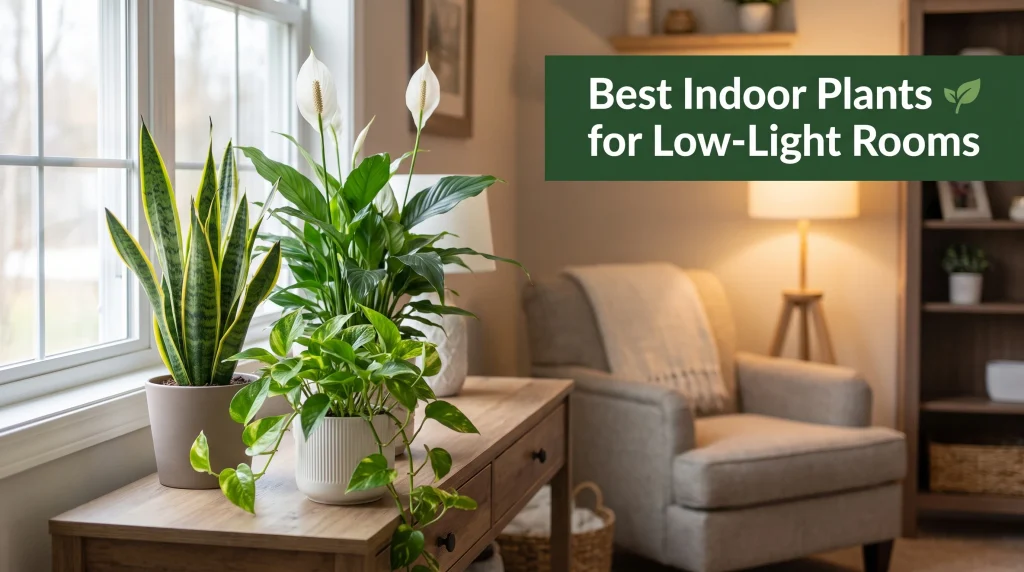
The good news is that many houseplants do surprisingly well in lower light conditions. Some of them can happily grow several feet away from a bright window, while others are especially useful for spaces where direct sunlight would be too harsh.
The trick is to pick a plant that suits the light conditions in the room you actually have. Even the most shade-tolerant plants need some light to stay healthy, so finding a suitable Low Light Plant is important for long-term growth.
Below are some of the best low-light plants for indoor spaces and some practical tips to help you keep them healthy and thriving.
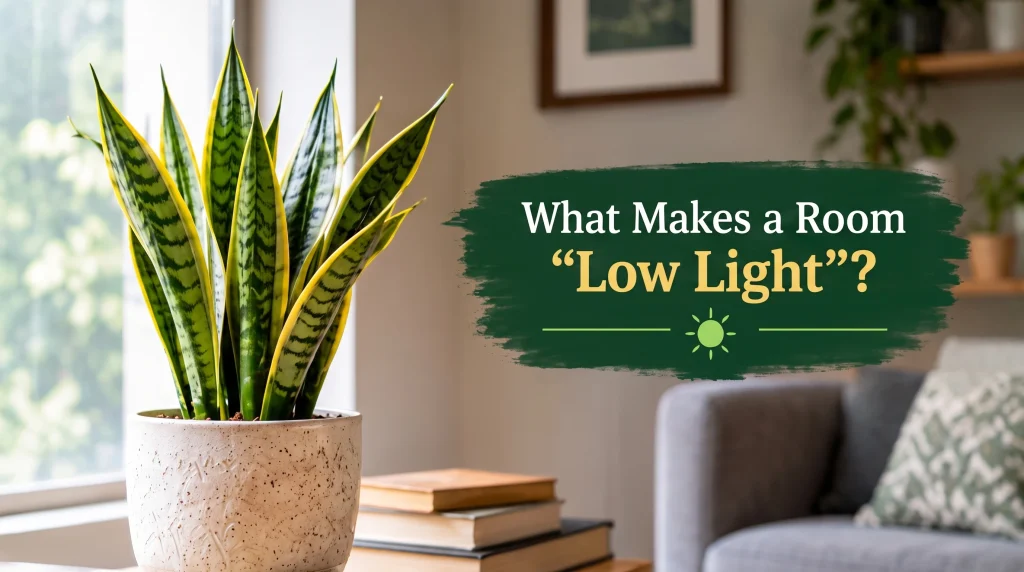
What Is a Low-Light Room?
Low light does not equal a room that is completely dark. Plants need light for photosynthesis, even if they can tolerate much less light than sun-loving species.
A Low Light Plant is generally suitable for spaces positioned away from windows or rooms where buildings, trees, curtains, or blinds reduce available daylight.
A good rule of thumb is this: If you can easily see and move around the room during the day without turning on a light, then there may be enough natural light for some shade-tolerant houseplants.
But leaving a plant in a room with no windows for a long time is a different situation. In that case, you may need to purchase an artificial grow light.
10 Best Indoor Plants for Low-Light Rooms
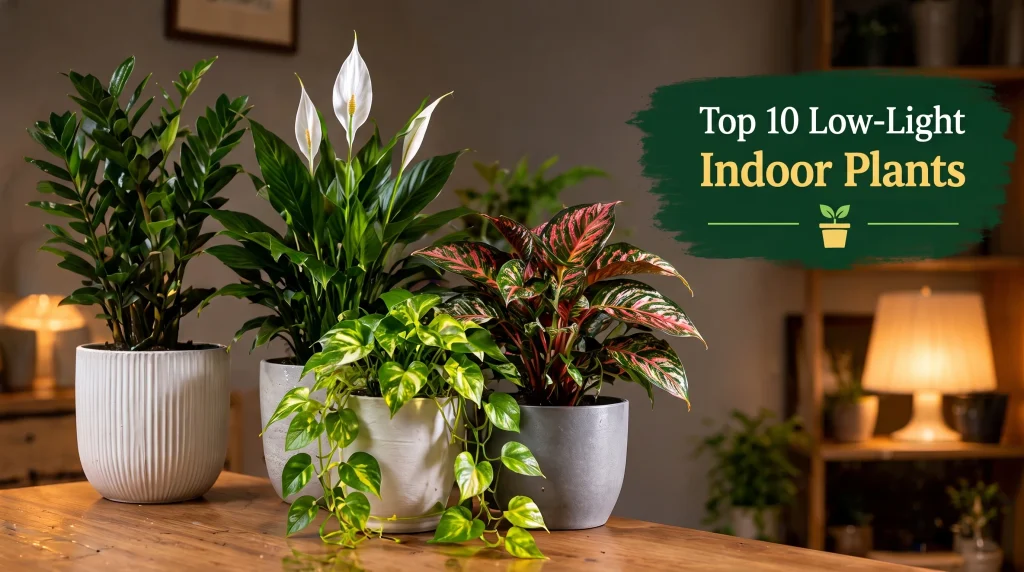
1. Snake Plant (Sansevieria)
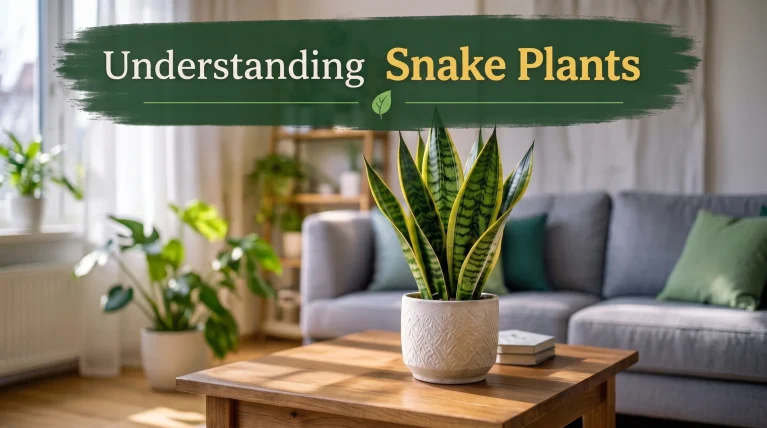
One of the most forgiving options for indoor settings is the snake plant (Dracaena trifasciata). Its upright, sword-like leaves add a strong architectural look that does not require constant attention.
This Low Light Plant tolerates lower light levels and generally likes to dry out between waterings. This makes it particularly helpful for beginners and for people who sometimes forget to water their plants.
Best for: Bedrooms, offices, hallways, and beginner plant owners.
Care tip: Avoid keeping the soil constantly wet. Root problems can result from poor drainage and watering too often.
2. ZZ Plant
Another great option for rooms that don’t get a lot of natural light is the ZZ plant (Zamioculcas zamiifolia). The shiny green leaves give it a neat appearance and make it a suitable choice for offices and modern interiors.
ZZ plants have underground parts called rhizomes that store water, helping them survive drought.
If you need a Low Light Plant that requires minimal attention, the ZZ plant can be a practical choice for busy households and people who prefer a simple plant care routine.
Great for: Offices, apartments, bedrooms, and busy homes.
Care tip: Let the potting mix get pretty dry before watering again.
3. Pothos (Epipremnum aureum)
Pothos is a hardy, adaptable houseplant that is easy to grow in a range of indoor environments. Its vines can hang from shelves, trail from containers, or climb a support.
While pothos can tolerate lower light levels, the variegated types may show less noticeable coloration if the light is insufficient.
This versatile Low Light Plant works well in homes where floor space is limited because its trailing vines can be displayed vertically.
Best for: Shelves, hanging baskets, offices, and living rooms.
Care tip: Don’t water on a calendar. Use your finger to feel a few centimeters into the soil to judge your plant’s need for water. If it is dry, it may be time to water.
4. Cast-Iron Plant
The cast-iron plant (Aspidistra elatior) has earned a reputation for toughness. It tolerates lower light better and handles less-than-ideal indoor conditions better than many ornamental houseplants.
It has large leaves that give it a lush look and do not need bright sunlight.
For a Low Light Plant that can handle a less sunny corner, the cast-iron plant is worth considering, particularly if you want attractive foliage without demanding care requirements.
Best for: Dim corners, hallways, and rooms with filtered daylight.
Care tip: Use a fast-draining potting mix, and don’t keep the roots constantly wet.
5. Chinese Evergreen (Aglaonema)
Chinese evergreen is prized for its attractive foliage and ability to tolerate lower indoor light. This variety may have leaves in various shades of green, silver, cream, or other patterns.
In general, greener varieties are better suited to lower-light areas than highly variegated types.
This attractive Low Light Plant adds color and texture to indoor spaces without requiring strong direct sunlight.
Best for: Living rooms, bedrooms, and offices.
Care tip: Let the top of the soil dry out before watering again. Make sure excess water can drain from the container.
6. Peace Lily (Spathiphyllum)
The peace lily is a popular houseplant with wide leaves and characteristic white, flower-like structures called spathes.
It tolerates lower light levels but generally will flower best with some appropriate bright, indirect light.
If you want a Low Light Plant with an elegant appearance, a peace lily can be a good option for a room with enough natural daylight.
Best for: Bedrooms, bathrooms with natural daylight, and living areas.
Care tip: Keep an eye on the leaves. Drooping can indicate thirst, but if it persists, it may also signal root problems or other stress.
7. Heartleaf Philodendron (Philodendron hederaceum)
Heartleaf philodendron has lovely heart-shaped leaves on trailing stems. It is versatile and particularly useful in hanging containers or on high shelves.
It prefers indirect light but can tolerate low-light indoor conditions.
This Low Light Plant is especially useful for decorating small spaces because its trailing growth adds greenery without taking up much floor space.
Best for: Bookshelves, hanging plant pots, and home offices.
Care tip: Prune excessively long or sparse vines to encourage a fuller appearance.
8. Dracaena
Several varieties of dracaena can tolerate moderate to lower light indoors. Their upright growth makes them useful when you need a plant that takes up vertical rather than horizontal space.
A dracaena can be a suitable Low Light Plant for rooms that receive filtered daylight, particularly if you want to add height and structure to your interior.
Best for: Living rooms, offices, and corners with filtered daylight.
Care tip: Avoid placing the plant right against a cold window or in an area with drastic temperature shifts.
9. Parlor Palm (Chamaedorea elegans)
Parlor palm is a compact palm that can adapt to indoor environments with relatively limited light.
Its fine, arching foliage gives rooms a softer, tropical appearance without requiring strong direct sunlight.
This Low Light Plant is an attractive option for people who want a tropical feel in their home without placing plants in direct sunlight.
Best for: Bedrooms, offices, and living rooms.
Care tip: Water according to the plant’s actual soil moisture rather than a fixed weekly schedule.
10. Prayer Plant (Maranta)
Prayer plants, including members of the Maranta group, are known for their patterned leaves and distinctive leaf movements.
They generally prefer indirect light rather than strong direct sunshine. They can tolerate lower light levels but generally require more careful watering and humidity than plants such as snake plants or ZZ plants.
Although this Low Light Plant can add beautiful patterns to your indoor greenery, it is best suited to people willing to provide a little extra care.
Best for: Rooms with bright-to-low indirect light where you’re willing to put in a little more care.
Care tip: Avoid letting the potting mix become completely dry for extended periods.
How to Select the Best Low-Light Plant
Not all low-light houseplants require the same level of care. Before you buy one, think about your room and your normal plant care routine. Choosing the right Low Light Plant for your lifestyle can make indoor gardening easier.
If You Tend to Forget to Water
Choose more drought-tolerant choices, including:
- Snake plant (Dracaena trifasciata)
- ZZ plant
- Cast-iron plant
They are more forgiving of occasional missed waterings than plants that prefer more consistent moisture.
If You Want Trailing Foliage
Pothos and heartleaf philodendron are great for shelves, hanging baskets, and plant stands. Their trailing stems can make a room look greener without requiring extra floor space.
If You Like Colorful Leaves
Flowers are not necessary for visual interest. Chinese evergreen varieties offer attractive foliage in different shades and patterns.
If You Want a Statement Plant, Make It Bigger
Some dracaena cultivars can provide height and structure without the need for direct sunlight. Choose a variety that suits the available space and light conditions.
Care Tips for Low-Light Plants
With little light, a plant will use water at a different rate. The soil can stay wet longer because photosynthesis and growth may be slower when light is limited.
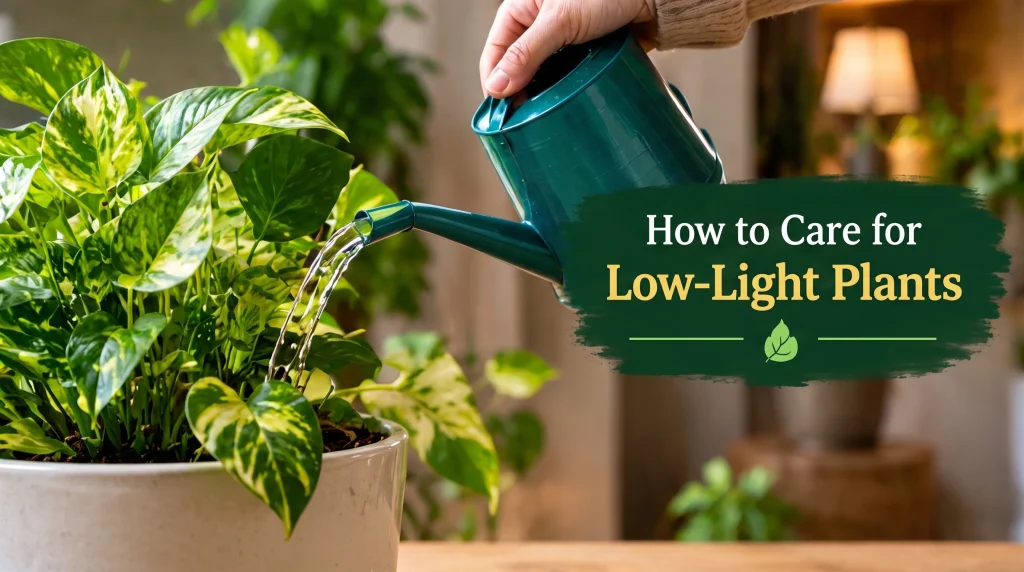
So, in dim rooms, overwatering is one of the most common problems. Even a hardy Low Light Plant needs suitable watering, drainage, and access to useful daylight.
Here are some practical steps to take:
- Check the soil before watering. Don’t water simply because it has been seven days.
- Use containers with drainage holes. Excess water needs somewhere to escape.
- Keep plants within reach of useful daylight. A plant may live in the shade, but not in a very dark corner without sufficient light.
- Dust the leaves occasionally. Dust can reduce the amount of light reaching the leaf surface.
- Rotate plants periodically. This can help different sides receive more evenly distributed light.
- Watch the plant grow. Long, weak, stretched growth or a significant loss of variegation can be a sign of too little light.
A good LED grow light can be a great source of additional light for rooms that receive very little natural light.
If you’re new to indoor gardening, learn how to care for a snake plant indoors with our easy care guide.
Common Mistakes to Avoid
Assuming Low Light Means No Light
No houseplant can live indefinitely without an energy source. Low-light plants tolerate reduced illumination; they do not eliminate the need for light.
Even if you choose a hardy Low Light Plant, make sure it receives enough natural or artificial light to support healthy growth.
Following Rigid Watering Schedules
One room might need watering weekly, while another room might have problems with the same schedule. Temperature, pot size, soil, humidity, and light all affect how quickly soil dries.
Always check the soil before watering and adjust your routine to the plant’s actual needs.
Putting Every Plant in the Darkest Corner
Even shade-tolerant plants require usable light. When a plant isn’t flourishing, try relocating it to a window with filtered or indirect daylight.
Ignoring Drainage
Water can accumulate around the roots in a decorative container that has no drainage. To use a cover pot, consider putting the plant in its own nursery pot with drainage.
Frequently Asked Questions
What Is the Best Indoor Plant for a Low-Light Room?
Snake plants and ZZ plants are some of the most practical options because they can tolerate lower-light conditions and generally don’t need to be watered often. The best choice depends on how much daylight you have and your care routine.
Can Plants Grow in a Room Without Windows?
Plants cannot grow forever without light. Usually, you need artificial grow lighting if you want to keep living plants in a room with no windows at all.
How Often Should You Water Houseplants in Low Light?
There is no fixed schedule. Plants in darker rooms may use up water more slowly, so check the soil before watering, using your finger or a moisture meter. Always consider what is best for the individual plant.
Do Low-Light Plants Require Sunlight?
They need light, but not necessarily direct sunlight. Many shade-tolerant houseplants prefer indirect or filtered light and can become stressed by strong direct sun.
Why Do My Low-Light Plants Have Yellow Leaves?
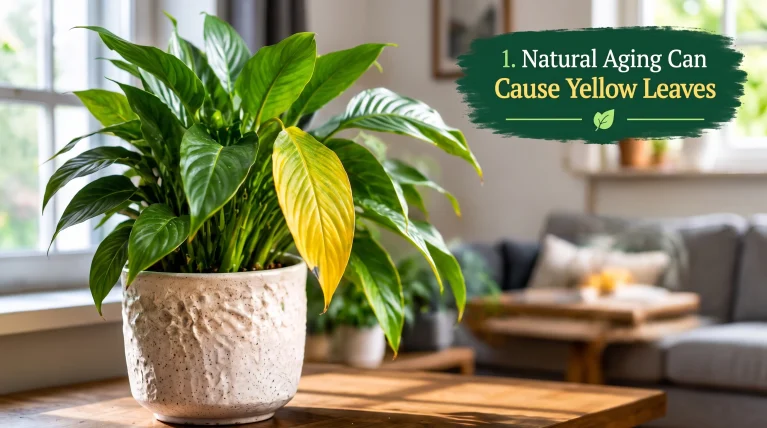
Yellow leaves can result from several things, including overwatering, poor drainage, natural aging, temperature stress, or lack of light. Check the soil, roots, plant care requirements, and whether the location provides sufficient usable light.
Can a Bathroom Be a Good Place for Low-Light Plants?
A bathroom can be good if there is some natural daylight. Some tropical plants like humidity, but a dark bathroom without useful daylight may need a grow light.
Summary
You don’t have to sacrifice attractive greenery when choosing plants for a room with limited sunlight. Snake plants, ZZ plants, pothos, cast-iron plants, Chinese evergreens, peace lilies, and several other species can grow indoors with limited bright sunlight.
The trick is knowing the difference between low light and no light at all. Provide as much useful indirect daylight as the room offers, use containers with excellent drainage, and avoid watering just because the calendar says it is time.
Start with a Low Light Plant that matches your room and care habits. Healthy indoor greenery can make a home feel warmer and more inviting, even in a room that isn’t particularly sunny, when you provide the right combination of light, watering, drainage, and placement.