10 Best Indoor Plants for Small Apartments
Living in a small apartment doesn’t mean you can’t have a beautiful indoor garden. The right plants will add color, texture and a natural feel without taking up valuable living space.
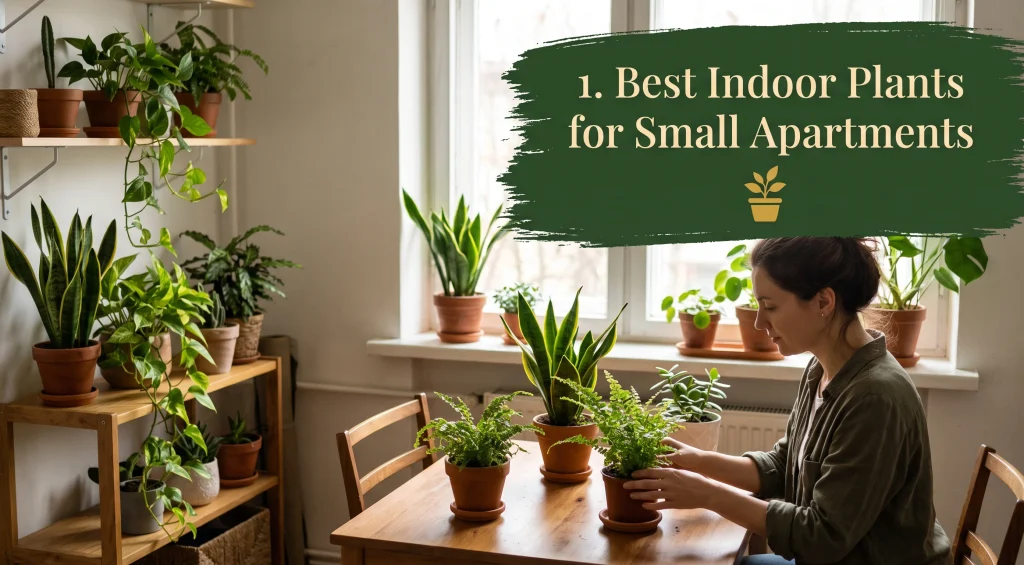
The trick is to choose plants that suit the light conditions in your apartment, the space you have and the care you can give them. Some types will thrive on a small shelf while others can grow vertically from a hanging planter. Or for those wanting greenery but don’t want to spend a lot of time on plant care there are hardy options.
The best indoor plants for small apartments can help you create a green, welcoming home, even when space is limited.
Looking for the best indoor plants for a small apartment? Here are some good ones to start with.
What you should know about choosing indoor plants for a small apartment
Check the conditions where you want to put a plant before you buy it. A beautiful plant may suffer if your house does not provide the basic needs.
Choosing indoor plants that suit your apartment’s environment can make plant care easier and help your greenery thrive.
1. Light Available
One of the most important things is light. See how much sun hits different parts of your apartment throughout the day.
- Low Light: Places a few feet away from bright windows can be good locations for shade-loving plants.
- Bright indirect light. Often ideal for many popular houseplants.
- Direct sunlight: Great for plants that can take the intense sun, especially near south- or west-facing windows that aren’t blocked by trees or buildings in many homes in the Northern Hemisphere.
Low light doesn’t mean no light. Plants still need light to photosynthesize.
2. Free space
Don’t stop at square footage. Shelves, desks, windowsills, bookcases, kitchen counters, hanging planters…they’re all great plant-growing spots.
If your apartment is very small, it can often be easier to deal with compact plants or plants that have an upright or trailing growth habit.
Indoor plants with upright or trailing growth habits are especially useful when you want greenery without sacrificing valuable floor space.
3. Maintenance Needs
If you travel often or have a busy schedule, pick plants that will withstand a missed watering here and there. If you are into gardening you might prefer varieties that require more regular attention.
Low-maintenance indoor plants are a practical option for people who want greenery but have limited time for regular care.
4. Safety of Pets
If you have cats or dogs who chew on plants, make sure to check if a particular species is considered toxic before you bring it home. Even if you keep plants on high shelves, inquisitive pets may still reach them.
10 of the Best Indoor Plants for Small Apartments
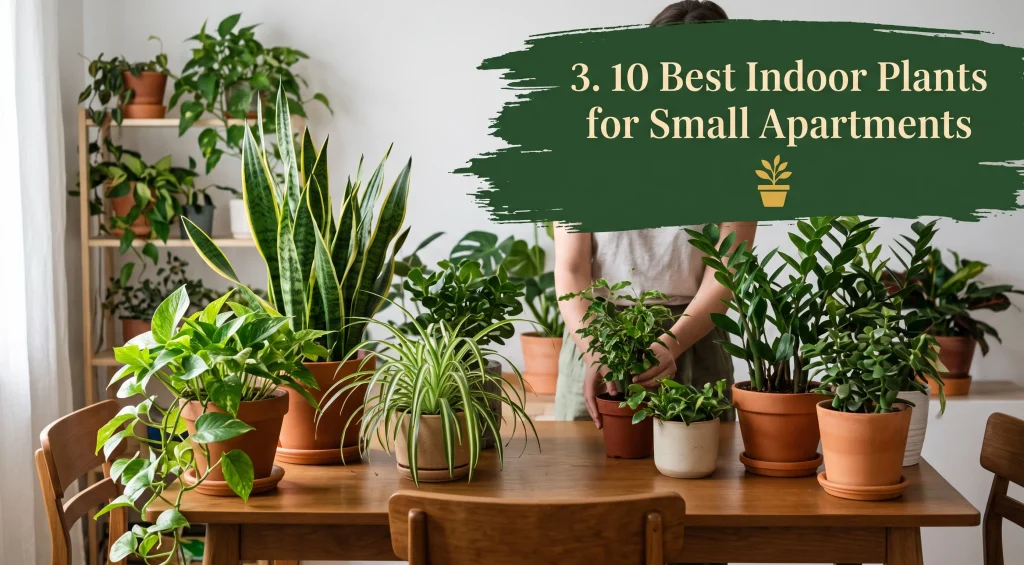
1. Snake Plants
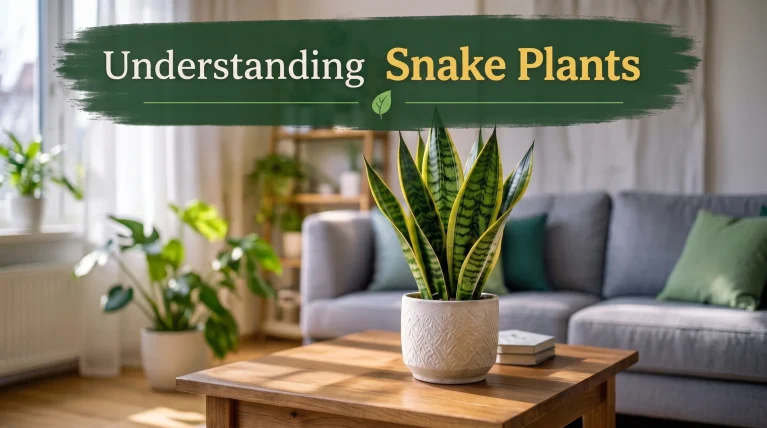
Snake plants, also known as Dracaena trifasciata, are popular for apartments because they grow upwards rather than outwards.
They have stiff upright leaves so are useful where floor space is limited. Indoors, they will tolerate a range of light conditions, but growth may be slower in low light.
They also like their soil to dry out between waterings so make a good choice for those who tend to forget about looking after plants.
For more growing tips, read our guide on how to care for a snake plant indoors.
Great for: beginners, bedrooms, corners and low-maintenance areas.
Space-saving tip: Choose a narrow pot and an upright variety, rather than a wide-spreading plant.
2. Devil’s Ivy
Pothos is one of the most adaptable plants for a small house. The heart-shaped leaves grow on trailing stems so you can put the plant on a shelf and let the vines hang down.
Variegated varieties will tolerate lower-light conditions but stronger growth and better coloration will be promoted by brighter indirect light.
Pothos is easily propagated from stem cuttings as well, so one mature plant can eventually fill several small containers.
These trailing indoor plants can bring greenery to empty shelves and bookcases without taking up additional floor space.
Best for: Shelves, bookcases, hanging planters, novices.
3. Zamioculcas zamiifolia
ZZ plant (Zamioculcas zamiifolia) has shiny green leaves and a naturally neat growth habit.
It is especially useful in apartments where consistent plant care is difficult. It has thick underground rhizomes that help it to store water so it generally does not need frequent watering.
Steer clear of consistently soggy soil where excess moisture can lead to root problems.
Best for: Offices, hallways, dimmer indoor spaces and plant owners looking for low-maintenance.
4. Spider Plant –
Spider plants are small enough to fit into many apartments, but they can produce long arching leaves and small plantlets that add visual interest.
They are especially good for hanging baskets where the leaves and offsets can cascade without taking up much floor space.
Give them bright indirect light whenever you can, and use a pot that drains well.
Spider plants are attractive indoor plants for apartment owners who want to use hanging space to display greenery.
Best for: Hanging baskets, shelves, kitchens, and starter plant collections.
5. Heartleaf Philodendron (Philodendron hederaceum)
Another great trailing plant for small spaces is the heartleaf philodendron.
Its heart-shaped leaves and pliable vines make it easy to grow vertically or in a hanging container. Don’t want a big plant taking up floor space? Let the stems cascade from a high shelf.
It prefers bright, indirect light, but can tolerate lower-light indoor conditions.
Best For: Small shelves, hanging pots and vertical displays
6. Peperomia
There are many miniature varieties of the peperomia family with a variety of leaf shapes, colors and textures. Their small size makes them particularly suitable for desks, bedside tables and narrow shelves.
They like bright, indirect light and don’t like to be kept constantly wet.
If you want some greenery without the container, Peperomias are a good choice, because they stay much smaller than many traditional houseplants.
Compact indoor plants such as peperomias are ideal when you want to decorate small surfaces without making your apartment feel crowded.
Best for: Desks, shelves, small tables and small plant collections.
7. Chinese Evergreen (Aglaonema)
Chinese evergreens, also called Aglaonema, are valued for their attractive foliage and ability to tolerate lower indoor light than many sun-loving plants.
If you’re after decorative foliage there are green, silver and patterned leaf varieties available, giving you plenty of choices.
Keep the potting mix moist but not constantly wet, allowing it to dry out slightly between waterings.
Best for: Decorative corners and low-light rooms.
8. Aloe Vera Gel
If you have a sunny windowsill in your apartment, aloe vera is a good choice.
Unlike plants that thrive in consistently moist soil, aloe stores water in its succulent leaves and prefers to dry out between waterings. Good drainage in the pot and potting mix is important.
Its compact, architectural form is also visually pleasing without requiring a lot of footprint.
Aloe vera is one of the indoor plants worth considering if your apartment has a bright, sunny windowsill and you prefer a succulent that needs less frequent watering.
Best for: Sunny windowsills and people who love succulents.
9. Cast Iron Plant
The cast iron plant, Aspidistra elatior, is said to tolerate relatively low light indoor conditions and some neglect.
It has big leaves that make it look lush, but it is generally a slower grower than some trailing houseplants. That can actually be an advantage in a small apartment as it is less likely to quickly overwhelm its location.
Best for: Dark corners and rooms in your flat.
10. Plants for the Air
Unique because they can be displayed without the usual soil-filled pots, air plants, or Tillandsia, are special.
They can be displayed in small decorative holders, mounted displays or open containers, making them useful when conventional floor and shelf space is limited.
Air plants do still require proper light, moisture and air flow despite their name. They should not be left in a dark room to be forgotten.
Ideal for: Small spaces, creative displays, desks & windowside decor.
Best Indoor Plants for Various Apartment Environments
Not all apartments have the same growing environment. Rather than picking a plant and then trying to make your house work for it, begin with the conditions you already have.
Different indoor plants have different light, watering and space requirements, so matching a plant to your apartment’s conditions is often the easiest way to keep it healthy.
| Condition of Apartment | Plants to Think About |
|---|---|
| Dimmer Switch | snake plant, ZZ plant, cast iron plant, Chinese evergreen plant |
| Indirect bright light | Pothos, Spider Plant, Philodendron, Peperomia, |
| Sunny window seat | Other succulents (e.g. aloe vera) |
| Very little surface area | Peperomias, tiny air plants |
| Vertical space available | Heartleaf philodendron, pothos, spider plant |
| Choice of low maintenance | Snake plant ZZ plant Cast iron plant |
They are starting points, not hard and fast rules. The requirements may vary for each individual cultivar and the actual light conditions inside an apartment may vary considerably.
Getting the Most Out of Limited Plant Space
You don’t need a big house to create a beautiful plant collection. The trick is to use space in many directions.
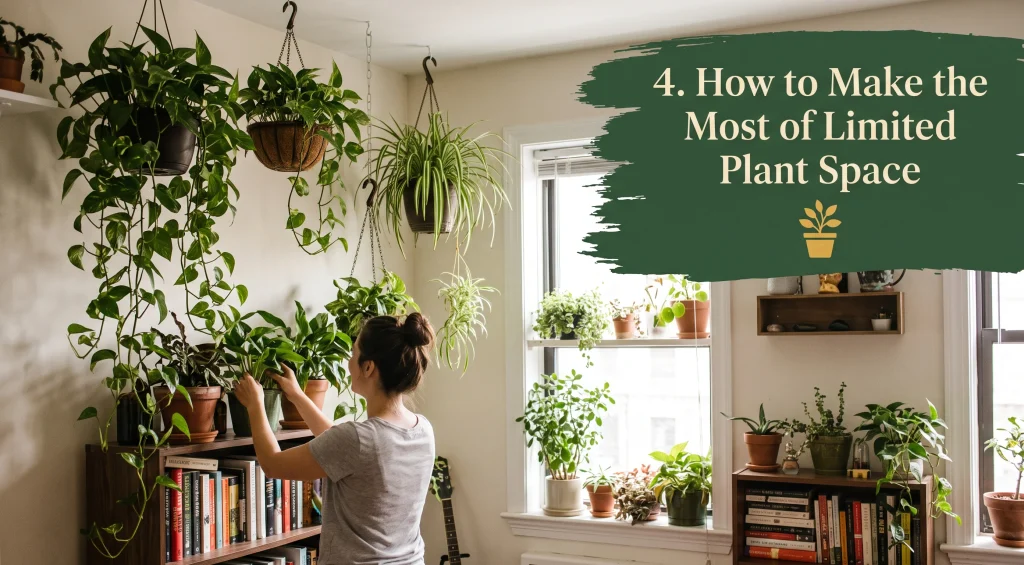
With the right indoor plants, even a compact apartment can feel more inviting, organized, and connected to nature.
Use Vertical Space
Hanging baskets and wall-mounted plant displays can free up valuable floor and counter space.
Trailers like pothos and heartleaf philodendron are especially useful because their leaves are inclined to grow downward.
Turn Your Shelves into Plant Displays
You can also create a plant zone with a bookshelf or an open cabinet. Position smaller plants in the front or on the edges and leave some room for airflow and maintenance.
Don’t plant them so close together that you can’t easily check the soil or reach each pot.
Small indoor plants can be arranged on shelves at different heights to create an attractive display while leaving your floor and work surfaces free.
Use Windowsills Wisely
Windowsills are great places, but check the temperature and sunlight before putting plants there. Some windows get bright afternoon sun, while others get only indirect light.
Choosing the Right Size of Pot
A big pot does not make a small plant healthier. Overly large containers can retain moisture for longer periods of time and can increase the chances of root problems.
Select a container suitable for the plant and ensure that excess water can escape.
Group Plants Based on Their Needs
Don’t just put plants together based on how they look. Group plants that have similar light and watering needs. That makes maintenance easier and decreases the chances of accidentally over or under watering one plant.
Avoid These Mistakes in a Small Apartment
Over-watering.
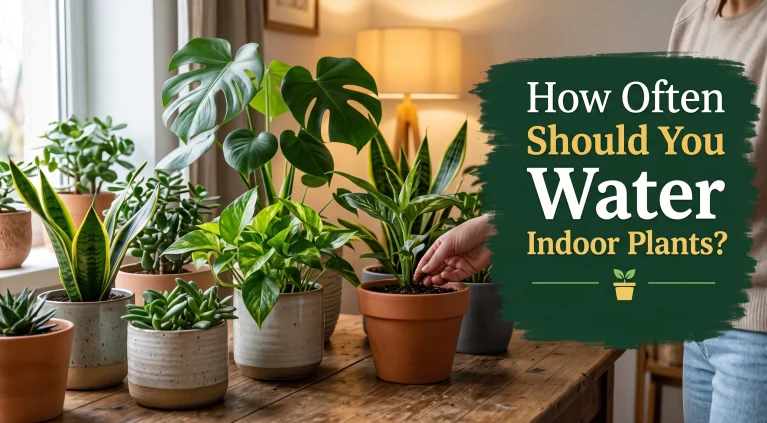
Overwatering is one of the most common houseplant issues. Don’t water simply because a number of days have passed.
Test the soil, consider the plant’s species, pot size, light, temperature, and season.
Disregarding Mature Size
A plant that seems small in the store can grow to be much larger over time.
Check expected mature size and growth habit before buying. This is especially true in a small apartment.
All Plants Like A Dark Place
Many plants described as tolerant of low light levels still require usable light to stay healthy. A room appears bright to the human eye, but can still provide a limited amount of light to a plant.
Drainage is not included
Decorative pots without drainage can cause excess water to build up around roots. For a decorative cachepot, consider placing the plant in a nursery pot with drainage in the cachepot.
Selecting Plants Solely on Appearance
A plant in a photograph may look perfect, but it might be a poor choice for your apartment.
Before you buy, consider light, humidity, watering habits, pets, temperature and available space.
Choosing indoor plants based on your real living conditions rather than appearance alone can help prevent common care problems and keep your collection manageable.
Common Questions
What are the best indoor plants for small apartment?
Snake plants, pothos, zz plants, spider plants and a few peperomias are generally good choices for beginners. The best option will depend on the lighting in your apartment and how often you are able to care for the plant.
What indoor plants need the least sun?
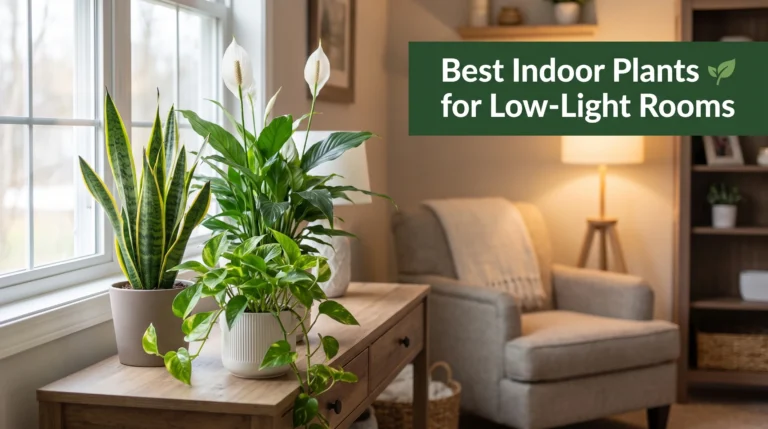
Snake plants, ZZ plants, cast iron plants and some Chinese evergreen varieties can stand fairly low light indoors. But low-light tolerance doesn’t mean a plant can live without light.
What are good plants for small apartments with pets?
Before a purchase, pet owners should check the safety of each individual plant. Some common houseplants that are safe for people may be toxic to cats or dogs. “The ASPCA has toxicity information by species that you can check out before bringing a plant into your home.”
How many plants should I have in a small flat?
There is no “one size fits all” Begin with a few plants that fit your light and space. Add more only if you can properly care for them.
Indoor plants that are easy to care for:
Snake plants and ZZ plants are often good choices for those who like to water less often. Pothos and heartleaf philodendron are also fairly easy to grow, given basic light and watering requirements.
Are indoor plants a good way to make a small apartment look better?
Yes. Plants add color, texture, height and visual interest without needing you to rearrange space. Greenery is particularly effective in small spaces when you use shelves, hanging planters and displays vertically.
Abstract
Best Indoor Plants for Small Apartments Not all of the best plants for small apartments are the smallest plants. They match your light conditions, the space you have, how much you water and your lifestyle.
Adding some greenery to a small home can be as easy as getting some snake plants, pothos, ZZ plants, spider plants and peperomias. If you have limited floor space, consider hanging baskets, shelves, windowsills and vertical displays to make better use of the space you have.
Choose, above all else, plants that will thrive in the conditions you can reasonably provide. A well-matched plant will do far better than one selected simply because it looks pretty at the garden center.
The best indoor plants for small apartments are those that fit your available light, space, and daily routine. Start with a few suitable varieties, provide the right care, and enjoy a greener home without overcrowding your living space.