5 Easy Ways to Care for a Snake Plant Indoors
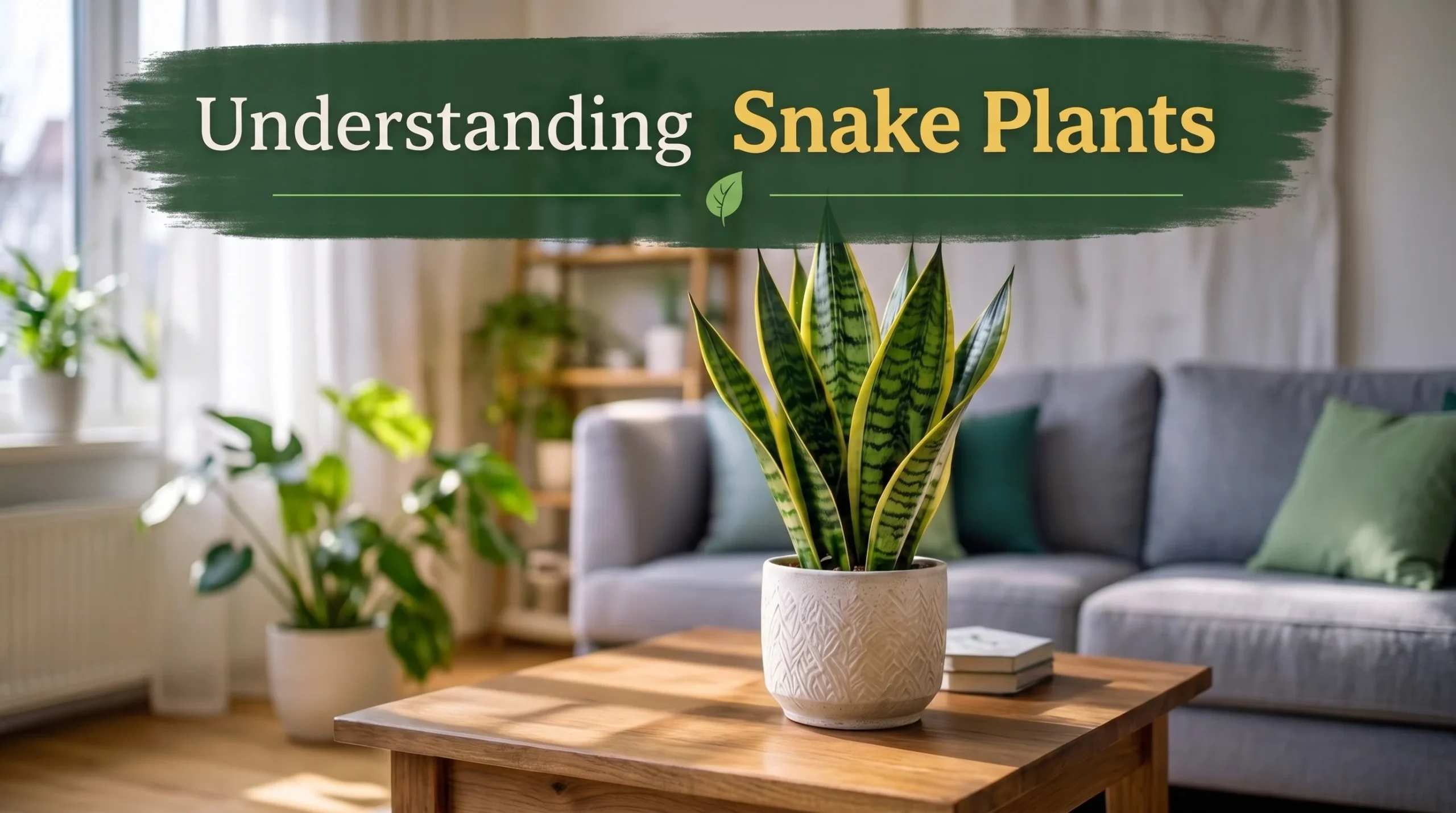
Snake plants are popular indoor plants for good reason. Their upright leaves add structure and color to a room, while their ability to tolerate a range of indoor conditions makes them relatively simple to maintain. But “low maintenance” does not mean a snake plant can survive anything. The right balance of light, watering, drainage, temperature, and occasional feeding will help it stay healthy for years.
The trick to successfully growing a snake plant is understanding that this plant stores water in its thick, fleshy leaves and roots. It’s generally better in dry conditions than in always wet soil. In fact, overwatering is one of the most common issues for indoor snake plants.
This guide covers how to care for a snake plant indoors, including where to place it, when to water, what soil to use, how to identify problems, and when to repot.
All About Snake Plants
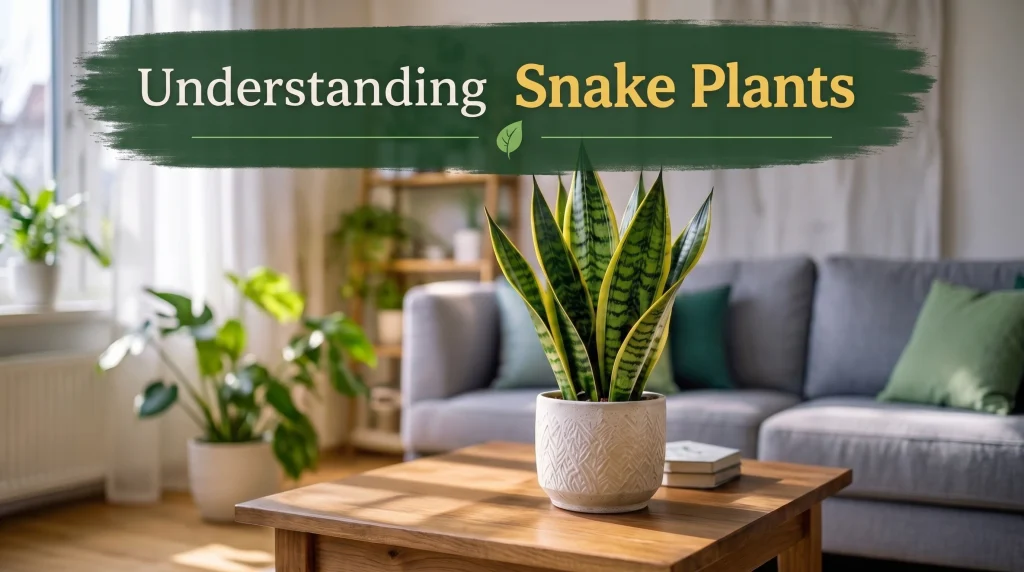
Snake plants are often called Sansevieria, but these plants are now classified in the genus Dracaena. They may also be sold under names such as the tongue of the mother-in-law.
They have stiff, erect leaves, succulent-like, that store water. “Sansevierias are tolerant of bright conditions and light shade and are naturally drought tolerant,” notes the RHS.
This makes them particularly useful for indoor settings where occasional missed waterings are likely. But their drought tolerance is also a sign of their biggest care need: Don’t keep the roots constantly wet.
How Much Light Does a Snake Plant Require?
Snake plants are surprisingly tolerant of a wide range of indoor light. They can take less light, but that doesn’t mean every dark corner is a good place to be.
For steady, consistent growth:
- Bright, indirect light is a great choice.
- Many plants do well with a few hours of direct sunlight.
- Lower light areas can work, but growth will be slower.
- Variegated varieties may need better light to keep their markings.
An east-facing window can provide useful morning light, while a bright room farther from a strong south- or west-facing window can also work. If the plant is receiving intense direct sun through glass for long periods, watch for pale, bleached, or scorched areas on the leaves.
The University of Minnesota Extension also lists snake plants among the indoor plants that do well in lower light.
Practical tip: If your plant is growing slowly but otherwise healthy, try moving it gradually to a brighter spot instead of changing several other care factors at once.

How Often Should You Water Snake Plants?
A simple watering method that works for every snake plant. The amount of water it needs depends on light, temperature, pot size, soil, season, and indoor conditions.
Don’t water on a set weekly schedule, but check the soil first.

A simple watering method
- Insert your finger several centimeters into the soil.
- If the soil is still wet to the touch, hold off.
- If the top part has dried and the pot is quite light, it is generally time to water.
- Rinse well to drain excess water from the bottom.
- Empty any water that might have collected in the saucer or outer container.
The RHS recommends watering sansevierias when the compost is starting to dry out and warns against wet conditions and overwatering.
In cooler or darker periods the plant may absorb water more slowly. In warmer, sunnier conditions, the soil can dry out faster.
Why overwatering causes trouble
Constantly wet soil reduces the air available around the roots and can contribute to root problems. Yellowing leaves, soft or mushy areas near the base, and a persistently wet potting mix are warning signs that your watering routine may need adjustment.
Why too much water creates problems each time. The best thing is to allow the soil to dry out well between thorough waterings and make sure the container drains well.
Choose the Right Soil and Pot
Good drainage is one of the foundations of successful snake plant care.
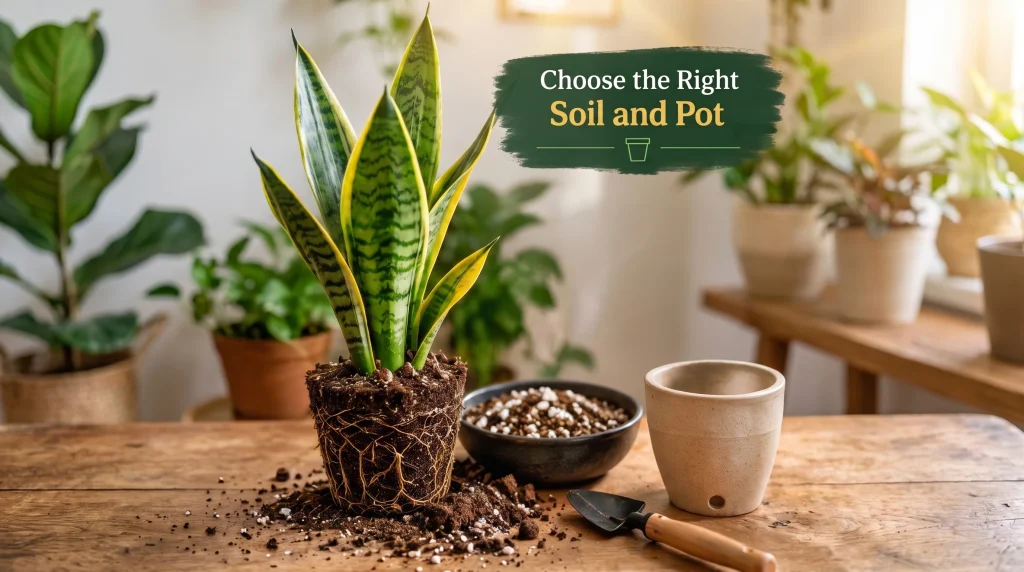
Use a loose, well-draining potting mix rather than heavy garden soil. A cactus or succulent-style Soil that is constantly wet limits the air around roots and can cause root problems. Yellow Red flags that your watering habits might need a tweak include leaves that are soft or mushy spots on the base and a constantly wet potting mix. ly.
The RHS recommends free-draining, peat-free compost and specifically mentions cactus compost as suitable for sansevierias.
Your container is as important as the soil.
Watch for:
- A hole for drainage at the bottom
- A pot no larger than the root system by a dramatic amount
- A saucer that lets excess water drain away
- A solid container for tall guys
If you love the look of a cachepot, keep the plant in a well-draining nursery pot in it, as a decorative pot without drainage can hold water around the roots.
Snake Plant Temperature and Humidity Indoors
Snake plants like regular room temperatures. The RHS suggests an ideal growing range of between 15 and 24°C (60 and 75°F approx.).
Avoid sudden extremes of temperature with the plant where possible. Do not place it immediately adjacent to a freezing draft, heater, or air-conditioning outlet.
Snake plants don’t need high humidity. In fact, the RHS says they prefer relatively low humidity and do not like overly wet conditions.
This means you generally do not need to mist the leaves or install a humidifier simply for a snake plant.
Are Snake Plants Fertilized?
Snake plants don’t eat a lot. If they are getting the proper light and growing in fresh potting mix they can grow without feeding them often.
During active growth, a balanced houseplant fertilizer used as directed on the product label can provide additional nutrients. Do not use more fertilizer than the recommended amount. Too much fertilizer can accumulate in the soil and may harm roots.
If your plant is in a low-light room and growing slowly, it’s not always a matter of more fertilizer. Maybe it would be more useful to improve the light.
When and How to Repot a Snake Plant (Sansevieria) 1.
Snake plants don’t usually need to be repotted often. When to consider repotting:
- Roots are getting pretty crowded.
- The plant is drying out at a very fast rate.
- The plant is top-heavy, which causes the container to be unstable.
- Carefully take the plant out and check the roots. If the soil is bad, change it with fresh and well-drained soil and ensure the new pot has good drainage.
When repotting, choose a pot that is only slightly larger than the current one. A very large pot, with more soil, can stay wet longer than it needs to. Roots are coming out of the drain hole.
Remove the plant carefully, inspect the roots, replace unsuitable soil with a fresh, well-draining mix, and make sure the new container has adequate drainage.
Common Issues with Snake Plants and How to Solve Them
Yellow leaves
A yellow leaf doesn’t necessarily mean a dying plant. Older leaves will die off naturally, but if the yellowing is extensive, especially if the soil is wet, it could be an indication of overwatering or poor drainage.
What to do: Check moisture level, look at drainage hole, and change watering schedule.
Brown or crispy leaf tips
Brown tips can have several causes, including inconsistent watering, very dry conditions, accumulated fertilizer salts, or environmental stress.
What to do: Check the soil and roots first rather than assuming the plant simply needs more water.
Golden leaves
Soft tissue near the base is a more serious warning sign and may be associated with excessive moisture and root or crown problems.
What to do: Stop routine watering while you assess the soil and roots. If roots are damaged, affected material may need to be removed and the plant replanted in fresh, well-draining mix.
Leaves falling or leaning
If the leaves get tall, they can lean if they are not growing evenly or getting light evenly.
What to do: Turn the pot occasionally so the different sides get the light. Make sure the plant is well established and the container is steady.
No or slight growth
Snake plants grow slowly compared with many tropical houseplants. Growth is also constrained by low light, cool conditions, seasonal dormancy, or limited nutrients.
If the plant appears healthy, slow growth is not a bad thing.
A Simple Snake Plant Care Routine
You don’t need an elaborate timetable. Most common problems can be avoided with a simple routine.
Every few weeks, check the soil moisture before watering automatically.
When the soil is appropriately dry, water it well and let the excess water drain away.
Regularly:
Look for yellowing, soft leaves, pests, dust, or other changes.
Occasionally:
Wipe dust from broad leaves with a clean, slightly damp cloth. This also gives you an opportunity to inspect the plant closely.
During active growth:
Consider occasional fertilizer if the plant needs additional nutrition.
When the plant becomes crowded or unstable:
Evaluate whether repotting is necessary.
The most important habit is simple: check the plant before acting. Snake plants often suffer more from too much attention, especially frequent watering, than from being left alone for a little longer.
Are Snake Plants Safe for Pets?
If you have cats or dogs, keep snake plants somewhere they cannot chew on them.
According to ASPCA, the snake plant (Sansevieria trifasciata) is toxic to dogs and cats. Its toxic principle is saponins, which are listed, and reported signs are nausea, vomiting, and diarrhea.
If you believe your pet has consumed part of the plant, contact your veterinarian or the appropriate animal poison-control service for guidance.
FAQ (Frequently Asked Questions) FAQ
How much water does a snake plant need indoors?
Water when the soil has dried appropriately, not on a fixed calendar. The exact time depends on light, temperature, pot size, soil, and season. Make sure any excess water can drain away from the container.
Can snake plants survive in dark rooms?
Snake plants can tolerate lower-light conditions, but really dark spots are not the best for healthy growth. Generally, a brighter room with indirect light is a better long-term environment.
Yes, you can spray a snake plant.
Typically no. Snake plants are drought tolerant and do not need high humidity. Misting does not replace proper watering or drainage.
What soil do you use for a snake plant?
Use a loose, well-draining potting mix. A practical choice is a cactus or succulent style mix that will drain excess water more easily.
Why do my snake plant leaves turn yellow?
Overwatering and poorly draining soil are common possibilities, although individual yellow leaves can also be part of normal aging. Check the soil moisture, drainage, roots, and overall growing conditions before changing your routine.
Can snake plants grow in low light?
Yes. Snake plants are relatively tolerant of low light, although growth may be slower. If possible, provide bright indirect light for stronger, more consistent growth.
Final Thoughts
Good snake plant care is more about getting the basics right than constant maintenance. Provide lots of light, use a pot and soil that drains well, allow the growing medium to dry out between waterings, and never keep the roots wet all the time.
Once you know how the plant responds to its environment, it’s easy to care for it. Instead of adhering to a strict watering calendar, pay attention to the soil, leaves, pot, and seasonal conditions. A little observation can help keep an indoor snake plant healthy and attractive for years.
Editorial reference note: The care recommendations in this guide are consistent with RHS guidance on Sansevierias and indoor-plant guidance from the University of Minnesota Extension; pet-safety information is based on the ASPCA’s plant toxicity database.