9 Proven Solutions for Yellow Leaves on Houseplants
Yellow leaves on an otherwise healthy-looking houseplant can be worrying, but it doesn’t always mean your plant is dying. Yellowing is one of the most common signs of plant stress, and the cause can range from completely natural leaf aging to watering problems, poor light, nutrient deficiencies, or unhealthy roots.
The problem is that yellow leaves are a symptom, not a diagnosis. The same color change can occur for several different reasons, so the best solution depends on what else is happening with the plant.
Fortunately, you can usually tell what’s going on by examining which leaves are affected, how quickly they change, the soil wetness, and the roots and growing conditions.
1. Leaf yellowing can be natural aging
If only one or two of the oldest leaves at the base of your plant are turning yellow, there may be nothing seriously wrong.
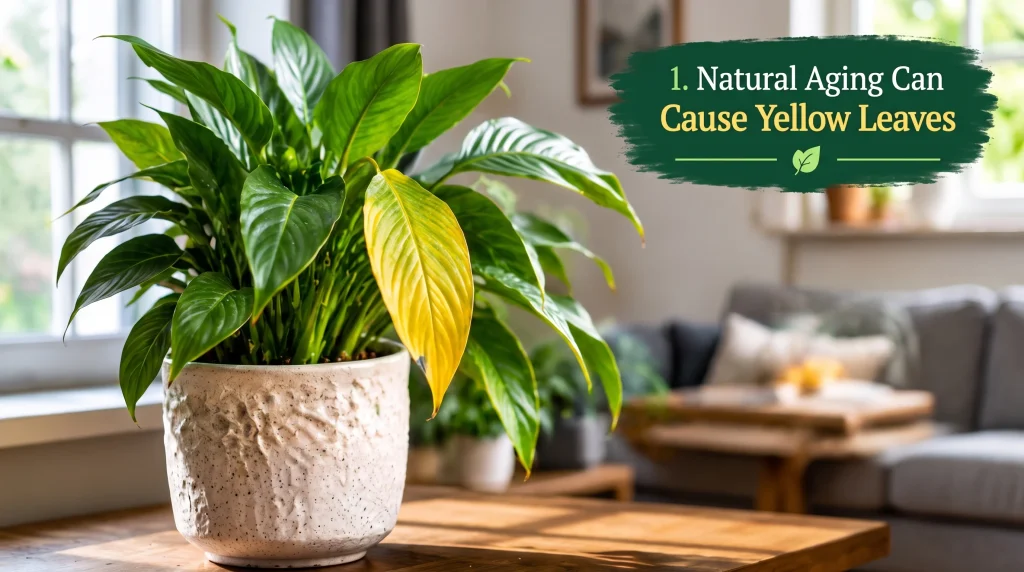
Plants naturally drop older leaves as they produce new growth. This is especially so when the remaining plant looks healthy and proceeds to produce new leaves.
Check for yellowing only on older, lower leaves, while new growth is healthy and stems are firm. If the plant looks normal otherwise, you may not need to change your care routine.
When the leaf is fully yellow or brown, cut it off with clean scissors or pruning shears.
But if a lot of leaves are turning yellow quickly, dig a little deeper rather than just assuming it’s normal aging.
2. Too Much Water is Often the Problem
Yellow foliage is often one of the first signs that you should check your watering regimen.
Lots of houseplant owners believe a wilting plant needs more water. However, constantly wet soil can damage roots and reduce the air available in the soil around them. Overwatering can ultimately lead to root problems, which can manifest as yellowing, wilting, leaf drop, and other symptoms.
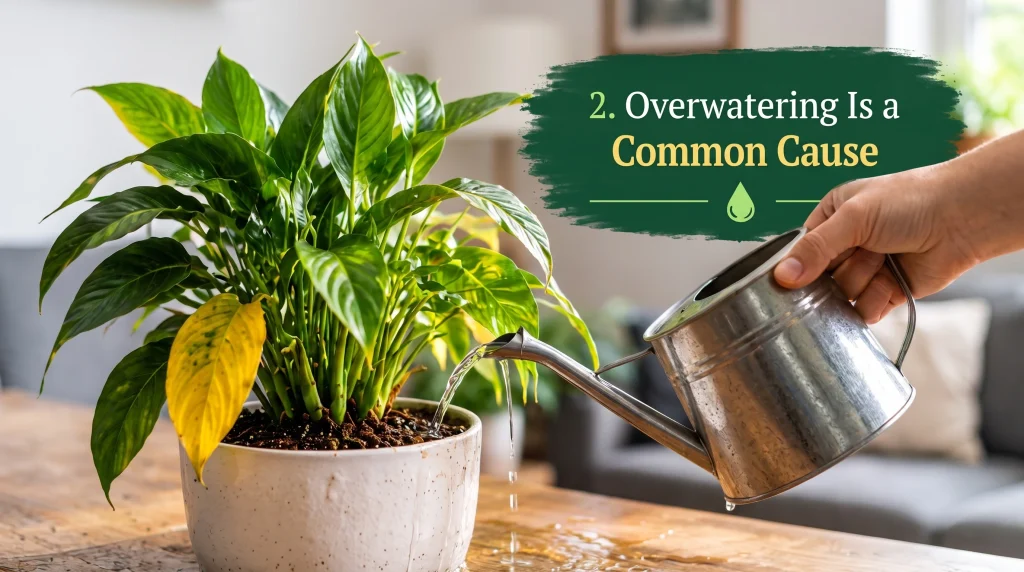
If you find that the soil remains wet for a long time, you have several yellow leaves, soft foliage or dark or mushy roots, overwatering may be the cause.
How to solve overwatering
Don’t just cut back on watering on a set schedule. First check the soil & drainage.
Be sure the container has drainage holes so excess water can drain freely and the plant is not sitting in water inside a saucer or decorative pot.
Different plants have different moisture requirements, so a watering schedule that works for a snake plant may not work for a fern or a tropical plant.
3. Your Plant Is Too Wet
Yellow leaves aren’t always a sign of overwatering. Yellowing can also be a sign of underwatering, particularly if the plant has become very dry.
A badly dehydrated plant may wilt, have brown crispy edges or lose older leaves.
If the potting mix is very dry and pulling away from the sides of the pot, the plant may need water.
Water well enough to moisten the root ball, but let excess water drain away. After that, adjust your routine so that the plant doesn’t swing constantly between being bone dry and too wet.
4. Bad Drainage Keeps Roots Too Wet
And sometimes the problem is not how much you water. It is the speed at which the soil drains.
An overlarge pot can contain a lot of wet compost around a comparatively small root system. This can hold the growing medium too wet too long and decrease aeration around the roots.
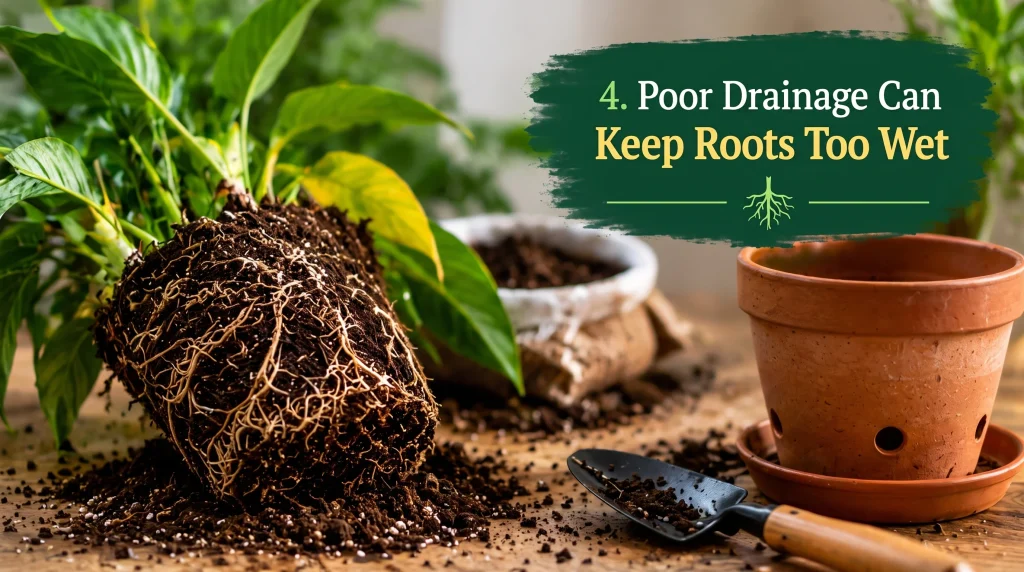
Make sure the container has drainage holes, the pot is only slightly larger than the root ball, the growing medium isn’t packed tightly, and water isn’t pooling in the bottom.
Also picking a suitable potting mix for the particular plant can help with drainage and root conditions.
5. Yellowing From Insufficient Light
Plants need light as energy for photosynthesis . If you take a light loving houseplant and put it into a very dark corner , it can eventually affect the growth and foliage .
Insufficient light can cause pale or yellowed leaves, weak or leggy growth, larger spaces between leaves, slow growth and lower leaf drop.
Slowly move the plant to a better spot that provides the right amount of light. Many houseplants do not need strong direct sunlight.
6. Too Much Direct Sun Can Also Cause Problems
More light isn’t necessarily better light.
For plants that prefer bright indirect light, too much direct sunlight (especially through a hot window) can cause damage. Leaves may be pale, yellow, scorched or have damaged patches.
If the yellowing is mainly on the side that is next to a bright window and there are dry or scorched patches, it could be too much light.
Try moving the plant a little further from the window, or filtering the strong sunlight with a sheer curtain.
7. Yellowing Can Be Caused by Nutrient Deficiencies
Eventually, nutrients in the potting mix of container plants become depleted. If a plant has been in the same pot for a long time, poor growth and pale or yellow leaves could indicate a nutritional problem.
For example, nitrogen deficiency can cause overall fading and yellowing, and some micronutrient deficiencies can cause yellow tissue between otherwise green leaf veins.
If the veins stay green and the tissue between the veins becomes yellow, then a nutrient related problem may be worth looking into.
But don’t start pouring on huge amounts of fertilizer. Too much fertilizer can harm the roots and cause other issues.
Check how long the plant has been in the current potting mix Has there been a slow down in growth? Is the light appropriate? Is watering correct?
8. Houseplants may be shocked by temperature changes
Houseplants can be sensitive to temperature shocks.
Leaf discoloration and damage can be caused by cold drafts from windows, doors, vents, very hot rooms or sudden temperature changes.
If the yellowing began after you moved the plant or changed its location, opened windows or increased or decreased the heating or air-conditioning, environmental stress is a possibility.
9. Check for Pests Before You Blame a Watering Problem
Small pests can damage leaves by sucking up plant tissue and sap. Common houseplant pests such as spider mites, mealybugs and scale insects can cause discoloration, speckling, weakening and leaf loss.
Examine the top and bottom surfaces of the leaves, stems and leaf joints.
Look for fine webbing, small moving insects, white cottony masses, brown scale-like bumps, sticky residue, or pale speckling.
If you find pests, move the affected plant away from your other houseplants until you can identify and treat the infestation.
How to Tell What’s Causing Yellow Leaves
Instead of changing everything about your plant care at once, attack the problem systematically.
See what leaves are yellow. Are only the oldest lower leaves showing the problem, or are new leaves turning color too?
Do a soil test. Is it wet, moist, or dry?
Check the roots if needed. If the plant is constantly soggy or wilting in wet soil, gently investigate the roots.
Look at the light. Think about the amount of natural light the plant will receive throughout the day.
Check temp. Look for drafts, cold windows, heat vents, and sudden changes in surroundings.
Check for pests. Carefully inspect leaves, stems and undersides of leaves.
Consider your nutrition. If the plant has been in the same potting mix for a long time and is not growing well, the problem might be nutrition.
This is a more reliable process than adding more water and fertilizer to every case of yellowing.
Should You Remove Yellow Leaves?
Remove any dying foliage that will not normally turn green again. Removing completely yellow leaves can improve the appearance of the plant.
But don’t be too quick to pull off every partially yellow leaf.
If there is still a lot of healthy green tissue on a leaf the plant may still be using it. Remove all completely yellow, brown, shriveled or damaged leaves but leave mostly green leaves when appropriate.
Use clean, sharp scissors or pruning shears and do not unnecessarily damage healthy stems.
How to avoid yellow leaves in the future
The best way to prevent recurrent problems is to create growing conditions that suit the particular plant.
- Water based on soil moisture, not on an automatic calendar.
- The containers must have drainage holes.
- Select an appropriate potting mix.
- Give the correct amount of light.
- Avoid placing plants in places with harsh drafts or extreme temperatures.
- Inspect plants often for pests.
- Feed as appropriate to the plant and season.
- When the plant really needs it, not just automatically into a much larger container.
Routine treatments are less important to the health of your houseplants than good growing conditions.
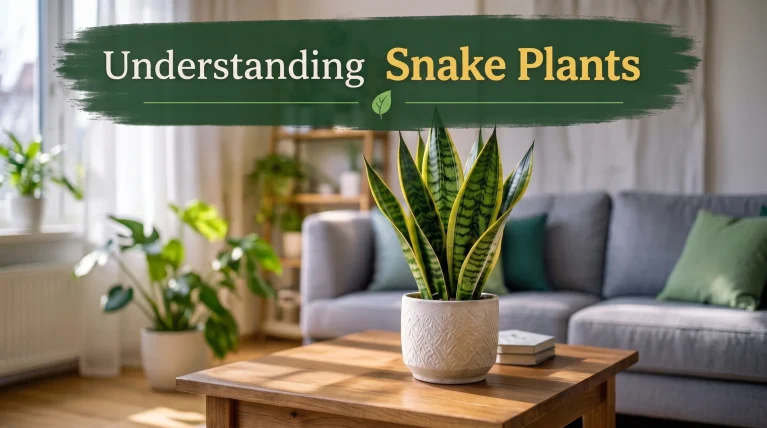
If you’re new to indoor gardening, learn how to care for a snake plant indoors with our easy care guide.
Frequently Asked Questions (FAQs)
Why are my houseplant leaves yellow and the soil is wet?
Yellowing or wet soil may be a sign of overwatering or poor drainage. If the plant continues to decline, check that the container drains freely and check the roots. Don’t just add water because the leaves are wilted.
Can yellow leaves turn back to green?
A yellow leaf doesn’t usually return to being green.” But the more important goal is to fix the underlying problem so that new growth happens normally.
Should I cut yellow leaves off my houseplant?
You can remove leaves that are all yellow, brown, shriveled or damaged. If a single leaf is still largely green, it may be best to leave it until the plant has made some healthy new growth.
Can too little sun cause yellow leaves?
Yes. Poor light can lead to dropping of lower leaves, pale or yellow leaves, and weak growth. Too much direct sunlight, however, can damage some houseplants, so the right amount of light depends on the species.
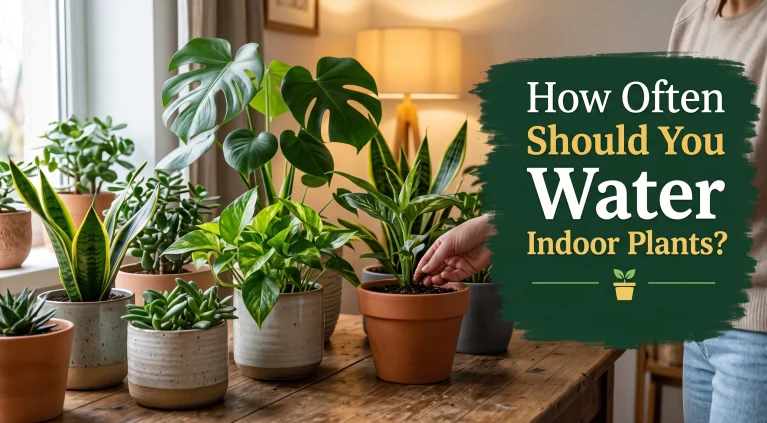
How often should I water my indoor plants?
There is no one watering schedule that fits all houseplants. Check the moisture of the growing medium. Think about the species of the plant, the size of the pot, the light, temperature, season and soil mix. Water when the plant’s particular needs tell you it wants moisture, rather than simply following a weekly schedule.
Are yellow leaves a sign that a plant is dying?
No. Sometimes a leaf turning yellow can be normal in the life of a plant. But if the yellowing is extensive or is developing quickly, it is worth investigating as it may be a sign of problems with water, roots, light, nutrients, temperature, pests or other growing conditions.
Abstract
One of the most useful warning signs you can get from a houseplant is yellowing leaves, but it doesn’t mean something is very wrong. Look for a pattern of yellowing, then check the soil, roots, light, temperature, nutrients and foliage for pests.
The most common mistake is to change too many things at once. Instead, try to determine the most likely cause, make one appropriate adjustment, and monitor the plant’s response over the next few weeks.
Many houseplants can recover and continue to produce healthy new growth with the proper combination of water, drainage, light, nutrition, temperature and regular inspection.