Weed Control: 9 Easy Natural Ways
Weed control is one of the most important parts of maintaining a healthy and beautiful garden. Weeds compete with flowers, vegetables, grass, and other plants for water, nutrients, sunlight, and space. Fortunately, effective weed control does not always require synthetic herbicides. You can manage weeds naturally with simple techniques that protect your garden and support healthy soil.
Natural weed control methods include hand-pulling, mulching, blocking sunlight, shallow cultivation, and improving growing conditions for desirable plants. The key is to remove weeds while they are young, before they produce seeds or develop deep, persistent roots.
If you want a healthier garden with fewer weeds, these nine natural weed control methods can help you maintain your garden throughout the growing season.
Why Do Weeds Keep Coming Back?
Weeds often return because they produce large numbers of seeds or grow again from roots and underground stems. Soil disturbance can also bring dormant weed seeds to the surface, where sunlight and moisture encourage germination.
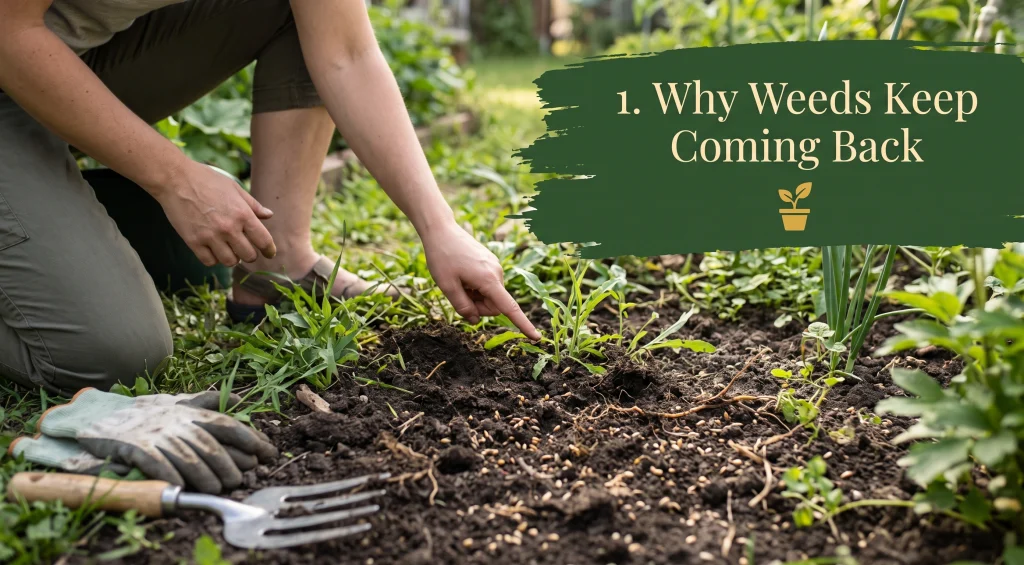
That is why effective weed control requires more than removing visible weeds. You also need to prevent new weeds from growing and spreading.
Regular inspection, timely removal, and proper soil coverage are essential parts of natural weed control. By following a consistent routine, you can reduce weed growth and make garden maintenance easier.
9 Natural Weed Control Methods
1. Pull Weeds by Hand
Hand-pulling is one of the simplest methods of weed control for small gardens, flower beds, containers, and vegetable patches.
The best time to pull weeds is when the soil is slightly moist. Moist soil makes it easier to loosen roots without excessive force. Hold the weed close to its base and pull steadily to remove as much of the root as possible.
Perennial weeds may regrow from roots left behind, so careful removal is important.
Best for: Small infestations, garden beds, containers, and weeds growing close to desirable plants.
Tip: Regular hand-weeding provides better results than waiting until weeds become large and firmly rooted.
2. Use Organic Mulch
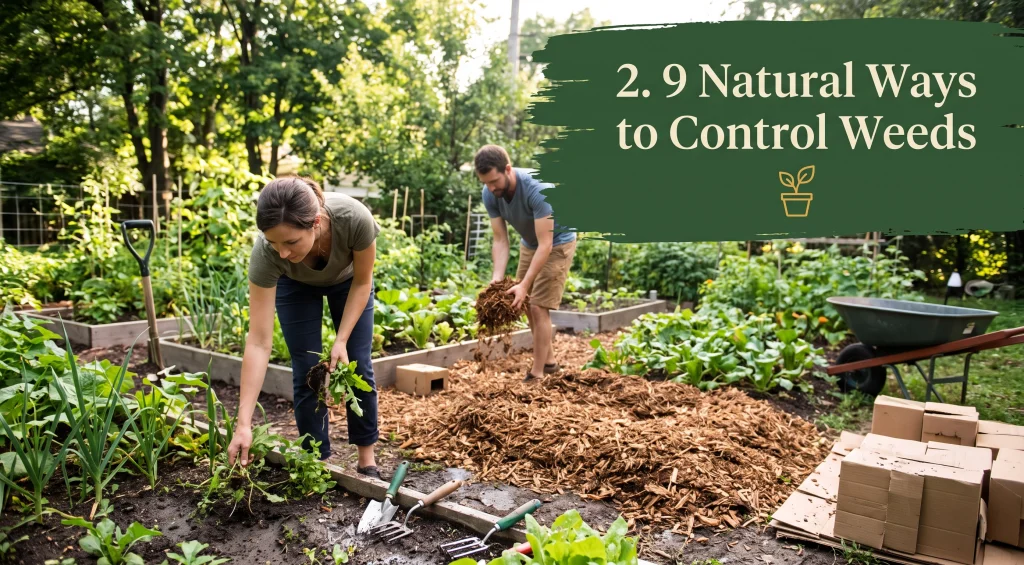
Mulching is one of the most effective natural weed control strategies for long-term garden maintenance. A suitable layer of mulch blocks sunlight, making it harder for many weed seeds to germinate and young seedlings to grow.
Common organic mulch materials include:
- Shredded leaves
- Straw
- Compost
- Grass clippings
- Wood chips
- Pine needles
Choose mulch according to your plants and local growing conditions. Keep it away from plant stems and tree trunks to reduce excessive moisture and the risk of rot.
Organic mulch also improves soil structure as it decomposes. For better weed control, maintain an appropriate mulch layer and replenish it when necessary.
3. Block Sunlight With Cardboard or Newspaper
If weeds cover a large area, covering the soil can be more practical than pulling every plant individually.
Plain cardboard or several layers of newspaper can block sunlight and suppress existing vegetation. Add a layer of mulch over the covering to hold it in place and improve the appearance of the garden bed.
This weed control method is particularly useful when preparing a new flower bed or converting a weedy area into a planting space.
Use plain, uncoated cardboard or non-glossy newspaper without plastic coatings. Water the material to help it settle, and ensure that planted areas can still receive the moisture they need.
4. Use Boiling Water Carefully
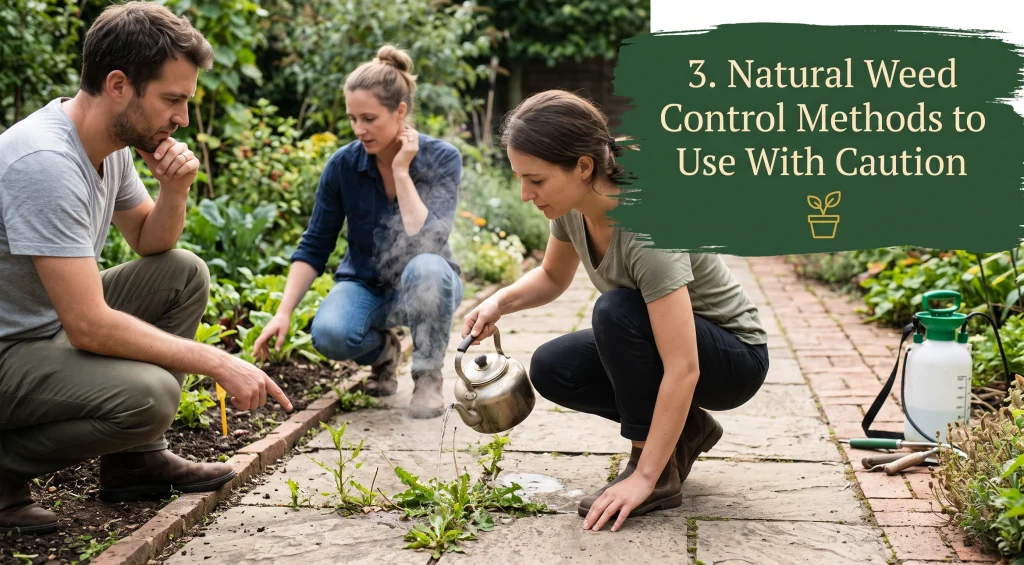
Boiling water can damage plant tissues and kill individual weeds growing in cracks in paths, driveways, and other hard surfaces.
Pouring hot water directly onto a weed may provide quick weed control without using a commercial herbicide. However, boiling water is not selective and can damage desirable plants, nearby vegetation, and soil organisms.
Avoid using this method in cultivated garden beds or close to plant roots. Hot water can also cause serious burns, so handle it carefully.
Best for: Isolated weeds growing through cracks in hard surfaces.
5. Be Careful With Vinegar
Household vinegar contains acetic acid, which can damage the leaves of plants it touches. Some people use vinegar for weed control, but it is not a selective treatment.
Vinegar may damage young weeds more easily than established perennial weeds. If the roots survive, the weeds can regrow. Spraying vinegar near flowers, vegetables, grass, or other desirable plants can also cause unwanted damage.
Repeated applications may affect the soil environment, particularly when stronger products are used. Avoid assuming that a kitchen product is automatically safe for garden use.
For most vegetable gardens and flower beds, hand-pulling and mulching are more controllable approaches to natural weed control.
6. Remove Small Weeds With a Hoe
Shallow hoeing is a practical way to remove young weeds from open areas and between rows of vegetables.
Move the hoe just beneath the soil surface to cut young weeds without disturbing the ground unnecessarily. Shallow cultivation can make weed control easier while reducing the chance of bringing buried weed seeds to the surface.
Dry weather can help cut weeds dry out and die, provided the method is suitable for the weed species and soil conditions.
Work carefully around desirable plants because their roots may grow close to the surface. Avoid deep digging unless it is necessary.
7. Improve Soil and Plant Growth
Healthy, vigorous plants compete more effectively with weeds for sunlight, water, nutrients, and space. Improving growing conditions is therefore an important part of long-term weed control.
Useful gardening practices include:
- Adding suitable organic matter to improve soil structure.
- Watering plants according to their needs.
- Choosing plants adapted to your local climate.
- Avoiding unnecessary soil disturbance.
- Spacing plants appropriately so they can grow and cover the soil.
Healthy soil does not eliminate weeds, but it helps your chosen plants establish and grow successfully.
The goal of natural weed control is not necessarily to remove every weed permanently. It is to give desirable plants the best opportunity to thrive.
8. Plant Suitable Ground Covers
Ground cover plants can help reduce bare soil and limit the space available for weed seedlings to establish.
Choose ground covers based on your climate, soil type, sunlight, and garden design. Once established, suitable ground covers can provide a living layer that competes with many weeds.
Select non-invasive species that are appropriate for your region. Some spreading plants can become difficult to manage if they grow beyond their intended area.
Ground covers work best as part of a wider weed control plan that includes mulching, regular inspections, and removing unwanted plants before they spread.
9. Prevent Weeds From Producing Seeds
Preventing weeds from setting seed is one of the most valuable long-term weed control practices.
Many common weeds produce large quantities of seeds that can remain in the soil and germinate later. Removing weeds before their flowers mature can reduce the number of new seeds entering the garden.
If you cannot remove a weed immediately, cutting off its flowers or seed heads before they mature may help reduce seed production. However, this does not necessarily kill the plant, particularly if it is a perennial weed that regrows from its roots.
Inspect your garden regularly and remove weeds before they spread. A few minutes of weekly attention can prevent a small problem from becoming a major infestation.
Natural Weed Control Methods to Use With Caution
Natural does not automatically mean harmless. Some homemade weed control remedies can damage desirable plants, affect soil conditions, or harm nearby vegetation.
Salt is sometimes recommended as a homemade weed killer, but it can accumulate in the soil and make it difficult for other plants to grow. For this reason, avoid applying salt to garden beds or areas where you want healthy vegetation.
Strong vinegar products can also damage plant foliage and may create additional risks when used incorrectly.
Before trying any homemade weed control remedy, ask yourself three questions:
- Could the treatment damage plants I want to keep?
- Could it affect the soil or nearby vegetation?
- Is it appropriate for the location where I intend to use it?
Physical removal, mulching, and prevention are usually easier to control in home gardens because you can target the unwanted plants without applying potentially damaging substances across a wider area.
Common Weed Control Mistakes to Avoid
Waiting Until Weeds Become Large
Young weeds are usually easier to remove than mature plants with deep roots. Inspect your garden regularly and remove weeds before they become established.
Disturbing the Soil Too Much
Repeated deep digging can expose buried weed seeds and encourage new growth. Use shallow cultivation when appropriate and disturb only the soil you need to work.
Leaving Bare Soil Exposed
Bare soil provides opportunities for weed seeds to germinate. Mulching, suitable ground covers, and appropriate plant spacing can reduce exposed areas and improve weed control.
Applying Homemade Sprays Everywhere
Homemade sprays can damage desirable plants as easily as weeds. Never assume that a product is safe for every garden situation simply because it is commonly found at home.
Removing Weeds Without Preventing Regrowth
Removing visible weeds solves the immediate problem, but it does not necessarily prevent new weeds from appearing. Effective weed control combines removal with preventive measures such as mulching and stopping seed production.
An Easy Natural Weed Control Routine
You do not need to spend every weekend working in your garden. A simple, consistent routine can make weed control more manageable.
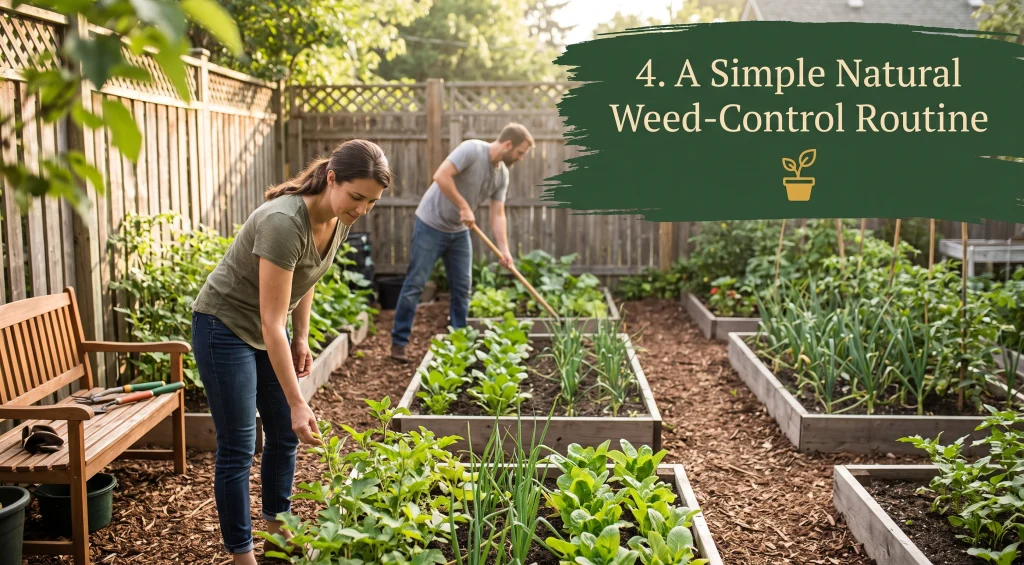
Step 1: Walk around your garden regularly and identify new weeds.
Step 2: Remove young weeds before they become firmly rooted.
Step 3: Apply suitable mulch around established plants and cover exposed soil.
Step 4: Use shallow hoeing to remove weeds in open areas when conditions are suitable.
Step 5: Remove or cut back weeds before they produce mature seeds.
Step 6: Watch for perennial weeds returning from roots and underground stems.
Step 7: Improve planting density and mulching practices in areas where weeds repeatedly appear.
By combining observation, removal, and prevention, you can gradually reduce weed growth and make garden maintenance easier.
Frequently Asked Questions About Weed Control
How Can I Get Rid of Weeds Naturally?
The most practical natural weed control methods for many home gardens are hand-pulling, organic mulching, shallow hoeing, and preventing weeds from producing seeds. Combining these methods is usually more effective than relying on a single homemade remedy.
Will Vinegar Permanently Kill Weeds?
Not always. Vinegar can damage the leaves of young weeds, but established perennial weeds may regrow if their roots survive. It can also damage desirable plants that come into contact with it.
Does Boiling Water Kill Weeds?
Yes, boiling water can damage and kill plant tissues. It may be useful for isolated weeds in hard-surface cracks, but it can also harm nearby plants and soil organisms. Use it carefully to avoid burns.
How Thick Should Mulch Be for Weed Control?
For many garden beds, a mulch layer around 2–4 inches deep can help suppress weeds, depending on the material and growing conditions. Use thinner layers of fine-textured materials where appropriate, and keep mulch away from plant stems and tree trunks.
Is It Better to Spray or Pull Weeds?
Hand-pulling provides precise weed control and avoids exposing nearby plants to a spray. It is especially useful in small gardens and around flowers or vegetables. Persistent perennial weeds may require repeated removal.
How Can I Stop Weeds From Coming Back?
You cannot always prevent every weed from returning, but you can reduce future growth by using mulch, avoiding unnecessary soil disturbance, removing weeds before they produce seeds, maintaining healthy plants, and inspecting your garden regularly.
What Is the Best Natural Weed Control Method for a Vegetable Garden?
Hand-pulling, shallow hoeing, and suitable organic mulch are practical options for many vegetable gardens. Work carefully around crop roots, and avoid homemade sprays that could damage vegetables or affect the growing soil.
Conclusion
Successful natural weed control is not about finding one perfect homemade weed killer. It is about developing consistent gardening habits that prevent weeds from spreading and make them easier to manage.
Remove weeds while they are young, cover bare soil with appropriate mulch, avoid unnecessary deep cultivation, and prevent established weeds from producing seeds. Targeted methods such as boiling water may help with isolated weeds in hard-surface cracks, but homemade sprays should be used with caution.
By following these nine natural weed control methods, you can maintain a healthier garden, reduce unwanted weed growth, and spend less time dealing with recurring infestations. Regular attention and prevention will help you keep weeds under control throughout the growing season.