7 Best Garden Soil Improvement Tips
Beautiful landscaping ideas can transform your outdoor space without turning yard work into a second job. With the right planning, you can create an attractive garden that requires less mowing, watering, weeding, pruning, and seasonal maintenance.
The best landscaping ideas focus on choosing plants and materials that suit your local climate, soil, sunlight, and lifestyle. By using native plants, mulch, efficient irrigation, ground covers, and practical hardscaping, you can create a beautiful yard that is easier to maintain throughout the year.
Whether you have a small front garden, a large backyard, or a difficult area where grass refuses to grow, these low-maintenance landscaping ideas can help you improve your outdoor space.
What Are Low-Maintenance Landscaping Ideas?
Low-maintenance landscaping ideas are designed to reduce unnecessary gardening work while keeping your yard attractive and functional. The goal is not to eliminate maintenance completely but to create a landscape that requires less time, effort, and water.
Before choosing landscaping ideas, consider the following factors:
- Local climate and rainfall
- Soil type and drainage
- Sunlight and shade conditions
- The amount of lawn you actually need
- Space for children, pets, and outdoor activities
- Available time for gardening
- Water availability and irrigation needs
Choosing plants that naturally thrive in your region can reduce the need for frequent watering, fertilizing, and pruning. A well-planned landscape also makes routine maintenance easier.
10 Best Landscaping Ideas for a Low-Maintenance Yard
1. Replace Unnecessary Lawn With Planting Beds
One of the most practical landscaping ideas is to reduce lawn areas that serve little purpose. Large lawns can be useful for recreation, pets, and entertaining, but unused areas often require unnecessary mowing and watering.
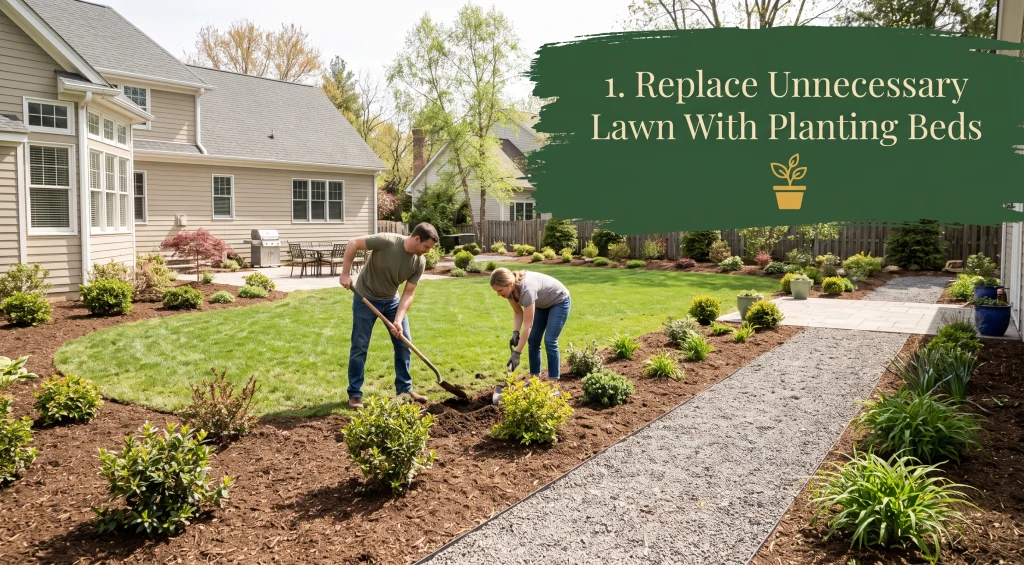
Consider replacing sections of grass with:
- Mulched planting beds
- Native shrubs and ornamental grasses
- Perennial flowers
- Ground cover plants
- Gravel pathways
- Patio seating areas
- Shade gardens and trees
You do not need to remove your entire lawn. Keep grass where you use it and replace difficult or unused sections with suitable landscaping features.
These landscaping ideas can reduce routine lawn care while making your yard more functional and visually appealing.
2. Choose Native and Climate-Adapted Plants
Selecting the right plants is one of the most effective landscaping ideas for reducing maintenance. Native plants are adapted to local environmental conditions, while other climate-appropriate species can also thrive with limited intervention.
Before buying plants, check their requirements for sunlight, moisture, soil, and mature size. Avoid selecting plants based only on their appearance at the nursery.
Homeowners in the United States can consult Cooperative Extension offices and regional plant databases. Garden centers, botanical gardens, and local horticultural organizations can provide similar guidance in other countries.
These landscaping ideas work best when plants are matched to the conditions of your property rather than chosen from a generic list of easy-care plants.
3. Use Mulch to Reduce Weeds and Watering
Mulching is one of the simplest landscaping ideas for keeping garden beds manageable. Organic mulch helps reduce moisture loss, suppress weeds, moderate soil temperatures, and protect soil from erosion.
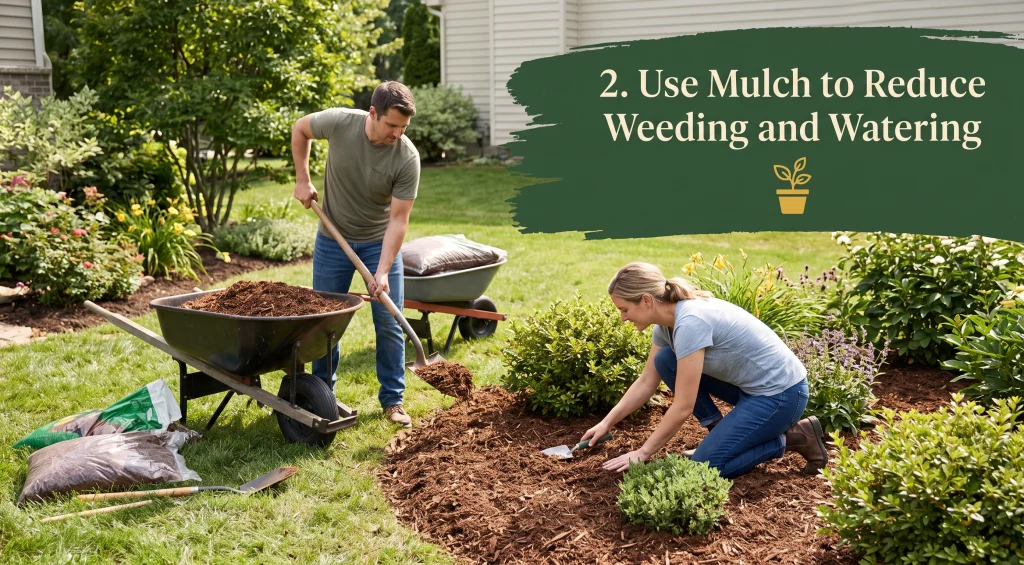
Useful mulch materials include:
- Wood chips
- Shredded bark
- Shredded leaves
- Compost used where appropriate
A layer of approximately two to three inches is often suitable for many planting beds, depending on the material and plant requirements. Keep mulch away from tree trunks and woody stems to avoid moisture-related damage.
Although mulch eventually needs replenishing, it can save time by reducing the need for frequent weeding and watering.
For the best results, combine these landscaping ideas with healthy plants and adequate spacing.
4. Add Evergreen Shrubs for Year-Round Structure
Evergreen shrubs provide year-round greenery and help create a structured, attractive garden. They can be used for property boundaries, foundation plantings, privacy screens, and pathway edges.
Choose shrubs according to their mature height and width. Plants that grow too large for their location may require frequent pruning or expensive removal.
These landscaping ideas are especially useful for homeowners who want a garden that looks organized throughout the year without repeatedly replacing seasonal flowers.
Select varieties that suit your climate, soil, and available sunlight. The right plant in the right place will usually require less maintenance over time.
5. Create a Gravel or Stone Garden
Gravel and decorative stone are practical landscaping ideas for areas where maintaining grass is difficult. They work well around drought-tolerant plants, garden paths, seating areas, and other spaces that do not need turf.
A gravel garden can reduce mowing and create a clean, modern appearance. However, stone does not eliminate all maintenance. Leaves can accumulate, weeds may emerge, and gravel may occasionally need raking or replenishing.
In hot, sunny locations, stone can absorb and radiate heat. Use suitable plants that can tolerate the resulting conditions.
For better results, prepare the site properly and choose gravel sizes and colors that complement your home’s exterior.
6. Plant Low-Growing Ground Covers
Ground cover plants fill empty spaces between larger plants and help reduce exposed soil. Once established, suitable ground covers can create a dense carpet that limits opportunities for weeds to grow.
Choose varieties according to your local climate, soil conditions, sunlight, and moisture levels. Some ground covers thrive in shade, while others prefer sunny, dry locations.
Avoid aggressive or invasive species that can spread beyond their intended area and become difficult to control.
These landscaping ideas can work particularly well on slopes, beneath suitable trees, and along garden borders where mowing is inconvenient.
7. Plant Trees for Shade and Comfort
Strategically placed trees can improve the appearance and comfort of your outdoor space. Trees provide shade, create visual structure, and may help reduce heat around patios and buildings.
Before planting, consider mature height, canopy spread, root characteristics, overhead utilities, and proximity to foundations and paved areas.
Select tree species that naturally suit your region and available space. Avoid planting large trees where they will eventually interfere with buildings or require repeated heavy pruning.
Among the most valuable landscaping ideas, well-positioned trees can provide long-term benefits with relatively little routine care once established.
8. Simplify Watering With Efficient Irrigation
Efficient watering is essential for a manageable garden. One of the best landscaping ideas is to group plants according to their water requirements, a method commonly called hydrozoning.
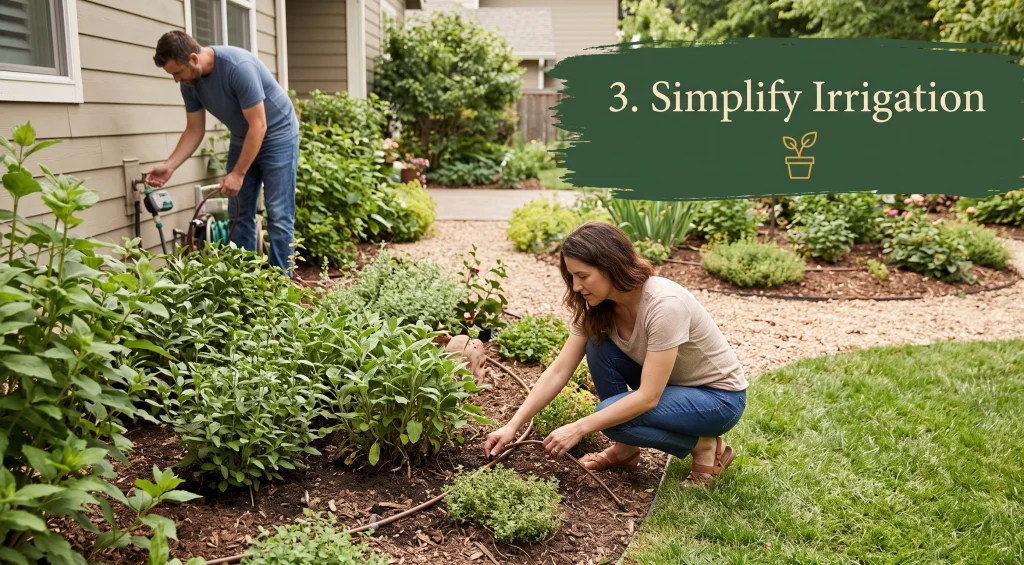
For example, drought-tolerant plants can be grouped together, while plants that need consistently moist soil can occupy a separate area.
Consider these practical improvements:
- Install drip irrigation in suitable planting beds.
- Water near the root zone where practical.
- Check for leaks and blocked emitters.
- Adjust watering according to rainfall and seasonal conditions.
- Avoid watering plants that do not need additional moisture.
An efficient irrigation system can reduce wasted water and save time, especially in larger gardens.
These landscaping ideas are most effective when the irrigation setup matches the plants’ actual needs.
9. Build a Rain Garden for Better Drainage
A rain garden is a shallow, planted depression designed to temporarily collect runoff from roofs, driveways, and other hard surfaces.
It can be an attractive way to manage stormwater while supporting plants suited to changing moisture conditions.
Before creating a rain garden, evaluate soil infiltration, slope, drainage patterns, underground utilities, and local regulations. Avoid placing it where collected water could threaten building foundations.
Choose native or locally appropriate plants that can tolerate the wet and dry conditions expected at the site.
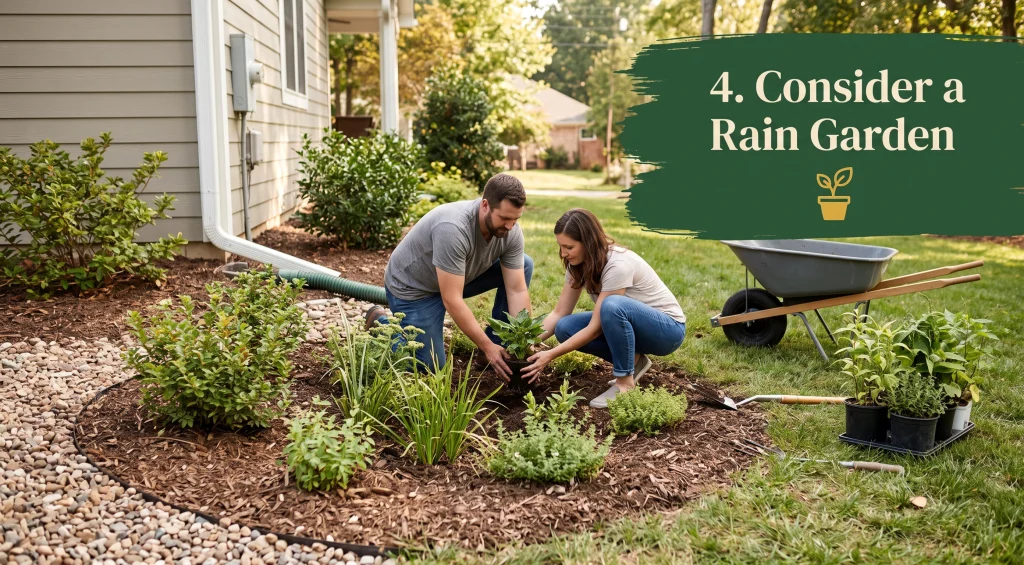
These landscaping ideas can combine visual appeal with practical water management when the garden is designed for the property’s conditions.
10. Design Simple Paths and Accessible Garden Beds
Some landscaping ideas reduce maintenance simply by making the garden easier to access. Clear paths and well-organized planting beds allow you to reach plants without stepping on soil or damaging surrounding vegetation.
Consider adding:
- Straightforward garden pathways
- Practical edging around planting beds
- Accessible watering points
- Open spaces for routine pruning
- Simple lawn shapes that are easy to mow
- Clearly defined planting zones
Avoid awkward corners, narrow gaps, and crowded beds that make maintenance difficult.
A simple layout with enough room for plants to mature can save considerable time and reduce the need for repeated trimming.
Low-Maintenance Landscaping Ideas for Different Climates
The best landscaping ideas depend on the local climate, soil, and growing conditions. A plant that thrives in one region may struggle in another.
Hot and dry climates: Choose drought-tolerant regional plants, use suitable mulch, create shade, and install efficient irrigation.
Cold climates: Select winter-hardy plants that can tolerate local temperatures without frequent seasonal protection.
Wet climates: Improve drainage where necessary and choose plants adapted to moist soil. Rain gardens may be appropriate for suitable sites.
Mild climates: Take advantage of locally adapted plants that thrive with natural rainfall and require limited supplemental watering.
Regardless of your location, choose plants based on their actual growing requirements rather than relying on a generic low-maintenance plant list.
Common Landscaping Mistakes to Avoid
Even attractive landscaping ideas can become difficult to maintain if the design does not suit the property.
Avoid these common mistakes:
- Choosing too many plant varieties: Different species may have different pruning, feeding, and watering needs.
- Ignoring local conditions: Plants that are unsuitable for your climate or soil may struggle.
- Keeping unnecessary lawn areas: Unused turf still needs mowing, watering, and occasional repairs.
- Ignoring mature plant size: Oversized plants may eventually block paths or require repeated pruning.
- Applying too much mulch: Excessive mulch can interfere with moisture and air movement around roots.
- Overwatering: Water according to plant requirements, soil conditions, and rainfall.
- Planting invasive species: Aggressive plants can spread and become difficult to manage.
- Overlooking drainage: Poor drainage can cause persistent plant health problems.
Following these landscaping ideas can help prevent avoidable maintenance problems and keep your yard looking attractive for longer.
How to Create a Low-Maintenance Landscape Step by Step
You do not need to redesign your entire property at once. Start with the areas that create the most work and gradually make improvements.
Step 1: Identify Problem Areas
Walk around your yard and identify places where grass struggles, weeds spread quickly, water collects, or mowing takes too much time.
These areas are often the best places to begin implementing practical landscaping ideas.
Step 2: Decide How You Will Use the Yard
Determine which areas need to accommodate children, pets, outdoor dining, relaxation, or gardening.
Keep functional lawn areas where they are useful and consider alternatives for spaces that are rarely used.
Step 3: Assess Sunlight, Soil, and Drainage
Observe which areas receive full sun, partial shade, or deep shade. Check soil conditions, drainage patterns, and the health of existing plants.
Retaining healthy mature trees and shrubs can often save money and reduce unnecessary work.
Step 4: Choose a Simple Plant Palette
Select a small group of plants that thrive in your region. Combine plants with similar sunlight and water requirements to make care easier.
A consistent plant palette can make your landscape look coordinated without requiring a large collection of different species.
Step 5: Cover Exposed Soil
Use appropriate mulch, ground covers, or dense planting to reduce bare soil and discourage weeds.
Choose materials that suit the plants and the conditions of each garden bed.
Step 6: Add Practical Infrastructure
Install pathways, edging, irrigation, or drainage improvements where they offer genuine long-term benefits.
These landscaping ideas should solve existing problems rather than add unnecessary features that require extra upkeep.
Step 7: Follow a Simple Maintenance Routine
Even a low-maintenance garden needs occasional attention. Remove weeds before they spread, replenish mulch when needed, prune plants appropriately, and adjust watering as the weather changes.
Regular, light maintenance can prevent small problems from becoming larger and more time-consuming.
Frequently Asked Questions
What Are the Best Low-Maintenance Landscaping Ideas?
The best landscaping ideas include reducing unnecessary lawn, planting native or climate-adapted species, using mulch, adding suitable ground covers, and simplifying irrigation. The right combination depends on your property and local growing conditions.
How Can I Landscape My Yard With Less Work?
Start by identifying unused lawn areas and replacing them with suitable planting beds, ground covers, or practical hardscaping. Group plants according to their needs and choose varieties that naturally thrive in your region.
What Plants Are Easiest to Maintain?
Native plants and other regionally appropriate species are often good starting points. The easiest plants for your yard depend on sunlight, soil, rainfall, temperature, and available space.
Is Gravel Landscaping Easier to Maintain Than Grass?
Gravel can reduce mowing, but it is not maintenance-free. Leaves, weeds, and displaced stones may require occasional attention. Gravel works best when the site is prepared properly and suitable plants are incorporated.
How Can I Reduce Watering and Mowing?
Keep only the lawn you actually need, choose climate-appropriate plants, mulch garden beds, and group plants according to their water requirements. Efficient irrigation can further reduce unnecessary watering.
Does Low-Maintenance Landscaping Mean Having No Plants?
No. A low-maintenance yard can include trees, shrubs, flowers, ground covers, and a smaller lawn. The aim is to select suitable plants and organize the space to reduce unnecessary work.
Final Thoughts
The best landscaping ideas are not necessarily the ones with the fewest plants or the most stone. They are the designs that match your property, climate, lifestyle, and preferred level of maintenance.
Start by reducing unnecessary lawn, choosing suitable plants, covering exposed soil, grouping plants according to their needs, and making watering more efficient. Add accessible paths and select plants according to their mature size to avoid future maintenance problems.
With thoughtful planning, these landscaping ideas can help transform a difficult yard into a beautiful, practical outdoor space that remains easier to care for over the years.