7 Best Garden Soil Improvement Tips
Healthy garden soil is the foundation of a beautiful and productive garden. Whether you grow vegetables, flowers, herbs, or shrubs, healthy garden soil helps plant roots access water, air, and essential nutrients. Fortunately, you can improve garden soil naturally without relying on synthetic fertilizers or expensive products.
The best way to improve garden soil depends on its existing condition. Clay soil may need better structure and drainage, while sandy soil often needs more organic matter to retain moisture and nutrients. Understanding your garden soil before adding amendments helps you achieve better results.
1. Know Your Garden Soil First
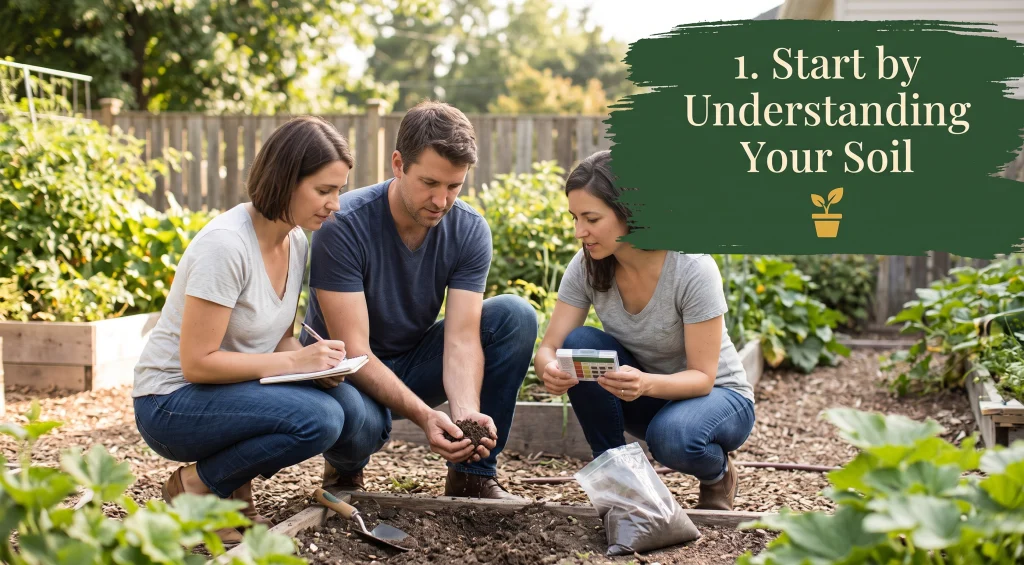
Before improving garden soil, learn about its texture, drainage, pH, and nutrient levels. Different areas of your garden may have different soil conditions, so examine the places where you plan to grow plants.
Test Garden Soil Texture and Drainage
Take a small handful of slightly moist garden soil and squeeze it gently. Sandy soil feels gritty and falls apart easily. Clay soil feels smooth and sticky when wet and may form a firm ball. Loamy soil usually holds together loosely but breaks apart with gentle pressure.
Drainage is another important factor in garden soil health. If water remains on the surface after rain, the soil may be compacted or poorly drained. If water drains too quickly, your soil may contain a high proportion of sand or insufficient organic matter.
Check Garden Soil pH and Nutrients
A soil test can reveal the pH and nutrient levels of your garden soil. This information helps you decide whether your plants need specific amendments.
Avoid adding lime, sulfur, or large amounts of fertilizer without a clear reason. Testing your garden soil first helps prevent unnecessary applications and supports healthier plant growth.
2. Improve Garden Soil with Finished Compost
Finished compost is one of the best natural amendments for garden soil. It adds organic matter, supports beneficial soil organisms, and improves the structure of different soil types.
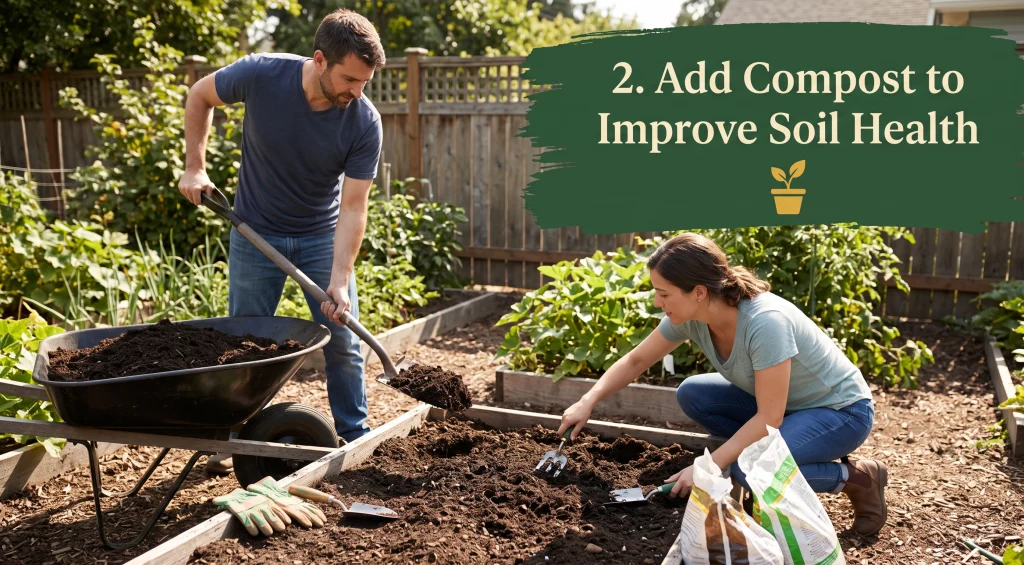
In clay soil, compost can gradually improve aggregation and help air and water move through the soil. In sandy soil, organic matter helps retain moisture and nutrients that might otherwise drain away.
Spread a moderate layer of mature compost over your garden bed. You can gently incorporate it into the upper soil layer or leave it on the surface if you follow a no-dig gardening method.
Good compost is dark, crumbly, and earthy-smelling. Avoid placing unfinished compost directly around sensitive plants because it may interfere with nutrient availability.
3. Add Organic Matter to Garden Soil
Regularly adding organic matter is an effective way to improve garden soil over time. Organic materials gradually decompose, helping maintain soil structure and biological activity.
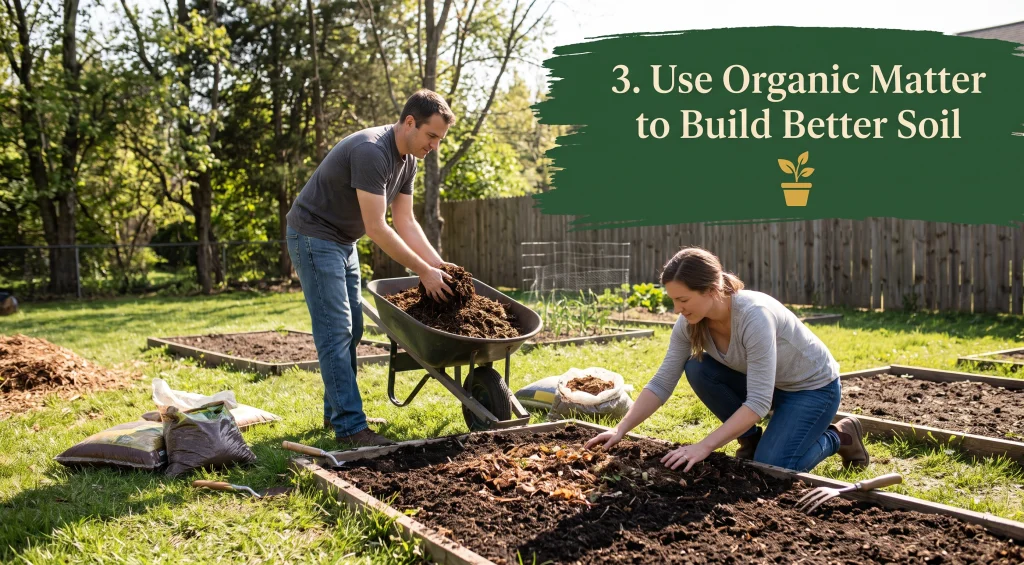
Useful organic materials include:
- Mature compost
- Well-aged or properly composted manure
- Decomposed leaves
- Leaf mold
- Chopped plant residues
- Suitable organic mulch
Leaf mold is particularly useful because it helps garden soil retain moisture and improves its structure. You can make leaf mold by collecting fallen leaves and allowing them to decompose over time.
When using manure, choose aged or properly composted material rather than fresh manure. Fresh manure may damage plants, introduce weed seeds, or carry harmful pathogens depending on its source and handling.
Consistent additions of suitable organic matter help build healthier garden soil over several growing seasons.
4. Protect Garden Soil with Organic Mulch
Improving garden soil is only part of the process. Protecting the soil surface helps preserve moisture, reduce erosion, and support long-term soil health.
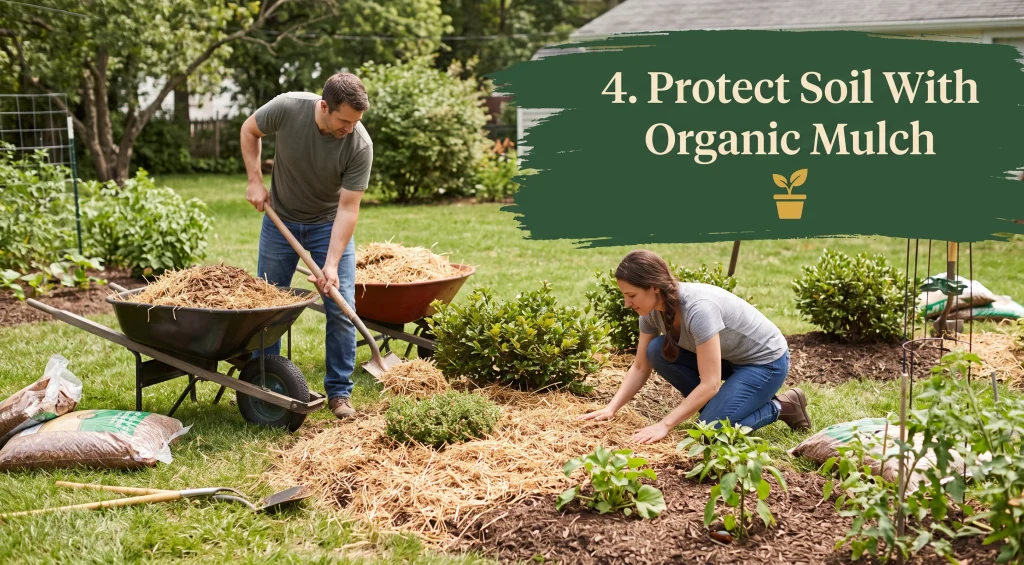
Suitable organic mulches include shredded leaves, straw, untreated grass clippings, and wood chips.
Organic mulch can help garden soil by:
- Reducing water evaporation
- Moderating soil temperature
- Limiting weed growth
- Protecting against heavy rain and erosion
- Gradually adding organic matter as it decomposes
Keep mulch a few inches away from plant stems and tree trunks to prevent excessive moisture around the base of plants.
Shredded leaves and straw work well in many vegetable gardens, while wood chips are useful around established trees and shrubs. Choose mulch according to your plants and local conditions.
5. Grow Cover Crops to Improve Garden Soil
If a garden bed is empty between growing seasons, consider planting a cover crop rather than leaving the soil bare.
Cover crops protect garden soil from erosion, improve organic matter, and support beneficial organisms. Legumes, such as clover and vetch, can contribute nitrogen through their association with nitrogen-fixing bacteria.
Common cover crops include:
- Clover
- Oats
- Rye
- Vetch
- Buckwheat
Choose a cover crop suited to your climate, growing season, and planting schedule. Cut or terminate the plants at the appropriate stage before they become difficult to manage or produce unwanted seeds.
Cover crops are a practical way to protect garden soil while improving its condition between harvests.
6. Avoid Excessive Digging and Soil Compaction
Frequent deep digging can damage garden soil structure and disturb organisms living in different soil layers. It can also expose organic matter to faster decomposition.
Instead, consider reduced-tillage or no-dig gardening. Add mature compost to the surface and disturb the soil only when necessary.
Some loosening may be useful when establishing a new bed or addressing compaction, but repeatedly turning the soil is rarely necessary for routine maintenance.
Avoid walking on planting beds whenever possible. Create permanent paths to reduce pressure on garden soil and help preserve the spaces that roots need for air and water.
7. Fix Common Garden Soil Problems Naturally
Different soil problems require different approaches. Identifying the cause helps you improve garden soil without wasting time or materials.
How to Improve Heavy Clay Garden Soil
Clay soil holds nutrients and water well, but it can become sticky when wet and hard when dry.
Add finished compost and other well-decomposed organic matter gradually to improve soil structure. Avoid digging, cultivating, or walking on clay soil when it is saturated because these activities can increase compaction.
Do not assume that adding sand will fix clay soil. Small amounts of sand mixed with clay may create a dense mixture rather than a loose, well-structured growing medium.
How to Improve Sandy Garden Soil
Sandy soil drains quickly and may struggle to retain moisture and nutrients.
Regular additions of finished compost can help sandy garden soil hold water and nutrients more effectively. Organic mulch also reduces evaporation from the soil surface.
Plants growing in sandy soil may require more frequent watering during hot or dry weather. Check moisture levels regularly instead of following a rigid watering schedule.
How to Fix Compacted Garden Soil
Compacted soil has fewer spaces for air and water to move through. This can restrict root growth and reduce plant performance.
Heavy foot traffic, machinery, working wet soil, and repeated cultivation can all contribute to compaction.
For small garden beds, carefully loosen the affected area when the soil is slightly moist rather than wet. Add suitable organic matter where appropriate, and prevent future compaction by keeping traffic off planting areas.
How to Improve Garden Soil with Low Organic Matter
Soil that drains too quickly, has poor structure, or contains little decomposed organic material may benefit from regular compost applications.
Add organic matter gradually rather than applying excessive quantities at once. Over time, consistent soil care can improve moisture retention, structure, and the environment for beneficial soil organisms.
8. Avoid Common Garden Soil Improvement Mistakes
Natural soil amendments are useful, but incorrect applications can create new problems.
Applying too much compost: Excessive compost, particularly material high in salts or certain nutrients, may cause nutrient imbalances. Apply moderate amounts according to your soil’s needs.
Using fresh manure: Fresh manure is generally unsuitable for direct application around many growing plants. Use properly aged or composted manure instead.
Working wet soil: Digging or cultivating saturated soil can damage its structure and increase compaction.
Adding amendments without testing: Lime, sulfur, and fertilizers should be used when observation or soil testing indicates a genuine need.
Leaving soil exposed: Bare garden soil is more vulnerable to erosion, moisture loss, temperature fluctuations, and weeds. Use suitable mulch or living plants to protect the surface.
Expecting instant results: Improving garden soil is a gradual process. Regular organic matter additions and sensible gardening practices usually provide more sustainable benefits than quick fixes.
9. Follow a Simple Garden Soil Improvement Plan
A consistent seasonal routine makes garden soil maintenance easier and more effective.
Spring: Test the soil if needed, add mature compost, and prepare planting areas with minimal disturbance.
During the growing season: Cover exposed soil with mulch or plants, avoid unnecessary foot traffic, and water according to plant needs and weather conditions.
After harvesting: Remove diseased plant material, retain healthy residues where appropriate, and consider planting cover crops in unused beds.
Autumn: Apply suitable organic mulch or mature compost and allow organic materials to decompose naturally.
Following these steps over several growing seasons can improve garden soil structure and help your garden become more productive and resilient.
Frequently Asked Questions About Garden Soil
How can I improve garden soil quickly?
Adding finished compost and applying organic mulch are practical starting points. Mulch can help conserve moisture relatively quickly, while lasting improvements to soil structure usually require consistent care.
What is the best natural amendment for garden soil?
Finished compost is a versatile option because it adds organic matter and can improve soil structure. However, the best amendment depends on whether your soil is sandy, clay-heavy, compacted, or deficient in particular nutrients.
How often should I add compost to garden soil?
The appropriate frequency and amount depend on the existing soil condition, compost quality, and the plants you grow. Moderate, periodic applications are often useful, while soil tests can help guide nutrient management.
Can I improve clay garden soil naturally?
Yes. Regular applications of finished compost and other suitable organic matter can gradually improve clay soil structure. Avoid working saturated soil and reduce foot traffic to prevent further compaction.
Are coffee grounds good for garden soil?
Used coffee grounds contain organic material, but they are not a complete fertilizer or a reliable quick fix for changing soil pH. Composting them with other organic materials is generally a sensible approach.
How long does garden soil take to improve?
The timeline depends on the starting condition and the changes you make. Mulch can help reduce moisture loss relatively quickly, while improvements in soil structure and organic matter often take several growing seasons.
Conclusion: Build Healthier Garden Soil Naturally
Improving garden soil does not require a miracle product or complicated gardening routine. Start by understanding your soil, add finished compost and other suitable organic materials, protect the surface with mulch, reduce unnecessary digging, and address specific problems according to your soil’s needs.
Healthy soil is the foundation of a beautiful and productive garden. Whether you grow vegetables, flowers, herbs, or shrubs, healthy soil helps plants absorb water, air, and essential nutrients. You can improve your garden naturally with simple gardening practices and organic materials.
1. Test Your Garden Soil
Before making improvements, check your soil’s texture, drainage, pH, and nutrient levels. Sandy soil drains quickly, while clay soil holds more water and can become compacted. A soil test helps identify nutrient deficiencies and determine which amendments are necessary.
2. Add Compost and Organic Matter
Finished compost is one of the best natural ways to improve soil. It improves structure, supports beneficial organisms, and helps retain moisture and nutrients.
You can also use leaf mold, chopped leaves, and well-aged manure. Add organic matter regularly to build healthier soil over time. Avoid fresh manure around growing plants.
3. Protect Soil with Mulch
Organic mulch, such as straw, shredded leaves, and wood chips, protects the soil from erosion and moisture loss. It also suppresses weeds and gradually adds organic matter as it decomposes.
Keep mulch away from plant stems and tree trunks to prevent excessive moisture buildup.
4. Grow Cover Crops
Cover crops such as clover, oats, rye, and buckwheat protect the soil between growing seasons. They can reduce erosion, add organic matter, and support beneficial organisms. Legumes such as clover can also contribute nitrogen.
5. Prevent Soil Compaction
Avoid digging or walking on wet soil because this can damage its structure. Create permanent garden paths and minimize unnecessary digging. Adding compost and reducing foot traffic can help maintain healthy soil.
6. Improve Different Soil Types
Clay soil: Add finished compost gradually to improve structure. Avoid working saturated clay.
Sandy soil: Add compost and organic mulch to improve moisture and nutrient retention.
Poor soil: Use suitable organic matter and soil test results to identify specific needs. Avoid adding lime, sulfur, or fertilizers without a clear reason.
7. Follow a Simple Soil Care Routine
- Spring: Add mature compost and test soil when needed.
- Summer: Use mulch, water appropriately, and limit foot traffic.
- Autumn: Add organic matter and plant cover crops in empty beds.
Frequently Asked Questions
How can I improve garden soil naturally?
Add finished compost, use organic mulch, grow cover crops, and avoid excessive digging.
What is the best natural amendment?
Finished compost is a versatile choice because it improves soil structure and adds organic matter.
How long does improvement take?
Some benefits, such as reduced moisture loss from mulch, can appear quickly. Lasting improvements in soil structure generally take several growing seasons.
Conclusion
Improving soil naturally requires consistent care rather than expensive products. Test your soil, add compost, protect the surface with mulch, and prevent compaction. These simple steps can help create healthier soil and stronger plants over time.Healthy garden soil develops through consistent care. By returning organic matter to your garden and protecting the soil throughout the year, you can create a better environment for roots, support beneficial organisms, and help your plants grow stronger over time.