bathroom mold: 7 easy ways to remove it fast
Bathroom mold around your shower, grout, ceiling or sink can be frustrating, especially if it seems to return soon after you clean. Bathrooms are naturally humid environments and warm, moist surfaces are ideal for mold growth. Removing bathroom mold properly can help keep these surfaces clean and reduce recurring growth.
The answer is not just to scrub away what you can see. Mold remediation is the process of removing visible growth, drying the affected surface and fixing the moisture source that allowed the mold to grow in the first place. Controlling moisture is the key to controlling indoor mold, the U.S. EPA stresses.
You can often address small amounts of mold yourself, on suitable hard surfaces. This is how to do the job safely and properly when dealing with bathroom mold.
What Causes Mold in Bathrooms?
Mold requires moisture to grow. In a bathroom that moisture can be the result of showers, baths, condensation, leaks in the plumbing, wet towels or poor ventilation. These conditions can encourage bathroom mold to develop on damp surfaces.
Common locations for mold include:
- Shower walls and corners
- Tile grout
- Caulk or silicone around tubs & showers
- Under kitchen sink areas
- Ceilings & Walls in Bathrooms
- Close to windows
- Shower curtains and other wet materials
If mold keeps coming back to the same spot, cleaning may not be enough. Moisture may be constantly supplied by a leaking pipe, damaged seal, condensation or poor ventilation. Recurring bathroom mold often indicates that the underlying moisture problem has not been resolved.
EPA recommends the immediate repair of leaks and other water problems and complete drying of affected materials.
Safety First Before You Remove Mold
It is still a good idea to provide basic protection for a small patch on a hard surface in the bathroom. Taking precautions before bathroom mold cleanup can help reduce direct exposure to mold and cleaning products.
Wear:
- Chemical resistant or waterproof gloves
- Eye Safety
- clothing covering exposed skin
Another factor is good ventilation. Open a window and use a bathroom exhaust fan vented to the outside if appropriate. CDC guidance recommends using cleaning products with fresh-air ventilation.
Do Not Mix Cleaning Products
This is one of the most important rules of mold remediation.
Do not combine bleach with ammonia or any other household cleaners. Chemical combinations may generate noxious fumes. Use whatever cleaning product you choose according to the directions on the label.
And you don’t have to identify the type of mold before cleaning a small visible patch. The practical priorities when mold is growing in the home are to remove it and to correct the moisture problem, according to CDC guidance.
How to Get Rid of Mold in the Bathroom
The proper way depends, in part, on what the mold is growing on. Absorbent surfaces are generally more difficult to clean than hard, non-porous surfaces. The best bathroom mold removal method depends on the affected material and the extent of the growth.
1. Eliminate Tile and Grout Mold
Ceramic or porcelain tile is easy to clean but grout can be more difficult because it is porous. Bathroom mold on grout may require careful scrubbing and thorough drying.
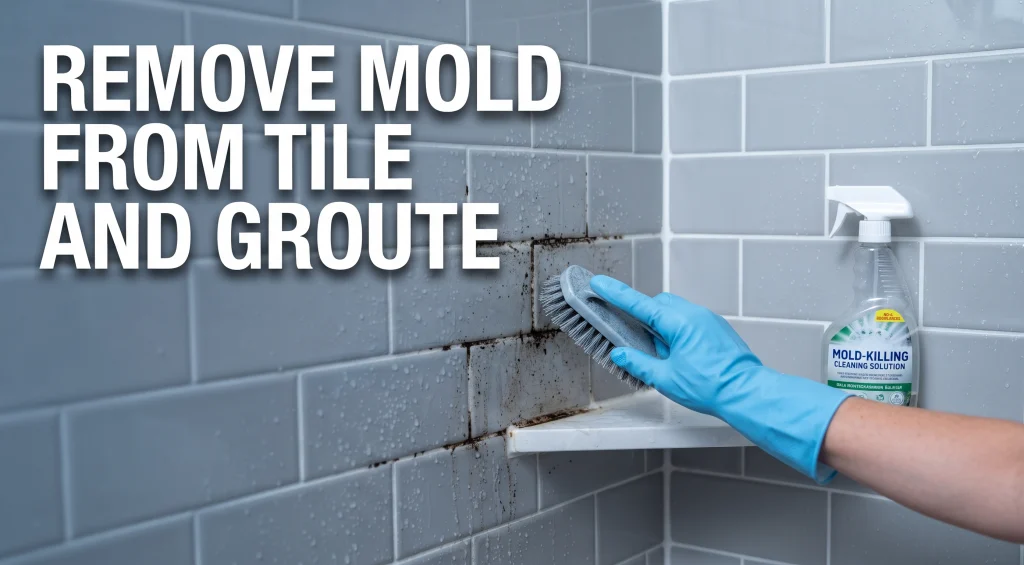
Begin with:
- Ventilating the bath room.
- Wearing gloves and eye protection.
- Clean the affected area with a suitable household cleaner or detergent solution.
- Using the right brush to scrub off the visible mold.
- Follow the cleaner’s instructions for wiping or rinsing the surface.
- Thoroughly drying the area.
EPA guidance says to scrub mold off hard surfaces with detergent and water, and to dry the surface completely.
For stubborn discoloration in grout, you may need to clean it several times. Please keep in mind that a dark stain does not necessarily mean there is live mold. Mold can cause permanent cosmetic staining even after the growth has been removed. If bathroom mold leaves a stain after cleaning, check whether the surface is completely clean and dry before deciding what to do next.
2. Clean Moldy Silicone or Caulking
Mold often grows along the silicone or caulking around a tub or shower. Bathroom mold in these areas can be difficult to remove when the caulk has deteriorated.
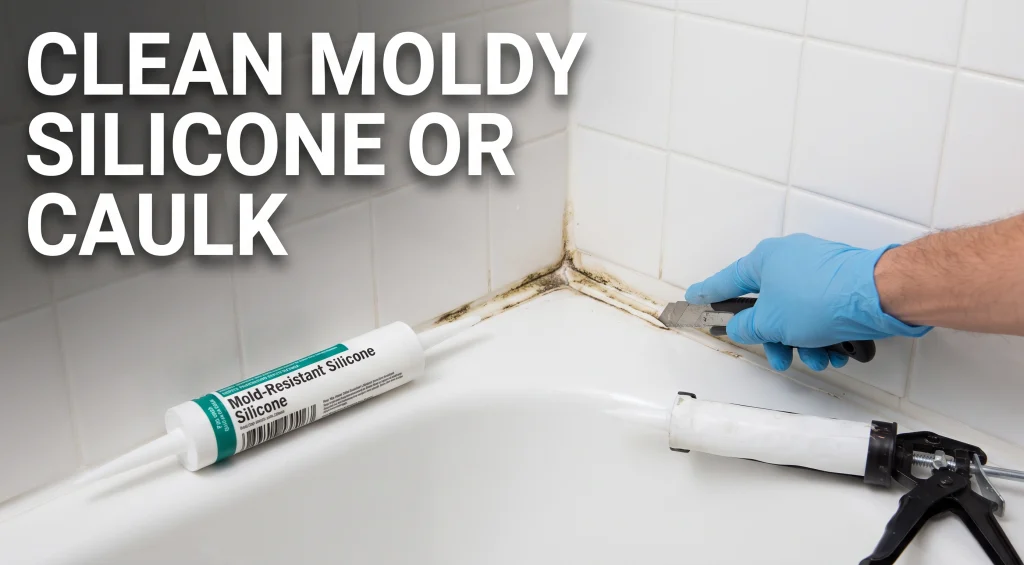
If the mold is limited to the surface, cleaning may do the trick. But if the discoloration has penetrated the deteriorated or porous caulk, just cleaning the surface may not restore it.
In that case, you may have to take out the damaged caulk and substitute it once the area below has been cleaned up and dried thoroughly.
Don’t just put new caulk over visible mold. The EPA guidance specifically requires that mold be cleaned and the surface dried before caulking or painting.
3. How to Remove Mold From Painted Walls and Ceilings in Bathrooms
You can clean small areas of mold on a sound, washable painted surface with water and an appropriate household cleaner or detergent. When removing bathroom mold from painted walls, avoid damaging the paint or allowing excess moisture to enter the wall.
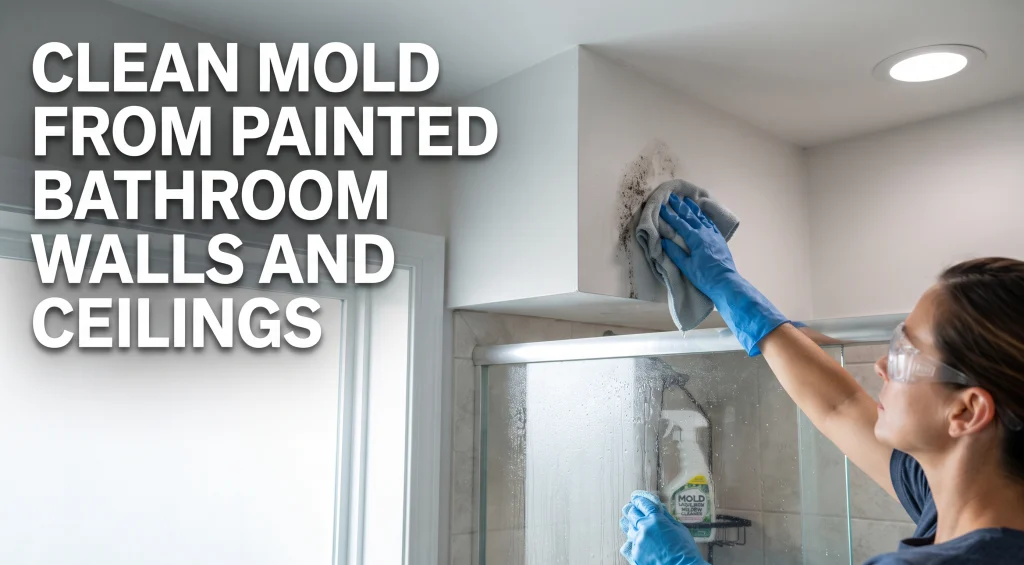
Do not saturate the wall, work gently. Too much water can cause another moisture problem, especially on drywall.
Wipe the surface dry after cleaning and investigate the cause of the dampness.
Bubbling or peeling paint, or a soft wall, can indicate moisture damage behind the surface. If so, cleaning the outside won’t solve the problem underneath.
4. Watch Out For Porous Materials
Cleaning porous materials is more difficult because mold can penetrate into their structure. Bathroom mold affecting these materials may not be completely removed by surface cleaning alone.
For example:
- Sheetrock
- Ceiling Panels
- Wooden materials some
- Carpets
- Some materials
According to the EPA, moldy absorbent or porous materials may need to be discarded because mold can grow into areas that are difficult or impossible to clean completely.
It is not advisable to automatically discard every slightly stained item, but when mold has penetrated an absorbent material, one should not assume that the problem is solved by wiping the surface.
How To Keep Bathroom Mold From Coming Back
Getting rid of existing growth is just half the battle. The long term solution is moisture control. Preventing bathroom mold from returning requires identifying and addressing the conditions that allow it to grow.
Better Ventilation for Your Bathroom
Follow the fan and home’s ventilation set-up for running the bathroom exhaust fan while showering and after. If you can, open a window to increase airflow.
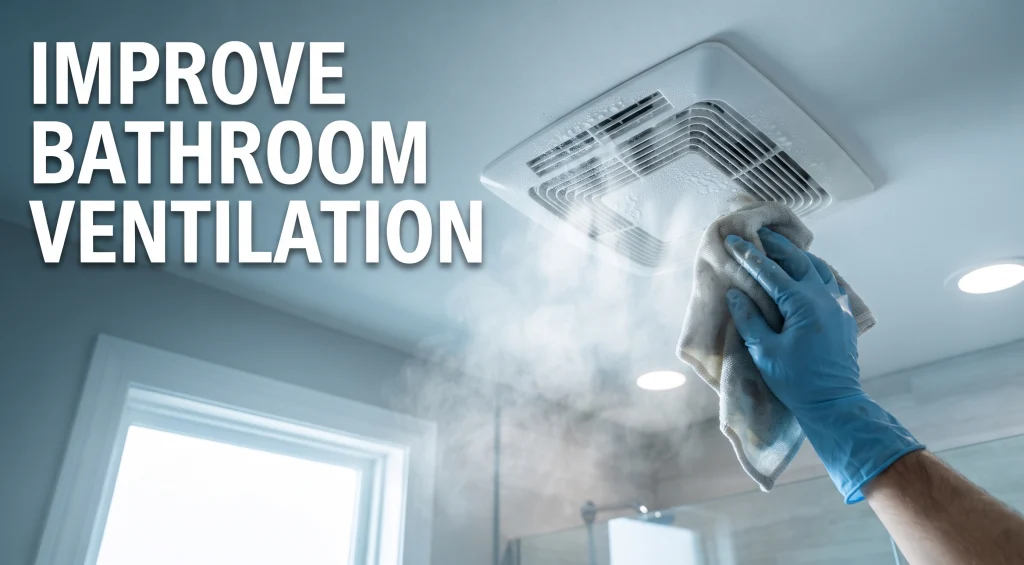
The exhaust system should vent outdoors, not just move moist air to an attic or other enclosed space. EPA guidance states to vent bathroom exhaust directly to the outdoors.
If your bathroom fan sounds like it is running but doesn’t seem to be removing much moisture, it may need to be cleaned, serviced or checked. Better ventilation can help reduce the conditions that encourage bathroom mold.
Wet & Dry Surfaces
Don’t let large amounts of water sit on walls, floors and other surfaces after bathing or showering. Keeping these surfaces dry helps prevent bathroom mold from developing again.
Easy ways to help:
- Remove excess water from shower surfaces.
- Hang towels to air properly.
- Don’t leave wet bathmats all balled up.
- – Repair leaky faucets and pipes.
- Look around the tub and sink for any consistent moisture.
Control Indoor Moisture
Mold likes humidity , so the less humidity inside the house the better .
EPA guidance suggests keeping indoor relative humidity below 60% and that 30-50% is an ideal range when possible.
A small hygrometer can be useful to determine whether the humidity levels are consistently high. If the climate is very humid, air conditioning or a well-maintained dehumidifier can help. Controlling indoor humidity is an important step in preventing bathroom mold.
Mistakes to Avoid When Cleaning Bathroom Mold
Covering mold with paint
Painting over a moldy surface may make it look better in the short term, but it doesn’t address the problem. Painting over bathroom mold without cleaning it first can leave the underlying problem unresolved.
Clean the mold, fix the source of the moisture and let the surface dry before you paint. EPA warns that paint over moldy surfaces will likely peel.
Too Many Chemicals in
More powerful chemicals don’t necessarily translate to better cleaning. When multiple products are used together, there can be unnecessary dangers.
Pick the right product, follow label directions, ensure ventilation and never mix cleaners.
Ignoring moisture source
If you have a bathroom ceiling that continues to get moldy in the same spot, cleaning it every couple of weeks without determining the cause probably won’t solve the problem for long. Repeated bathroom mold growth can be a sign of an unresolved leak or ventilation problem.
Look for sources of persistent dampness such as leaks, condensation or poor ventilation.
Scrubbing unguarded
Mold cleanup is not something to treat like normal dusting. Gloves and eye protection reduce direct exposure and adequate ventilation limits exposure to fumes from cleaning products. CDC recommends protective measures during cleanup of mold.
When to call a pro?
Some mold issues are not do-it-yourself jobs. Professional assistance may be appropriate when bathroom mold affects a large area or is associated with significant water damage.
If the area involved is less than about 10 square feet, homeowners can often do the cleanup themselves, the EPA says. Professional advice is needed if mold covers more than about 10 square feet or if significant water damage has occurred.
When to seek professional help:
- Mold covers a lot of ground.
- There has been a lot of water damage.
- There is mold growing in walls and other hidden places.
- Affects drywall and other building material to a large extent.
- The problem came from sewage or polluted water.
- Mold keeps returning even after you’ve addressed the obvious moisture issues.
- You’re not sure the contaminated material can be safely cleaned.
People with certain respiratory conditions or significant mold allergies may also need to take extra precautions, and should consult a doctor before attempting major cleanup.
Bathroom Mold FAQ
How can I quickly get rid of mold on bathroom tiles?
For small areas on hard tile, clean the surface with an appropriate household cleaner or detergent and water, scrub the visible growth away, and dry the area completely. Grout is more porous and may need more attention. These steps can help with bathroom mold on suitable hard surfaces.
Does bleach kill mold in bathroom?
Bleach is an option for some mold-cleanup situations, but it is not necessary for every hard-surface cleanup. CDC guidance allows a properly diluted bleach solution for mold on hard surfaces, stressing ventilation, protective equipment, label directions, and the rule never to mix bleach with other cleaners.
Why does mold keep returning in my bathroom?
Recurring growth usually means the moisture conditions that promote mold growth have not been completely resolved. Causes can include poor ventilation, condensation, leaks in the plumbing system, and surfaces that stay damp.
If you clean up the visible mold, but do not repair the source of the moisture, the problem will return. Addressing these issues is essential for long-term bathroom mold prevention.
Can you paint mold on a bathroom wall?
No. Painting over visible mold is not a sufficient replacement for cleanup and moisture control. First the affected surface should be cleaned and dried and the source of the moisture corrected.
How can I stop mold from growing around my shower?
When you shower, make sure you have enough ventilation, keep wet surfaces dry, fix leaks right away and control the humidity inside. Regular cleaning also prevents buildup from becoming established. These habits help reduce the risk of bathroom mold returning around the shower.
How can I tell if bathroom mold is too much to clean myself?
The EPA considers 10 square feet an important threshold. Often homeowners can deal with smaller areas but larger areas or those with a lot of water damage may need to be evaluated by a professional.
Final Thoughts
The best way to remove bathroom mold is to solve the visible growth and moisture problem behind it. For small patches on hard surfaces, scrub away visible mold with an appropriate product or detergent and water, and dry the area thoroughly. Proper bathroom mold removal also means understanding why the moisture developed in the first place.
Improving ventilation, fixing leaks, reducing constant dampness and not allowing moisture to sit on bathroom surfaces are also important.
If mold covers a large area, has gotten into porous building materials or keeps coming back despite reasonable moisture control, it’s safer to get a professional assessment. A clean bathroom is not simply about wiping away the visible dirt. It’s also about creating conditions where mold has a harder time coming back