washing machine cleaning: 5 easy tips
Washing machine cleaning is an important part of household maintenance. Your washing machine cleans your clothes, but over time, detergent, fabric softener, dirt, hair, lint, and moisture can build up inside the drum, detergent drawer, door seal, and filter. This buildup can cause unpleasant smells and prevent your washer from staying fresh.
The good news is that washing machine cleaning does not require special equipment or hours of hard work. With a few simple steps and the right approach, you can keep your appliance cleaner, reduce odors, and help prevent common problems.
How to Clean a Washing Machine Properly (Front-Load and Top-Load)
Regular washing machine cleaning helps remove residue from accessible areas and keeps your appliance in better condition. Whether you own a front-load or top-load washer, always follow the manufacturer’s instructions for cleaning products and maintenance cycles.
Why Is Washing Machine Cleaning Important?
Not all detergent and dirt are removed when water passes through your washing machine during a regular wash cycle.
Small deposits of detergent, fabric softener, body oils, dirt, and other debris can remain behind. Moisture can also collect around the door gasket of a front-loading washer.
Without regular washing machine cleaning, you may notice:
- An unpleasant or musty smell
- Residue around the door seal
- A dirty detergent drawer
- Buildup inside the drum
- Drainage problems
- Lint and dirt around the filter
Cleaning these accessible areas regularly helps reduce residue and keeps your washer fresher between laundry loads.
How Often Should You Clean Your Washing Machine?
For many households, monthly washing machine cleaning is a good starting point. However, the ideal frequency depends on how often you use your appliance and the type of laundry you wash.
You may need to clean your washer more frequently if:
- You wash several loads every week.
- You regularly wash heavily soiled clothes.
- You frequently use cold or low-temperature cycles.
- Your washer develops a musty smell.
- You use fabric softener frequently.
- Moisture remains inside the machine between washes.
Always check your owner’s manual before starting a cleaning cycle. Some manufacturers recommend specific cleaning products, maintenance settings, or schedules for washing machine cleaning.
How to Clean a Washing Machine in 7 Easy Steps
The exact cleaning procedure varies by model, but these washing machine cleaning steps cover the main areas that usually need attention.
1. Empty the Washing Machine
Start by removing all clothing, towels, and other items from the drum.
Check inside for coins, hair clips, lint, or anything else left behind. Removing these items before cleaning helps prevent debris from moving into other parts of the appliance.
If you need to remove a component, check the manufacturer’s instructions before attempting to take it apart.
2. Clean the Washing Machine Drum
Many modern washing machines include a maintenance setting called Drum Clean, Tub Clean, or something similar.
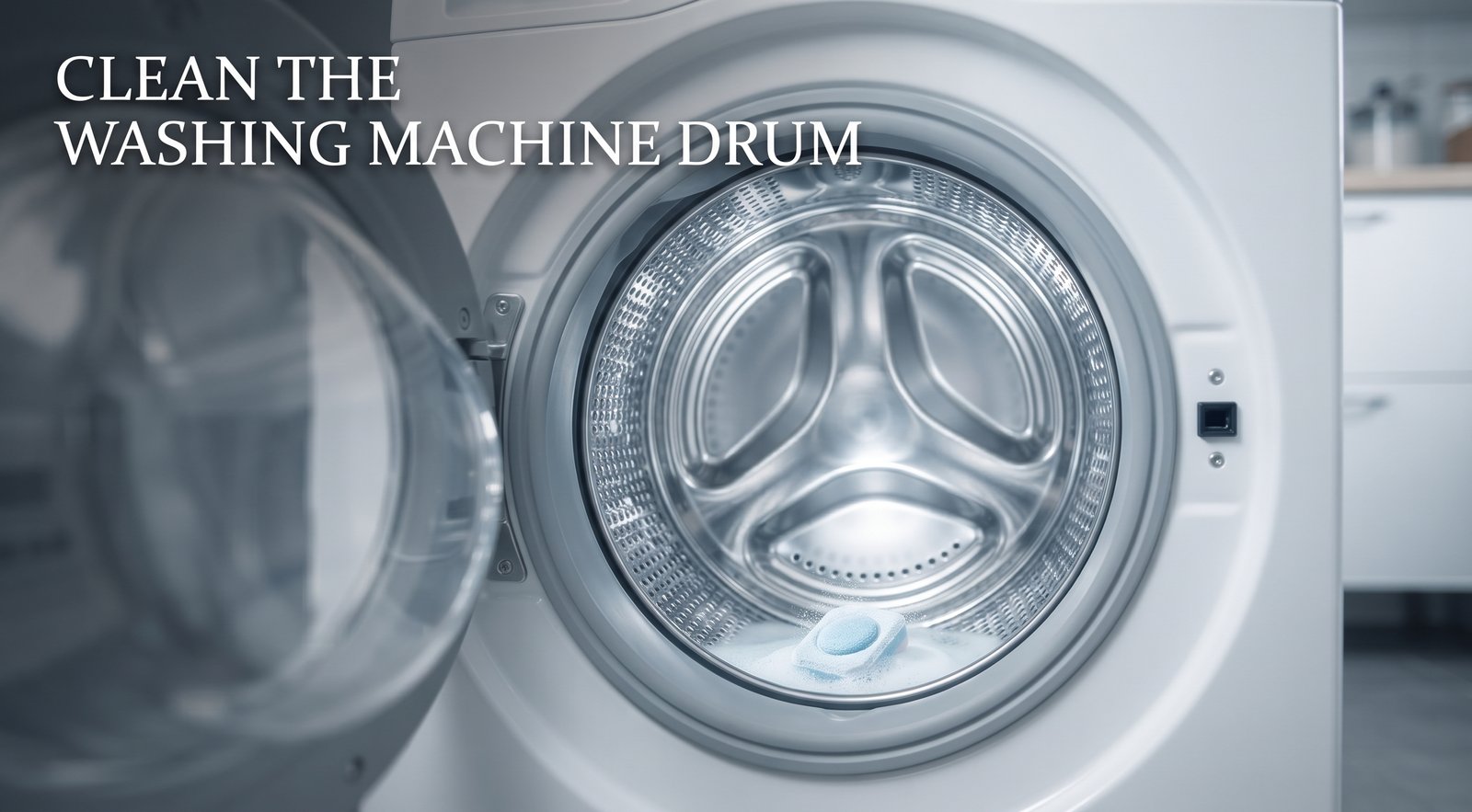
If your washer has this feature, run it according to the manufacturer’s instructions. If it does not, consult the owner’s manual for the recommended cleaning procedure.
For effective washing machine cleaning, use an appliance cleaner only if the manufacturer approves it for your model.
Avoid adding random household chemicals or combining cleaning products. Different machines may have different requirements, and unsuitable products can damage internal components.
After the cycle finishes, leave the door or lid open when safe and practical so the drum can dry.
3. Clean the Door Seal or Rubber Gasket
Cleaning the door seal is particularly important for front-loading washing machines.

Carefully inspect the rubber gasket and check its folds for trapped hair, lint, detergent residue, and other debris.
Use a soft cloth or sponge to remove visible dirt. For stubborn deposits, use a small amount of suitable detergent solution if permitted by the manufacturer, then wipe the area with clean water.
Pay particular attention to the lower folds, where moisture and debris can collect.
Dry the seal thoroughly with a clean towel. Avoid abrasive brushes and harsh chemicals that could damage the rubber.
4. Clean the Detergent Drawer
Detergent drawers can accumulate fabric softener, detergent residue, and dirt over time.
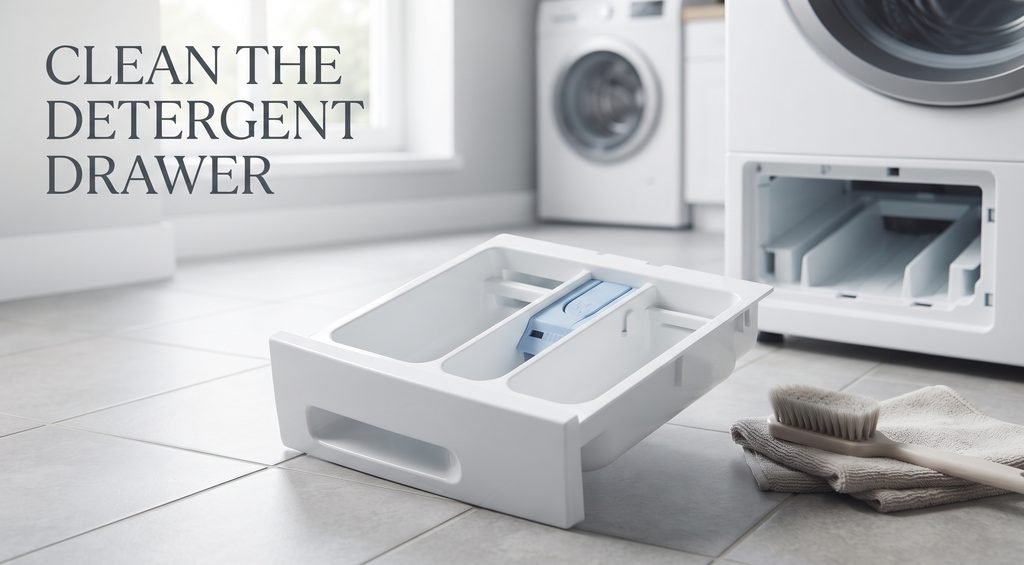
If your model allows removal, take out the drawer according to the owner’s manual. Rinse it with warm water and use a soft toothbrush to clean corners and openings.
During washing machine cleaning, remember to inspect the dispenser compartment itself. Residue can collect around the water-entry channels and restrict the flow of water.
Allow removable parts to dry before reinstalling them. Never force a drawer or component out of its housing.
5. Inspect and Clean the Washing Machine Filter
Some washing machines have an accessible drain or pump filter that collects lint, hair, coins, and other debris.
On many front-loading models, the filter is located behind a small access panel near the bottom front of the machine. Its position and design can vary.
Before cleaning the filter:
- Turn off the washing machine.
- Disconnect the power if required by the manufacturer’s instructions.
- Place towels and a shallow container nearby to catch residual water.
- Open the filter according to the owner’s manual.
- Carefully remove visible debris.
- Clean or rinse the filter as directed.
- Reinstall it securely.
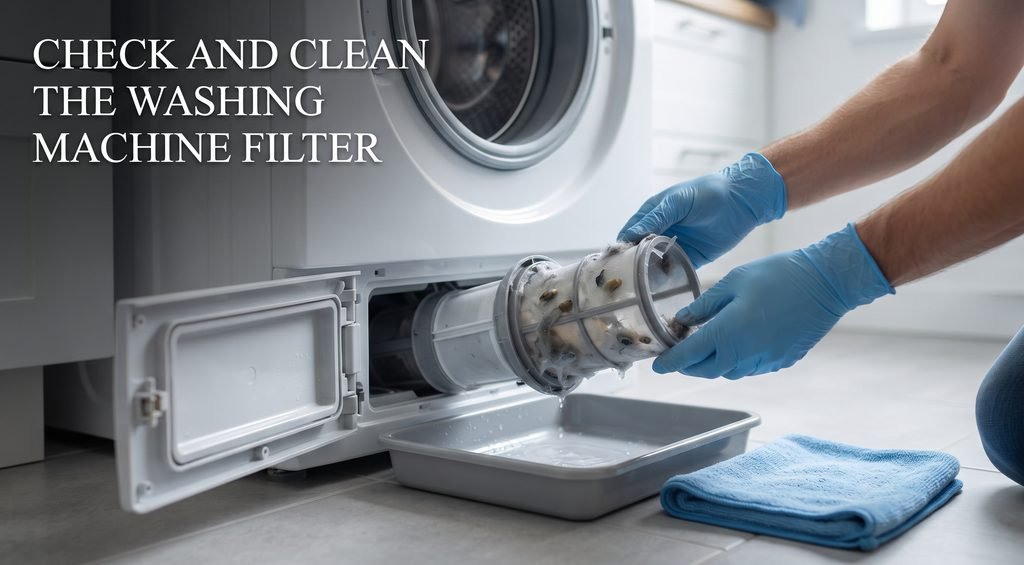
Not every washing machine has a user-accessible filter. Check your manual before attempting this part of the cleaning process.
6. Wipe Down the Exterior
Washing machine cleaning should also include the outside of the appliance.
Use a soft, slightly damp cloth to wipe the control panel, lid, door, handles, and surrounding surfaces. Avoid soaking the controls or allowing water to enter electrical openings.
If your washer has a stainless-steel finish, follow the manufacturer’s care instructions to prevent scratches and damage.
7. Allow the Washing Machine to Dry
After cleaning, remove any remaining moisture from the drum, gasket, and detergent drawer.
If the manufacturer permits, leave the door or lid open to help air circulate inside the appliance.
This simple habit can help reduce lingering moisture and unpleasant odors between laundry loads. If children or pets are present, take appropriate precautions to prevent access to the open machine.
How to Get Rid of Washing Machine Smells
A bad smell often indicates trapped moisture, detergent residue, or debris that needs attention.
Start by inspecting these areas:
- The rubber door gasket
- The detergent dispenser
- The washing machine drum
- The accessible drain or pump filter
- The area around the door or lid
A thorough washing machine cleaning routine should address these accessible areas and include the maintenance cycle recommended by the manufacturer.
To help prevent odors from returning, remove laundry promptly, wipe away excess moisture, and allow the interior to dry whenever practical.
If the smell persists after cleaning, inspect the drain hose and consult the manufacturer’s troubleshooting guide. Persistent odors may indicate a drainage problem or another issue that requires professional servicing.
Common Washing Machine Cleaning Mistakes to Avoid
Using Too Much Detergent
More detergent does not necessarily mean cleaner clothes. Excess detergent can leave residue inside the drum, dispenser, and other accessible areas.
Use the amount recommended by your detergent manufacturer and washing machine manual.
Mixing Cleaning Chemicals
Never mix household cleaning products unless their labels specifically confirm that doing so is safe.
Avoid experimenting with combinations of bleach, vinegar, acids, ammonia, or other cleaners. Certain combinations can produce dangerous fumes or chemical reactions.
Ignoring the Door Seal
A drum-cleaning cycle may not remove residue from every fold of a rubber gasket.
Inspect the seal separately and wipe away visible dirt and moisture.
Closing the Door While the Interior Is Damp
Keeping a damp washing machine tightly closed can slow drying and encourage musty odors.
When safe and permitted by the manufacturer, leave the door or lid open after washing to help moisture escape.
Forgetting the Filter
If your model has a user-accessible drain filter, debris can accumulate when it is neglected.
Follow the recommended maintenance schedule and cleaning instructions for your particular appliance.
How to Extend the Life of Your Washing Machine
Good habits can reduce buildup and make regular washing machine cleaning easier.
After each laundry load:
- Remove clothes promptly.
- Wipe excess moisture around the door seal when necessary.
- Leave the door or lid open when safe and permitted.
- Check the gasket for visible dirt.
- Avoid excessive detergent and fabric softener.
- Inspect the detergent drawer and clean it before residue builds up.
Follow the maintenance recommendations in your owner’s manual. The manufacturer understands the specific design, drainage system, cleaning cycle, and materials used in your appliance.
Washing Machine Cleaning: Frequently Asked Questions
Can I Clean a Washing Machine With Vinegar?
Some cleaning guides recommend vinegar, but it is not suitable for every washing machine. Repeated exposure to acidic products may affect certain components or seals.
Check your manufacturer’s instructions before using vinegar or homemade cleaning solutions. An approved washing machine cleaner may be a better option for your particular model.
How Do I Get Rid of a Smelly Washing Machine?
Start by cleaning the door gasket, detergent drawer, drum, and accessible filter. Run the recommended maintenance cycle and allow the machine to dry thoroughly.
If the odor remains after washing machine cleaning, consult the manufacturer’s troubleshooting guide to check for drainage problems or other maintenance issues.
How Often Should I Run a Washing Machine Cleaning Cycle?
Follow the cleaning schedule recommended in your owner’s manual. Monthly cleaning is a useful starting point for many households, but some models have specific maintenance requirements.
You may need to clean more often if you use your washer frequently or notice persistent odors.
Should I Leave My Washing Machine Door Open?
If the manufacturer permits, leaving the door or lid open after a wash can help the interior dry.
Take appropriate safety precautions if children or pets could access the appliance.
Should I Clean My Washing Machine Filter?
Yes, if your washing machine has a user-accessible filter that requires regular maintenance. The filter can collect debris and should be cleaned according to the manufacturer’s instructions.
Some models have different drainage systems or filters that are not designed for user removal, so check your manual first.
Why Does My Washing Machine Still Smell After Cleaning?
Persistent odors can result from hidden residue, trapped moisture, drainage problems, or another maintenance issue.
If cleaning accessible components and running the recommended maintenance cycle does not resolve the smell, consult the manufacturer’s troubleshooting instructions or arrange professional servicing if necessary.
Final Thoughts on Washing Machine Cleaning
Regular washing machine cleaning is a simple household task that can help keep your appliance fresh and reduce the buildup of detergent, dirt, lint, and moisture.
Remember to clean the drum, door seal, detergent drawer, accessible filter, and exterior. For many households, a monthly maintenance routine is a practical starting point.
Between washes, remove laundry promptly, use the recommended amount of detergent, and allow the machine to dry when possible.
Most importantly, follow your owner’s manual for approved cleaning products, maintenance cycles, removable parts, and safety precautions. A few minutes of regular care can help keep your washer fresh and ready for the next load.