hard water stains: 7 easy ways to clean
If you see cloudy spots on your shower door, white crust around a faucet, or dull marks inside a sink, you probably have hard water stains. These hard water stains are formed by the evaporation of water that contains dissolved minerals that are left as deposits.
New mineral deposits are easier to take away than old hardened buildup. The good news is that you can usually get rid of these marks using simple household cleaning methods and a little patience when removing hard water stains.
Surface dependent. Not all glass, stainless steel, ceramic, tile, natural stone and metal fixtures respond to the same cleaner. This manual will assist you to safely get rid of mineral deposits, and help prevent hard water stains from coming back.
What Causes Hard Water Stains?
Hard water contains minerals . Specifically calcium and magnesium . Minerals can be left behind when water dries on a surface, resulting in hard water stains.
Repeated exposure may cause:
- White or chalky patches
- Frosted glass
- Scale on faucets
- Sinks dull
- Mineral deposits around fixtures
- Build up inside toilets
- Deposits surrounding shower heads
The more time the deposits have to sit, the harder they can be to remove. This is why hard water stains are often more difficult to clean when mineral deposits have accumulated over time.
Hard water stains are not the same as normal dirt. Because the buildup is mineral based, an acidic cleaner is often more effective than a general purpose detergent.
But it is important what kind of acid and what surface you are cleaning. What works well on glass can be harmful to natural stone, especially when removing hard water stains.
How to Get Rid of Hard Water Stains
Know the surface and read the care instructions before cleaning hard water stains. If this is the first time you are using a product, test it on a small inconspicuous area when appropriate.
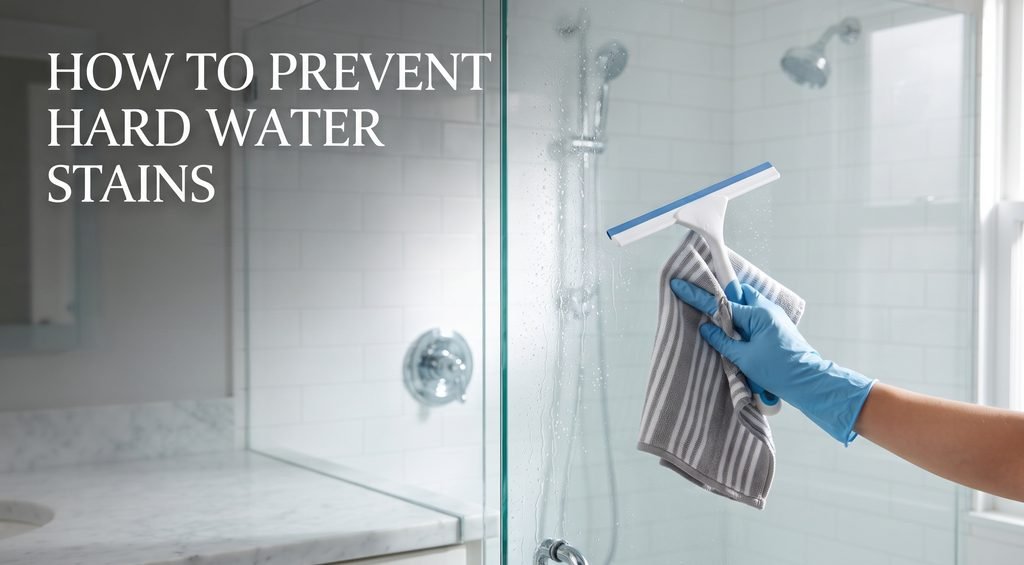
Also, use appropriate gloves and ventilate when using cleaning products.”
1. Stain Removal on Glass and Shower Doors
Water droplets continually evaporate on the surface of glass shower doors, leading to mineral buildup and visible hard water stains.

For light to moderate deposit:
- Dampen the glass.
- Use a suitable descaling or mineral deposit cleaner.
- Allow to sit for the length of time specified on the product label.
- Use a non-abrasive sponge or suitable cleaning pad to gently clean.
- Rinse well.
- Wipe dry with clean microfiber cloth or squeegee
Mild acidic solutions can sometimes help dissolve mineral deposits.Homemade solutions should only be used when compatible with the surface and surrounding materials. This approach may help remove hard water stains without unnecessary scrubbing.
Do not use abrasive powders, steel wool or rough scouring pads on glass as these can scratch the surface.
Heavy buildup may need a few gentle treatments, rather than one aggressive scrubbing session, to remove stubborn hard water stains.
2. Clean Taps and Metal Fittings
Water pooling at the base of faucets often leads to white mineral deposits and hard water stains.

Begin with a wipe-down for loose debris. Instead of letting an aggressive product sit on the fixture forever, use a manufacturer-approved limescale or mineral-deposit cleaner on a cloth or sponge for compatible fixtures.
Cleaned up:
- Wash the surface completely.
- Be sure it is completely dry.
- Polish in accordance with care instructions from the manufacturer.
Pay special attention to plated, coated, brushed or specialty finishes. Even if they eliminate the mineral deposit, strong acids or abrasive cleaners could damage the finish when treating hard water stains.
If the mineral buildup is confined to the aerator, the part can be taken out for separate cleaning. Do not force it loose. Work according to the faucet manufacturer’s instructions.
3. Sinks and Bathtubs Cleaning
For ceramic or other compatible non-porous surfaces, begin with a mild cleaner and a soft sponge to remove hard water stains safely.
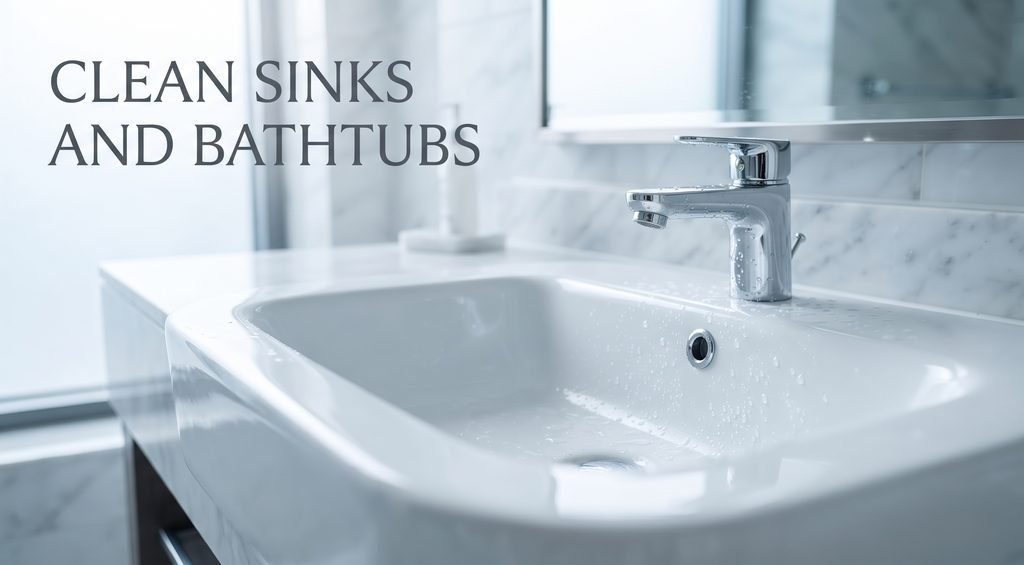
If mineral deposits persist, apply a suitable descaling product as directed on its label. Let the product work for you instead of scrubbing too hard.
Then rinse the surface thoroughly and dry it. Regular cleaning can help prevent hard water stains from building up again.
Do not use acid cleaners on surfaces that are susceptible to acid damage. This is particularly crucial when working with natural stone.
4. Toilet Mineral Deposit Cleaning
Hard water can leave a ring of minerals or a chalky buildup in the toilet bowl. These hard water stains may become more difficult to remove if they remain for a long time.
Use a toilet bowl cleaner that is specifically designed for limescale or mineral buildup and follow the label directions.
Toilet-safe pumice products might be appropriate for tough deposits, but only if the product and toilet manufacturer say it is safe for the surface. During use, be sure to keep the porcelain wet and not use excessive pressure.
Do not use a household pumice stone on other bathroom surfaces without caution. It can scratch the finishes.
Never combine toilet cleaner with bleach or other cleaning chemicals. Mixing cleaners can create dangerous reactions or fumes.
5. Scrub tile and grout well
Suitable descaling products can often be used on ceramic and porcelain tiles, but grout needs more care when cleaning hard water stains.
Use a suitable cleaner on the affected area, and gently scrub with a soft or medium brush. Then rinse thoroughly.
Natural stone tile is another story. Materials such as marble, limestone and travertine are sensitive to acids. These surfaces can be etched by vinegar, lemon juice, and many acidic descalers.
Use a cleaner that is labeled safe for the stone you are cleaning and follow the manufacturer’s recommendations. Choosing the right cleaner is essential when removing hard water stains from different tile surfaces.
What cleaning method should you use?
The best way would depend on the material and the severity of hard water stains.
| Top | Right approach | Main warning |
|---|---|---|
| Glass | Soft scrubber and non abrasive de-scaler | Do not scrape |
| Ceramic | Compatible scale remover . | Rinse well |
| Porcelain. | Mineral Deposit Cleaner (ok) | Be careful with abrasive tools |
| STAINLESS STEEL . | Cleaner approved by manufacturer | Do not use strong abrasives |
| Chrome/Plated Fittings | Safe cleaner finish | Strong acids can hurt the finish |
| Natural stone | Stone-safe cleaner | No Acidic Cleaners Unless Authorized |
If there is any doubt, the safest route is to check the manufacturer’s cleaning instructions before using an acidic or abrasive product to remove hard water stains.
What about baking soda & vinegar?
Vinegar is often suggested as a home remedy for mineral deposits, as the acidity can aid in dissolving some mineral build-up. It’s good for some acid resistant surfaces, but it’s not a universal cleaner for hard water stains.
A notable exception is natural stone. Household products that are acidic can damage stones such as marble and limestone.
Baking soda is a mild abrasive and can be used for some general cleaning, but when mixed with vinegar it cancels out the acid-base properties of vinegar. The fizz can be impressive but it doesn’t mean the combination is a magic hard-water cleaner.
For tough mineral build-up, a descaling product made for the job and safe for the surface may be more practical for removing hard water stains.
Common pitfalls to avoid
Using an Acid Cleaner on Natural Stone
One of the biggest mistakes to avoid is this. Acid can etch Calcareous natural stones leaving a dull or damaged surface. Using the wrong cleaner to remove hard water stains can make the damage worse.
Scrubbing too hard,
Mineral deposits can be stubborn, but too much force can scratch glass, metal finishes, ceramic surfaces or coatings.
Use the right kind of cleaner to soften the buildup and then gently remove it. This is particularly important when cleaning hard water stains from delicate surfaces.
Cleaner Left On Too Long
Longer is not good. Cleaning products are designed with specific contact time instructions. Follow the label, don’t assume that extended exposure will improve the result.
Mixing Cleaning Chemicals
Never mix cleaning chemicals unless the manufacturer’s instructions specifically indicate they can be combined.
Do not mix bleach with acids or products containing ammonia, in particular.
Ignoring the Source of the Water
If you see new deposits immediately after cleaning it may not be a cleaning issue. It boils down to the continuing exposure to mineral-laden water.
So, it might be better to prevent than to keep taking away the same build-up of hard water stains over and over again.
How to stop hard water stains
The best stain to remove is the one that doesn’t happen. Preventing hard water stains can save time and reduce the need for frequent deep cleaning.
Wet Surfaces Dry
When the water evaporates they remain as mineral deposits. Eliminating water before it dries can greatly reduce visible spotting and help prevent hard water stains.
Use a squeegee to wipe down glass doors and shower walls as needed after a shower.
Clean Under Faucets
Keep a microfiber cloth handy and dry the areas around the faucets you use the most. This simple habit can help prevent hard water stains around frequently used fixtures.
This only takes a few seconds but can save water from drying repeatedly on the same surface.
Bathroom Ventilation Upgrades
Good ventilation reduces condensation and excess moisture. Use bathroom exhaust fan properly, and allow damp areas to dry.
Water Treatment Issues
If you have a problem with hard water in much of your home, you might want to consider water-treatment options. Addressing hard water throughout the home may help reduce recurring hard water stains.
A water softener can reduce the concentration of hardness minerals in the water that comes into a home. The right system depends on the home’s water supply, plumbing and local conditions.
If you’re considering installation, get your water tested and compare systems based on your actual water chemistry, not marketing claims.
Stains from hard water that won’t come off
Not all cloudy or discolored surfaces are mineral deposits. Some marks that look like hard water stains may actually be caused by surface damage.
If after proper cleaning a stain remains, it may be:
- Surface damage or etching
- Rust
- Soap residue
- Permanent Dyes
- Damage to a protective film
- Mineral deposits that have grown very thick
For example, acid will remove mineral deposits from glass, but if the surface is already compromised it can leave etched glass that looks cloudy. This means some hard water stains may not disappear with ordinary cleaning.
If the condition does not improve, stop using more aggressive products. You can remove a stain, but extra scrubbing can cause permanent damage to the surface.
Hard Water Stains FAQs
How to Remove Hard Water Stains Quickly?
A limescale or descaling product will work well, as it is designed to break down mineral deposits. It is contingent upon the surface. The best choice Always follow the label on the product and do not use acidic cleaners on surfaces that can be damaged by acids.
“Does vinegar get rid of hard water stains?
Vinegar is acidic, so it can help dissolve some mineral deposits. However, it is not suitable for all surfaces. Do not use on acid sensitive natural stone such as marble and limestone.
How can I get hard water stains off of my glass shower doors?
Apply a mineral-deposit cleaner that is compatible with the surface and allow it to work for the time specified. Lightly scrub with a non-abrasive tool. Rinse well and dry the glass. Regular use of a squeegee can help reduce future buildup of hard water stains.
How to clean hard water stains from faucets?
Use a cleaner that is safe on the finish on the faucet. Use as directed by the manufacturer, gently lift softened deposits, rinse thoroughly and dry fixture.
Hard water stains are not permanent.
Yes. Mineral deposits can sometimes cause or accompany surface damage. Repeated buildups or improper cleaning can leave etching or discoloration. If a surface remains cloudy after proper cleaning, do not try more aggressive treatments to remove hard water stains.
How do I keep hard water stains from returning?
Keep surfaces dry, squeegee shower glass, wipe around faucets regularly, keep good bathroom ventilation, and consider suitable water treatment if hard water affects the whole family, before water evaporates. These simple steps can help prevent hard water stains from returning.
Summary
Matching the cleaning method to the surface usually makes it easier to remove hard water stains. Glass, ceramic, porcelain and suitable metal fixtures can generally be treated with a suitable mineral-deposit cleaner, but natural stone requires considerably more caution.
The biggest mistake is to think a stronger cleaner or more vigorous scrubbing is always better. Use the mildest effective method. Follow product instructions. Do not use acid products on acid sensitive materials.
Elimination of the buildup makes prevention much easier. Dry shower surfaces, wipe around faucets, improve ventilation and solve the underlying water hardness when it affects the entire home. A little regular maintenance goes a long way to reducing the frequency of those pesky white deposits and preventing hard water stains from returning.