Decluttering: 7 Easy Steps to Win
Decluttering your home can feel overwhelming when every room seems to need attention at the same time. The good news is that you do not have to organize your entire house in one weekend. With a practical decluttering plan, you can work room by room and make steady progress without unnecessary stress.
The purpose of decluttering is not to make your home look empty. It is about keeping the things you use, love, and need while removing items that no longer serve a purpose. A well-organized home is easier to clean, more comfortable to live in, and simpler to maintain.
This room-by-room decluttering guide will help you organize your belongings, reduce clutter, and create a home that works better for your lifestyle.
Before You Begin Decluttering
Before starting your decluttering project, choose one room, drawer, shelf, or small area. Avoid emptying the entire house at once because this can create more mess and make the process difficult to finish.
Create four categories for your belongings:
- Keep: Items you regularly use or genuinely value.
- Donate: Useful items in good condition that someone else could use.
- Sell: Valuable belongings you no longer need.
- Recycle or discard: Broken, unusable, or unsuitable items.
Avoid buying storage containers before decluttering. First decide what you want to keep, then choose suitable storage solutions for the remaining belongings.
When deciding whether to keep something, ask yourself, “Would I buy this item again today?” If the answer is no, consider whether you have a genuine reason to keep it.
1. Decluttering the Entryway
The entryway often becomes a collection point for shoes, coats, handbags, keys, mail, and everyday accessories. Decluttering this area can make your home feel more organized from the moment you walk through the door.
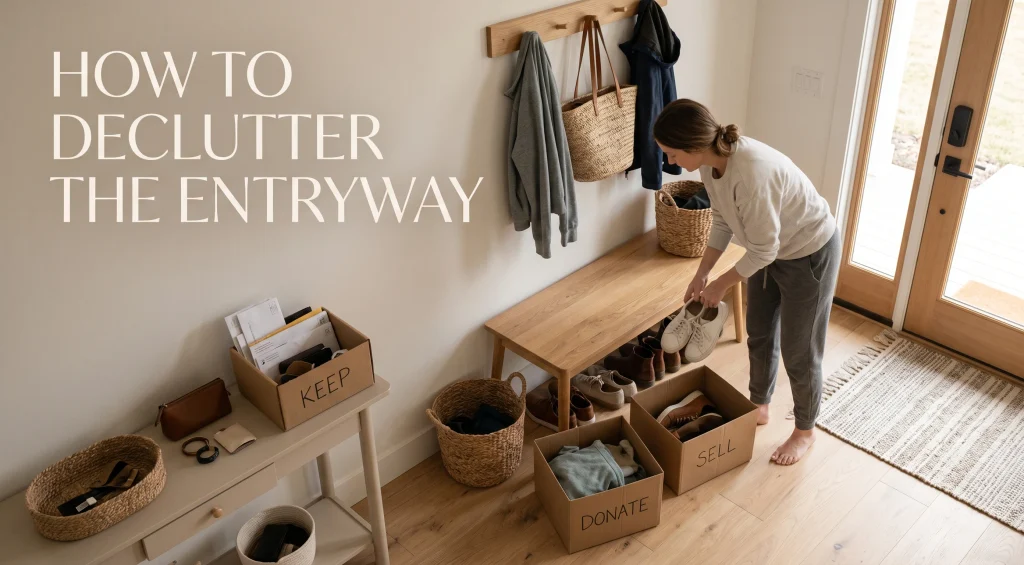
Start by removing items that belong in other rooms. Then identify the belongings you regularly use when leaving or returning home.
Keep everyday essentials within easy reach and store seasonal clothing or occasional accessories elsewhere.
Create a designated place for:
- Keys and wallets
- Everyday shoes
- Bags and handbags
- Coats and jackets
- Incoming mail
- Umbrellas and outdoor accessories
An organized entryway reduces daily frustration and makes it easier for everyone in the household to put things back where they belong.
2. Decluttering the Living Room
The living room should feel comfortable, welcoming, and functional. However, books, decorations, electronics, blankets, and miscellaneous belongings can quickly take over the space.

Begin decluttering by clearing coffee tables, side tables, shelves, and floors. Group similar items together before deciding what to keep.
Ask yourself these questions:
- Do we actually use this item?
- Does it belong in the living room?
- Does another item already serve the same purpose?
- Does this decoration add value to the room?
You do not need to fill every shelf or surface. Leaving some open space can make the room feel calmer and easier to clean.
Choose convenient storage locations for remote controls, blankets, board games, magazines, and frequently used electronics. When everything has a designated place, maintaining a tidy living room becomes much easier.
3. Decluttering the Kitchen
The kitchen is one of the most useful places to begin decluttering because unnecessary items can take up valuable preparation space.
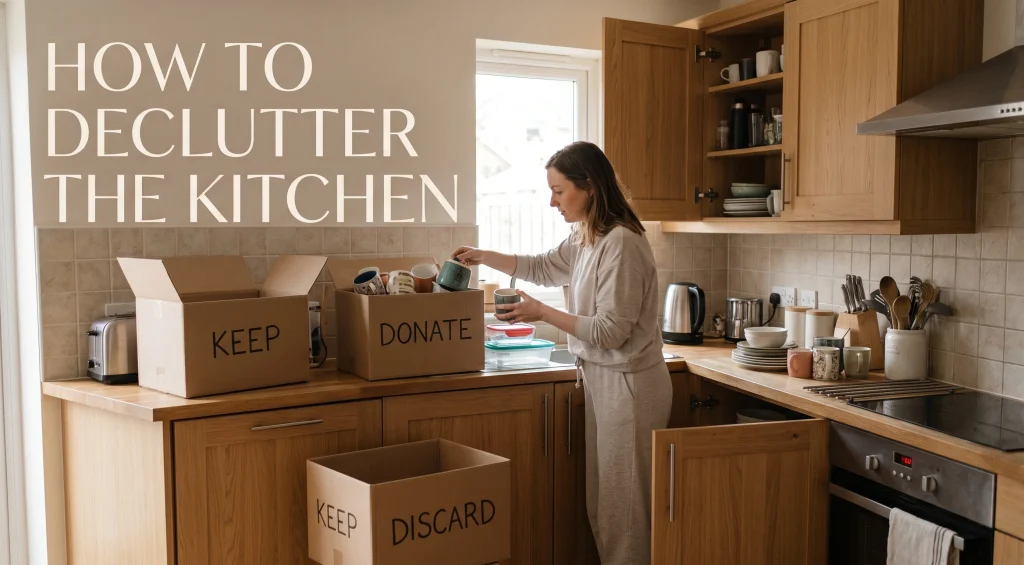
Start with countertops and remove appliances, utensils, and decorations that you rarely use. Then work through cupboards and drawers one section at a time.
Look for:
- Duplicate cooking utensils
- Cracked dishes and damaged glasses
- Food containers without matching lids
- Appliances you rarely use
- Expired pantry items
- Unnecessary kitchen gadgets
- Excess mugs, plates, and bowls
Pay particular attention to food storage containers. Keep containers that are in good condition and match them with their lids. Recycle or dispose of damaged pieces according to local waste guidelines.
When decluttering kitchen appliances, consider how often you actually use each item rather than keeping everything because it might be useful someday.
Keep frequently used cooking tools close to your preparation area. Store occasional appliances in cupboards where they remain accessible without occupying valuable counter space.
4. Decluttering the Bedroom
Your bedroom should be a relaxing place for rest, not a storage area for belongings that have no other home.
Begin decluttering your bedroom with clothing. Remove items that no longer fit, feel uncomfortable, are badly damaged, or have remained unused for a long time without a good reason.
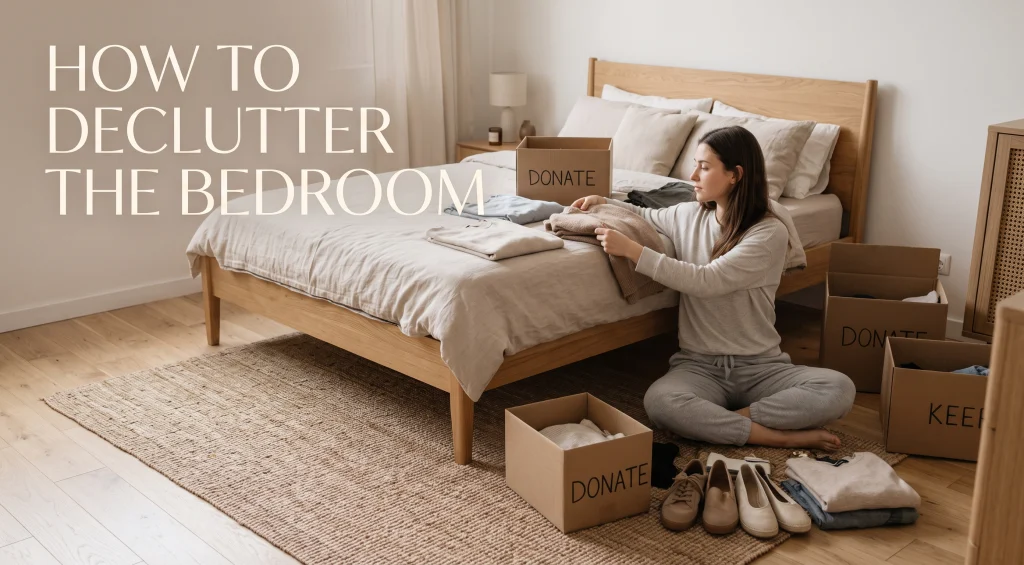
Next, review:
- Shoes and footwear
- Bags and accessories
- Bedside tables
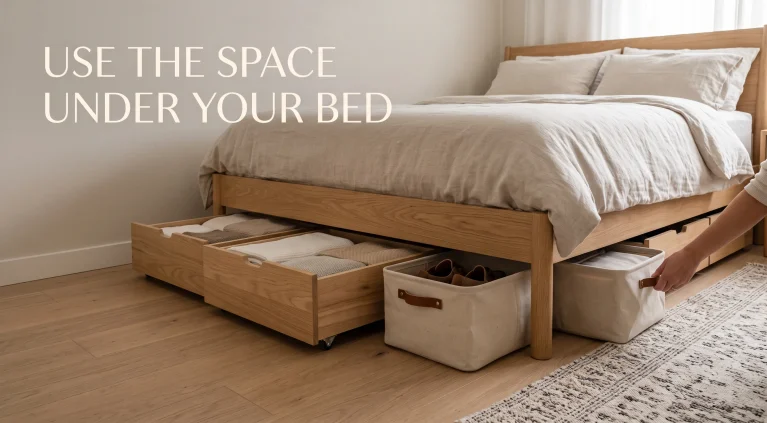
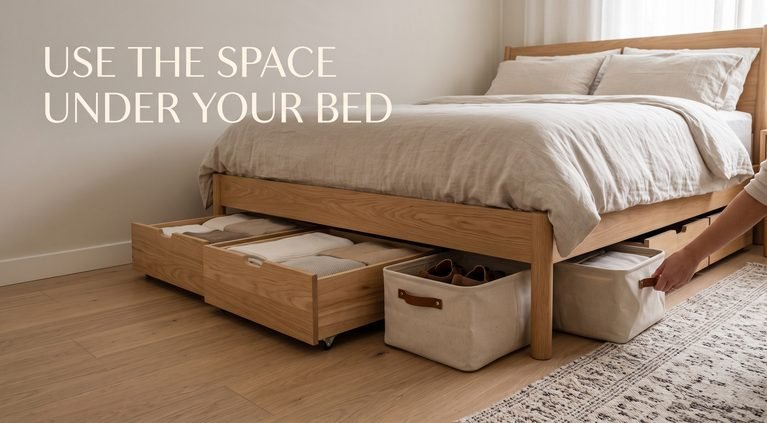
- Under-bed storage
- Decorative items
- Extra pillows and bedding
Keep everyday clothing in accessible locations. Store seasonal clothes and occasional outfits separately if doing so makes your wardrobe easier to use.
Your bedside table also deserves attention. Ideally, it should contain only the essentials you regularly use, such as a lamp, reading material, glasses, or nighttime necessities.
A simple bedroom decluttering routine can reduce visual distractions and help create a more peaceful environment.
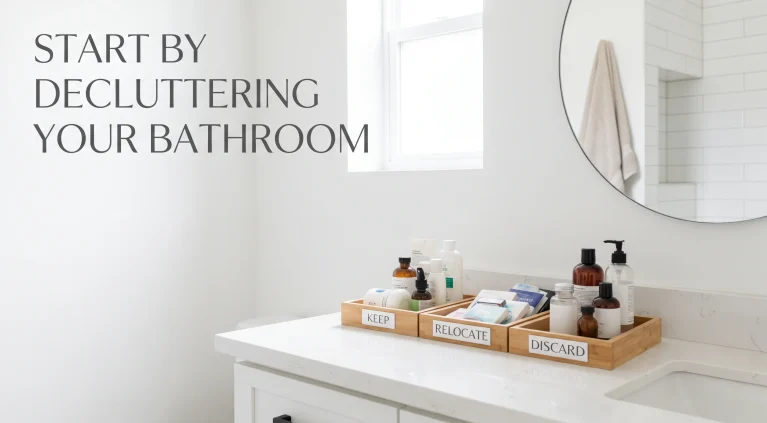
5. Bathroom Decluttering Tips
Bathrooms often contain half-used products, duplicate toiletries, old cosmetics, and items purchased but rarely used.
Check bathroom cabinets, drawers, shelves, and shower areas for products that are:
- Empty or nearly empty
- Dried out or damaged
- Expired or no longer suitable
- Unused or unwanted
- Unnecessary duplicates
Group similar products together, including skincare, haircare, dental products, cleaning supplies, and first-aid essentials.
Keep the products you use daily within easy reach. Store occasional items in a separate area so your bathroom surfaces remain clear.
When decluttering the bathroom, never dispose of medicines, chemicals, or hazardous products carelessly. Follow local guidance for safe disposal.
6. Decluttering Your Home Office
Paperwork and office supplies can quietly create significant clutter. A focused decluttering session can help you create a more productive workspace.
Begin by sorting papers into three categories: documents requiring action, documents that need to be filed, and papers that can be recycled or securely shredded.
Consider whether digital copies are suitable for records you no longer need in physical form. However, protect confidential information and retain documents required for legal, financial, tax, or personal purposes.
Next, review:
- Old notebooks and unused stationery
- Pens and office supplies
- Spare cables and chargers
- Unused electronic equipment
- Packaging and empty boxes
- Product manuals and paperwork
- Filing cabinets and desk drawers
Keep frequently used supplies near your desk and move occasional items into designated storage.
An organized home office makes it easier to find important documents, focus on tasks, and maintain a productive working environment.
7. Decluttering Closets, Garages, and Storage Areas
Storage areas can be difficult to organize because they often become places for items you are unsure about keeping.
Instead of moving belongings from one box or room to another, make decisions about each category before storing anything again.
Ask yourself, “What is this space supposed to be used for?”
If your garage is intended for tools, equipment, and outdoor supplies, prioritize those functions instead of filling the space with unrelated household items.
Divide larger areas into manageable sections. Work on one shelf, cupboard, box, or corner at a time.
Pay attention to belongings kept because they might become useful someday. Keeping a genuinely useful spare can make sense, but storing piles of unidentified objects often creates unnecessary clutter.
Label boxes clearly and group similar items together so you can find what you need without searching through everything.
What to Do With Items You No Longer Need
Decluttering does not mean throwing everything away. Many unwanted belongings can be reused, donated, sold, or recycled.
Donate: Clothing, books, furniture, and household goods in good condition may be useful to local charities or community organizations.
Sell: Furniture, electronics, tools, collectibles, and other desirable items may be worth selling. Set a deadline so unsold belongings do not remain in your home indefinitely.
Recycle: Use local recycling programs for materials and products they accept.
Dispose responsibly: Broken or unusable items may need to be discarded. Electronics, batteries, chemicals, and certain other materials may require special disposal methods.
The important part of decluttering is following through. Put donations in your car or arrange a collection, list items for sale promptly, and take recyclable materials to the appropriate facility.
A pile of unwanted belongings sitting in the hallway is still clutter.
How to Maintain a Clutter-Free Home
After completing a decluttering project, a few simple habits can help prevent unnecessary belongings from accumulating again.
Apply the One-In, One-Out Rule
When you buy a replacement or bring home a similar item, consider removing something you no longer need. This can help prevent clothing, kitchenware, toys, and other belongings from accumulating.
Complete a Quick Daily Reset
Spend five to ten minutes returning misplaced belongings to their designated locations. Small daily efforts can prevent a major cleaning session from becoming necessary.
Give Everything a Home
Items without a clear storage location often end up on counters, chairs, floors, and other temporary surfaces. Assign practical homes to everyday essentials so everyone knows where to return them.
Review Clutter-Prone Areas Regularly
Pay attention to the places where clutter accumulates most quickly. Entryway surfaces, kitchen counters, bedroom chairs, and desk drawers may need more frequent attention.
Regular reviews help you identify unnecessary items before they become difficult to manage.
What Not to Do When Decluttering
Trying to Organize the Entire House at Once
Working on every room simultaneously can leave your home in greater disorder. Focus on one manageable area and finish it before moving on.
Buying Organizers Too Early
Storage products cannot solve the problem of owning too many unnecessary belongings. Declutter first and purchase organizers only when you understand your actual storage needs.
Keeping Everything Because It Was Expensive
The money spent on an item is already gone. If something no longer serves a purpose, keeping it simply because it was expensive may not be worthwhile.
Moving Clutter From Room to Room
Relocating unwanted items does not solve the underlying problem. Decide whether each item should be kept, donated, sold, recycled, or discarded.
Waiting for the Perfect Weekend
You do not need an entire free weekend to make progress. Even ten minutes spent organizing a drawer or shelf can help you move forward.
FAQs About Decluttering Your Home
Where Should I Start Decluttering My Home?
Start with a small, manageable area rather than the most difficult room. A single drawer, bathroom cabinet, entryway shelf, or section of a closet can provide a quick sense of accomplishment.
How Can I Declutter When I Feel Overwhelmed?
Break the task into smaller steps. Choose one category or defined area and set a short time limit. Avoid removing more belongings than you can realistically sort and put away during that session.
What Should I Get Rid of When Cleaning Out?
Consider removing items that are broken, expired, unused, uncomfortable, duplicated, or no longer suitable for your needs. Think carefully before discarding important documents, sentimental possessions, or items with practical or legal value.
How Often Should I Declutter?
There is no universal schedule. Many households benefit from brief monthly reviews of clutter-prone areas and more thorough seasonal or annual reviews of clothing, storage, and household belongings.
How Can I Stop Clutter From Coming Back?
Reduce unnecessary purchases, give frequently used belongings a designated home, review incoming items, and establish short daily tidying routines. Consistency is more important than achieving perfection.
Final Thoughts on Decluttering
Effective decluttering is not about turning your home upside down or throwing away everything you own. It is about making thoughtful decisions and creating spaces that support your everyday life.
Start small, work through each room at a manageable pace, and keep the belongings that are useful, meaningful, or genuinely necessary. Find suitable homes for the things you keep and responsibly remove the items you no longer need.
With regular maintenance and practical habits, decluttering can make your home easier to clean, more comfortable to use, and less stressful to maintain.
The goal is not a perfectly minimalist home. It is a home that works better for you.