Kitchen Organization: 7 Easy Tips
A small kitchen can quickly feel crowded when cabinets, drawers, and countertops have to accommodate cookware, dishes, groceries, and everyday appliances. Fortunately, you do not need a bigger kitchen to create a functional and comfortable cooking space. With the right kitchen organization strategies, you can maximize your available space, reduce clutter, and make everyday cooking easier.
The key to effective kitchen organization is removing unnecessary items, using overlooked storage areas, and keeping frequently used essentials within easy reach. Whether you live in a small apartment, a tiny home, or a house with limited cabinet space, these practical kitchen organization tips can help you create a cleaner and more organized kitchen.
1. Start Your Kitchen Organization by Decluttering
Before purchasing storage containers, shelves, or drawer organizers, start by removing items you no longer need. An effective kitchen organization system begins with decluttering because adding more storage products to an overcrowded kitchen can make the problem worse.
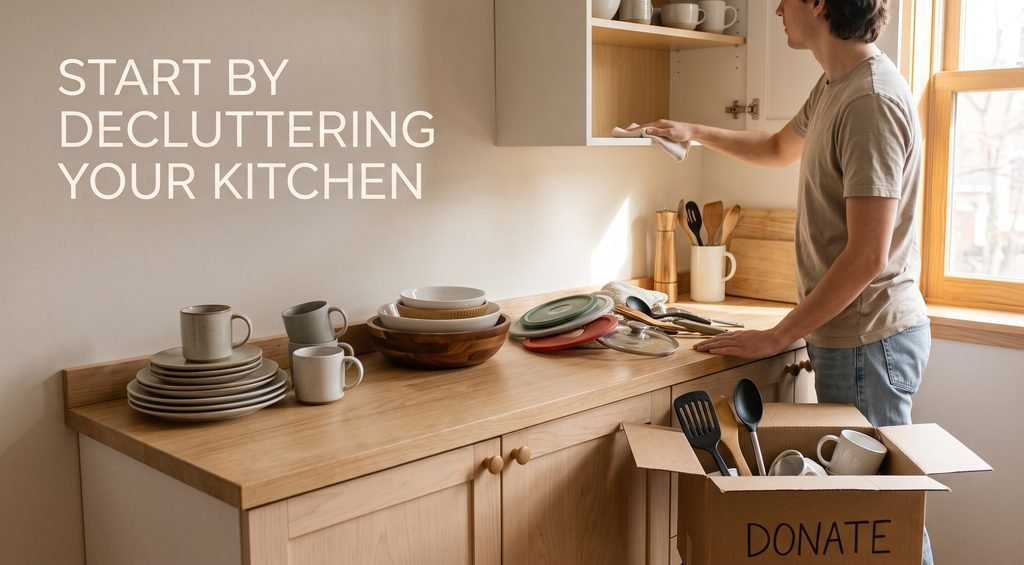
Organize Items by How Often You Use Them
Empty one cabinet, drawer, or shelf at a time. Sort everything into three categories:
- Daily essentials: Plates, mugs, cooking utensils, pans, and basic ingredients.
- Occasional items: Serving dishes, specialty cookware, and seasonal kitchen tools.
- Rarely used items: Duplicates, damaged tools, and things you have not used in a long time.
Keep frequently used items in accessible locations and move occasional items to higher shelves or the back of deeper cabinets. This simple kitchen organization method helps you find what you need without unnecessary searching.
Remove Duplicates and Unnecessary Items
Small kitchens benefit from having fewer duplicates. If you own several similar spatulas, mugs, storage containers, or serving bowls, keep the items you use most often.
Check food containers for missing lids and remove damaged kitchen tools. You do not have to adopt a completely minimalist lifestyle. Instead, focus on making sure every item earns its place in your kitchen.
Decluttering is one of the easiest kitchen organization improvements because it creates more usable space without requiring expensive renovations.
2. Make the Most of Vertical Kitchen Storage
When floor and countertop space are limited, look upward. Walls, cabinet sides, and the inside of cabinet doors offer valuable storage opportunities for small kitchen organization.
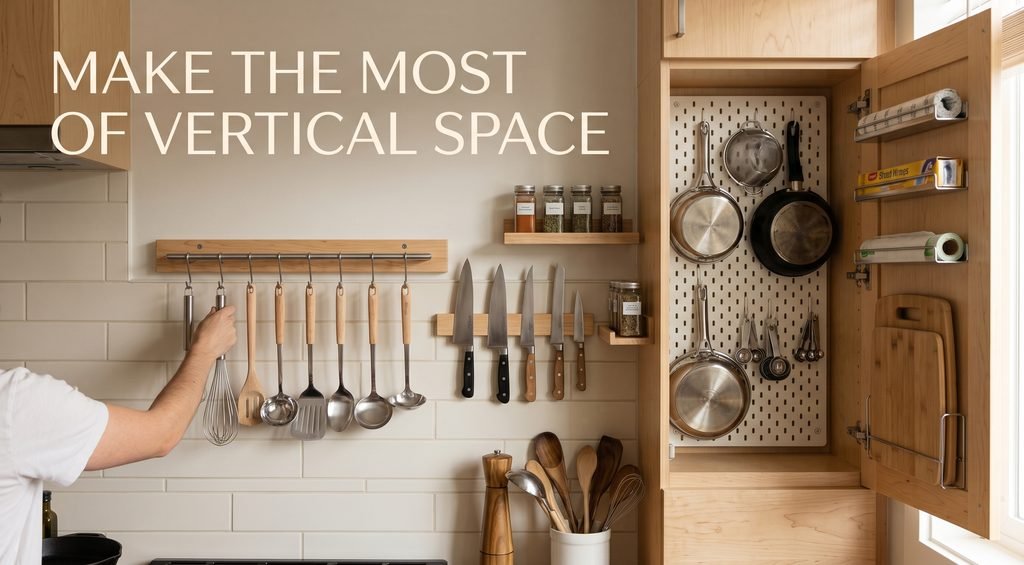
Use Wall-Mounted Storage Solutions
A small section of wall can hold items that would otherwise occupy drawers or countertops. Consider these kitchen organization ideas:
- Install wall-mounted rails for frequently used cooking utensils.
- Add shelves for spices, jars, or lightweight kitchen supplies.
- Use magnetic holders for compatible metal utensils.
- Hang mugs or kitchen towels on suitable hooks.
- Install a narrow shelf for small containers and everyday essentials.
Vertical storage keeps useful items accessible while freeing up valuable workspace. Always ensure that shelves and rails are securely installed and suitable for the weight they will hold.
Organize the Inside of Cabinet Doors
Cabinet doors provide additional storage that many homeowners overlook. A suitable door organizer can hold measuring spoons, food wraps, lightweight cleaning supplies, or small kitchen tools.
Before installing an organizer, measure the available clearance. Make sure the cabinet door closes properly and that stored items do not interfere with shelves or other objects.
Using cabinet doors wisely can improve kitchen organization without taking up additional counter space.
3. Improve Kitchen Cabinet and Drawer Organization
Good kitchen organization is not about filling every available inch. It is about making items easy to find, access, and put away.
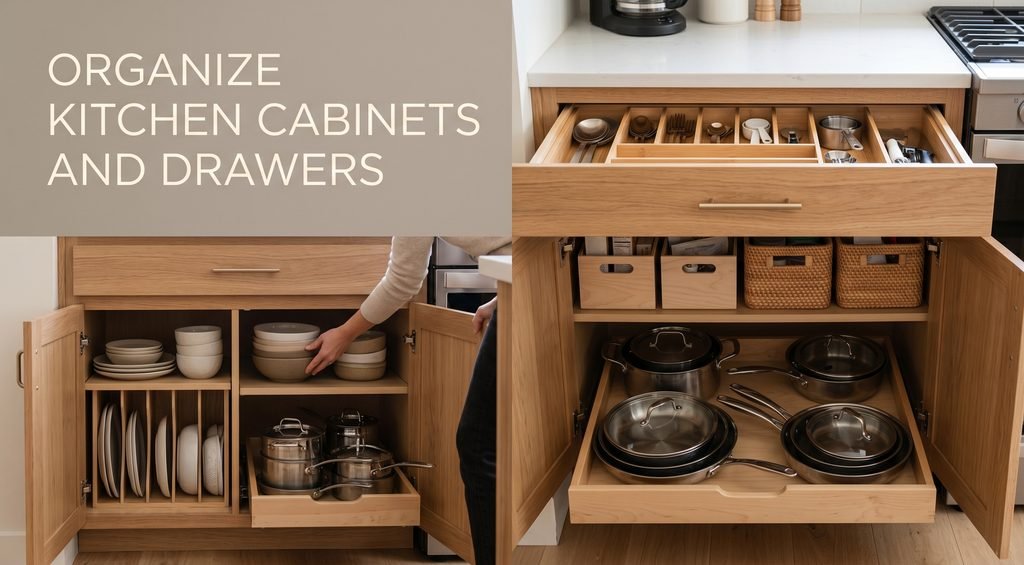
Group Similar Kitchen Items Together
Create specific storage areas for related items instead of placing everything wherever space is available.
For example:
- Store baking ingredients and baking tools together.
- Keep pots and pans close to the cooking area.
- Place plates and bowls near the dishwasher or dining area.
- Group everyday glasses and mugs in one cabinet.
- Keep food-storage containers and lids together.
- Store frequently used cooking utensils near the stove.
Think about how you move around your kitchen while preparing meals. Positioning items near their point of use makes kitchen organization more practical and reduces unnecessary movement.
Use Drawer Dividers, Bins, and Shelf Risers
Simple organizers can make existing cabinets and drawers much more useful.
Drawer dividers separate cutlery, measuring tools, and cooking utensils. Shelf risers create an additional storage level for smaller dishes, jars, and cups. Bins and baskets keep loose items grouped together, making them easier to remove and return.
For deep cabinets, arrange everyday cookware toward the front. Store less frequently used items toward the back without blocking access to essential supplies.
The best kitchen organization products are those that solve a specific problem. Measure your cabinets before purchasing organizers to avoid wasting money on products that do not fit.
4. Maximize Countertop and Sink Space
Clear countertops can make a small kitchen appear larger and provide more room for food preparation. Keeping surfaces organized is an important part of maintaining an efficient kitchen organization system.
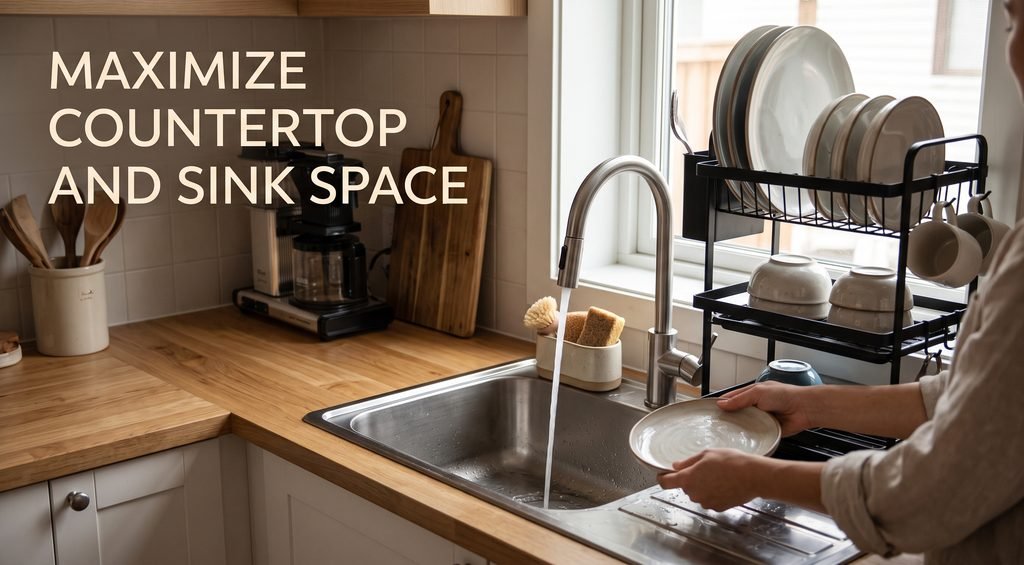
Keep Only Daily Essentials on the Counter
Review everything currently sitting on your countertop. Ask yourself whether you use each item regularly.
A coffee maker or toaster may deserve permanent counter space if you use it every day. However, appliances used only occasionally can usually be stored in a cabinet or pantry.
Create separate areas for everyday kitchen activities, such as:
- Food preparation
- Cooking and seasoning
- Washing dishes
- Using small appliances
Keeping these areas organized helps you prepare meals more comfortably and prevents clutter from spreading across the kitchen.
A practical kitchen organization rule is to return items to their designated storage spaces after use. This small habit helps maintain clear countertops throughout the week.
Keep the Sink Area Organized
The area around the sink can become cluttered with dish soap, sponges, brushes, and drying dishes.
Use a compact sink caddy to keep washing supplies together. A small drying rack can also help manage wet dishes without occupying the entire countertop.
Choose holders that allow water to drain properly and items to dry between uses. Avoid storing too many products around the sink, as excess moisture and clutter can make cleaning more difficult.
5. Explore Smart Storage Ideas for Small Kitchens
Once you have decluttered your kitchen and organized existing cabinets, look for unused spaces that could provide additional storage.
Use Narrow and Pull-Out Storage
Narrow gaps between cabinets, appliances, or walls may accommodate slim rolling storage units. Pull-out organizers can also make deep cabinets easier to access.
These kitchen organization solutions can be useful for storing:
- Spices and seasoning containers
- Cooking oils and bottles
- Cleaning products
- Canned foods
- Small pantry essentials
Measure the available width, depth, and height before purchasing a storage unit. Also check whether there is enough clearance to pull it out comfortably.
Avoid placing heavy items in unstable or difficult-to-reach organizers. Practical storage should make everyday tasks easier rather than create additional work.
Make Use of Corners and Awkward Spaces
Kitchen corners can become difficult-to-access storage areas. Depending on your cabinet design, rotating organizers, corner shelves, and adjustable racks may help you use these spaces more effectively.
The area above kitchen cabinets can also hold suitable lightweight items that you do not need regularly. However, avoid storing heavy objects overhead or placing everyday essentials where they are difficult to reach.
Successful kitchen organization focuses on accessibility rather than simply squeezing more belongings into every available space.
6. Build a Kitchen Organization System That Lasts
Organizing your kitchen is only the beginning. Maintaining the system is what keeps your kitchen functional over time.
Give Every Item a Designated Place
Every frequently used kitchen item should have a logical storage location. If utensils repeatedly end up on the countertop, their current storage location may be inconvenient.
For example, if you regularly use a particular cooking tool, store it in a nearby drawer or container. If food-storage lids keep getting separated, create a dedicated space for them.
Your kitchen organization system should match your cooking habits, available space, and daily routine. Do not hesitate to change an arrangement that is not working.
Reset Your Kitchen Regularly
A short daily reset can prevent clutter from accumulating.
At the end of the day, put away cooking utensils, wipe down countertops, return ingredients to their storage areas, and wash or organize dirty dishes.
Every few months, review your cabinets and drawers. Remove items you no longer use and adjust storage arrangements where necessary.
Consistent kitchen organization does not require hours of cleaning. Small, regular efforts can help maintain a tidy and functional cooking area.
7. Avoid These Common Kitchen Organization Mistakes
Even well-intentioned organizing projects can create new problems. Avoid these common mistakes when improving your small kitchen.
Buying Organizers Before Decluttering
Purchasing baskets, containers, and drawer inserts before removing unnecessary items can waste money and create more clutter. Declutter first, measure your space, and then buy only the organizers you genuinely need.
Filling Every Available Surface
Crowded countertops, shelves, and cabinet tops can make a small kitchen feel even smaller. Leave enough open space for preparing food and completing everyday tasks.
Ignoring Accessibility
Storage is only useful when you can easily reach its contents. Avoid placing everyday cookware behind several other items or storing frequently used ingredients on difficult-to-reach shelves.
Transferring Everything Into Containers
Matching containers may create a coordinated appearance, but transferring every food item is not necessary. Use containers when they improve freshness, visibility, or storage efficiency.
Always label containers clearly and follow appropriate food-storage recommendations.
Storing Heavy Items Too High
Large pots, heavy appliances, and bulky cookware should generally remain in stable, accessible locations. This reduces the risk of dropping items while reaching overhead.
Creating an Overly Complicated System
A complicated kitchen organization system can be difficult to maintain. Choose simple arrangements that make it easy for everyone in the household to return items to their proper places.
The most effective system is one that fits naturally into your everyday routine.
Frequently Asked Questions About Kitchen Organization
How Can I Organize a Tiny Kitchen Without Much Cabinet Space?
Start by removing unused items and unnecessary duplicates. Then make use of wall-mounted rails, cabinet door organizers, vertical shelves, and multipurpose kitchen tools.
Keep everyday essentials within easy reach and move occasional items to less accessible storage areas. These kitchen organization strategies can help you make better use of limited cabinet space.
How Can I Make a Small Kitchen Look Less Cluttered?
Keep countertops as clear as possible, group similar items together, and avoid displaying too many appliances or decorative objects.
Use baskets and containers where they genuinely improve storage. Consistent arrangements and clear surfaces can make your kitchen look more spacious without expensive renovations.
What Should I Keep on My Kitchen Counter?
Keep appliances and tools you use frequently, such as a coffee maker or toaster if you use them daily. Store occasional-use appliances in cabinets or pantry spaces whenever practical.
Effective kitchen organization means balancing convenience with available workspace.
What Is the Best Way to Organize Deep Kitchen Cabinets?
Place frequently used items toward the front and less frequently used items toward the back. Use bins, shelf risers, or pull-out organizers to improve visibility and access.
Avoid stacking items so deeply that you cannot see or reach them comfortably.
How Often Should I Reorganize My Kitchen?
There is no universal schedule. A quick daily reset helps prevent everyday clutter, while a more thorough review every few months can help remove unused items.
You may need to reorganize sooner if cabinets become difficult to open, countertops become crowded, or frequently used items are hard to find.
Conclusion: Make Kitchen Organization Simple
You do not need expensive renovations or dozens of storage products to create a more functional small kitchen. The best approach is to remove what you do not use and arrange the remaining items according to how you cook, clean, and move through the room.
Use vertical storage, cabinet doors, drawer dividers, corners, and overlooked spaces to improve kitchen organization while keeping everyday essentials accessible.
Most importantly, create a system that is easy to maintain. With a little planning and a few practical changes, you can make your small kitchen cleaner, less cluttered, and more enjoyable to use every day.